Bad Smell in the Bathroom or Kitchen? The Importance of Floor Gully Traps in Madeira
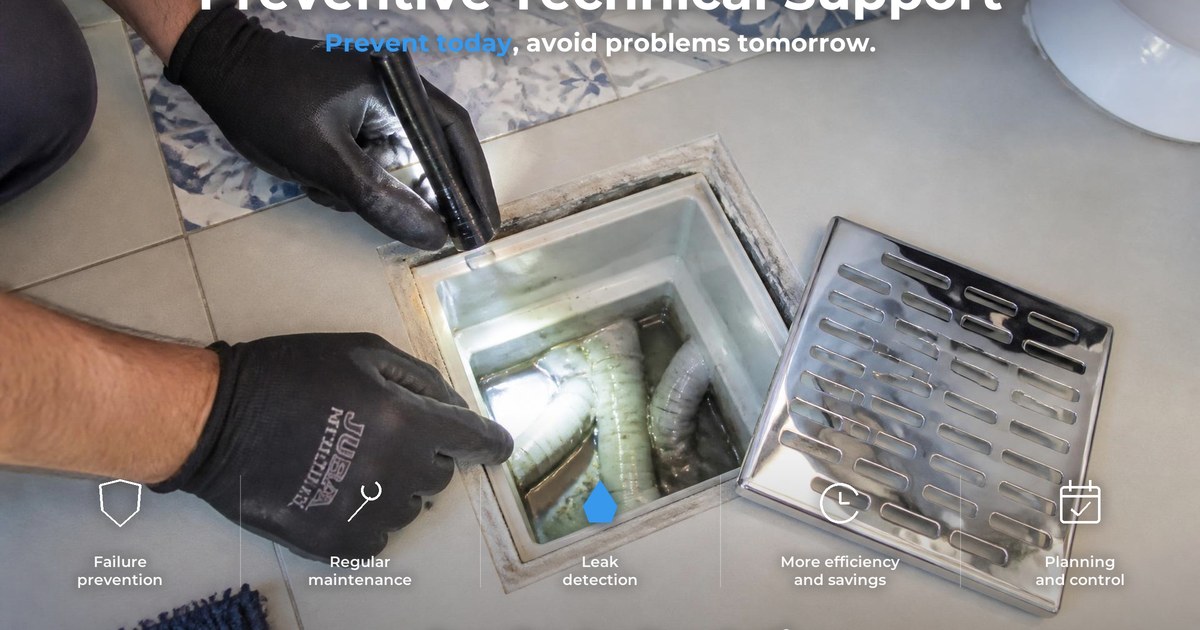
We get the same call every week in Funchal, Caniço, Santa Cruz and Câmara de Lobos: “there is a sewer smell in my bathroom and I have already cleaned everything.” In the vast majority of cases the problem is neither the toilet nor the cleaning products — it is in the floor. The floor gully trap is the component that receives and connects the secondary wastes of the bathroom (washbasin, hand basin, bidet, shower or bath) and of the kitchen or laundry (washing machine, utility sink, kitchen sink and dishwasher) before delivering them to the main stack. When it is properly built, it is what stops sewer gases from entering the home. When it is missing, badly adapted or has lost its water seal, the smell becomes chronic and no supermarket product will fix it.
🧭 What a Floor Gully Trap Actually Does
1) A floor gully trap is a box set at floor level that receives several appliance discharges and routes them together into the main waste branch. 2) In the bathroom it usually gathers the washbasin or hand basin, the bidet and the shower or bath; in the kitchen and laundry it takes the washing machine, the utility sink, the kitchen sink and the dishwasher. 3) By bringing those secondary wastes to a single point it avoids dozens of metres of pipework criss-crossing under the tiles and drastically reduces potential leak points. 4) It is also an inspection point: with the grid removed you can check flow rates, pull out hair and debris and clear a branch without breaking the floor. 5) In buildings in Funchal and Machico with thin slabs, it is the solution that lets every appliance keep the correct fall without overloading the floor build-up. 6) Properly installed and accessible, it turns a future ten-hour job into a thirty-minute visit.
💧 The Secret of the Water Seal: the Submerged Elbow
1) The technical detail that separates a gully that works from a gully that smells is the outlet pipe or elbow, which must sit submerged in the residual water with its mouth facing downwards. 2) That submerged elbow creates a permanent water barrier — the water seal — between the interior of the home and the main sewer stack. 3) Gases rising from the public network or the building stack hit that body of water and cannot pass, even under pressure swings. 4) The retained water depth should be around 5 cm; below that the seal is fragile and disappears through evaporation or through siphonage when another appliance discharges hard. 5) If the outlet runs straight out with no submerged elbow, the box is nothing but an open junction — and every smell in the network comes straight up the drain. 6) That is why an apparently identical gully works in one home and stinks in another: nothing shows on the surface, the difference is under water.
⚠️ The Shortcut That Ruins Renovations: Everything Into the Stack
1) The most frequent shortcut we find in refurbishments done by non-specialists is connecting each appliance directly to the central waste stack in the wall chase. 2) It saves pipe, it saves time and the client sees no difference on handover day — the problem only shows up weeks later, when the smell settles in. 3) With no gully trap and no water seal on each connection, the stack communicates directly with the home and gases rise through any drain. 4) In apartment blocks the effect is worse: a discharge from an upstairs neighbour creates negative pressure in the stack and sucks out whatever water is left in the traps. 5) Another classic mistake is connecting the washing machine or dishwasher to a branch with no trap, letting the smell in every time the drain pump stops. 6) We also find gullies buried behind masonry or covered with bonded tiles, which removes inspection access and forces floor demolition at the first blockage. 7) The outcome is always the same: a job that looks good but hides a chronic hydraulic defect under the floor.
🔎 Symptoms and Diagnosis of the Smell
1) A stronger smell at the end of the day with the house closed up, or after several days without using the bathroom — the classic sign of a trap dried out by evaporation. 2) A smell that appears exactly when the washing machine drains or when someone showers upstairs — that points to siphonage from negative pressure in the stack. 3) Gurgling in the shower drain when the toilet is flushed, a symptom of insufficient stack ventilation. 4) Odour concentrated around the floor drain with no damp on walls or on the neighbour's ceiling, which rules out a leak. 5) A simple check: pour two litres of water into the drain; if the smell goes for a few days and then returns, the water seal is emptying. 6) In technical diagnosis we use visual inspection of the gully, a water tightness test and, when needed, a smoke test to locate exactly where the gas escapes. 7) Only once the cause is confirmed do we propose a solution — sealing the drain with silicone merely pushes the smell to another point in the house.
🛠️ Technical Solutions Without Excessive Demolition
1) When the gully exists but has no internal trap or proper elbow, we adapt and cut an outlet elbow to measure so it sits submerged, restoring the water seal without lifting tiles. 2) When the grid and body are clogged with hair, grease and building debris, we carry out technical cleaning and restore the water level, checking flow appliance by appliance. 3) When an appliance was connected straight into the stack, we correct that branch and return the connection to the gully trap, working only on the strictly necessary area. 4) For siphonage caused by pressure drops in Funchal apartment blocks, we fit an air admittance valve on the stack, which stabilises pressure and protects every water seal in the home. 5) In seasonal homes and holiday lets in Santa Cruz, Machico and Calheta we solve evaporation with membrane traps or with a simple maintenance routine between stays. 6) In full refurbishments and new builds the rule is mandatory, not negotiable: a floor gully trap with a submerged elbow, an accessible inspection cover and every appliance connected to it at the correct fall. 7) We always hand over photographic records of what was left under the floor — a decisive document for any future work.
🎯 Definitive Technical Solution
1) Kill the vacuum in the stacks: fit an air admittance valve (AAV, secondary venting) at the top of the branch discharge pipe or under the basin. When the toilet is flushed, the valve opens to let air in and prevents the suction effect — siphonage — that pulls out and empties the water seal of floor drains and gully traps. 2) Holiday homes and short-term rentals left unused for weeks: replace conventional traps with dry traps fitted with a silicone membrane or a mechanical shutter. Even if the trap water evaporates completely, the membrane stays hermetically closed by gravity and blocks 100% of sewer gases and odours, opening only when water flows through.
🧰 What to AVOID and Preventive Maintenance
1) Avoid sealing the drain with silicone or tape to mask the smell: it removes inspection access and worsens any blockage upstream. 2) Avoid pouring aggressive chemicals to “kill” the odour — they attack seals, gaskets and the gully body itself, and the smell is back within days. 3) Avoid covering the gully with bonded tiles or fixed furniture during a refurbishment: inspection must remain accessible. 4) Avoid connecting washing machines directly into the stack without a dedicated trap, even when it looks like the quickest route. 5) Maintenance: pour two to three litres of water into each rarely used drain every fortnight, and before and after long absences. 6) Clean the grid and the inside of the gully two or three times a year, removing hair and grease — in Funchal and Caniço we recommend cleaning at the start and end of high season. 7) In kitchens, use a strainer basket in the sink and never pour oils down the drain, because grease solidifies and destroys the gully's flow. 8) An annual gully inspection costs a fraction of breaking the floor to clear a collapsed branch.
FAQ
Why does the floor drain smell right after flushing the toilet?
Because the flush creates a vacuum in the stack and sucks the water out of the drain's seal. The fix is to fit an air admittance valve (AAV) at the top of the branch discharge pipe or under the basin, letting air in and preventing siphonage.
The house is closed for weeks and always smells of sewage on return. What can be done?
The trap water evaporates while the property is closed. In holiday homes and short-term rentals the definitive fix is a dry trap with a silicone membrane or mechanical shutter: even with no water it stays closed by gravity and blocks sewer gases.
Where exactly does the smell coming out of the floor drain come from?
From the main sewer network. Gases formed as waste decomposes rise through the building stack and, if they find an open path, enter the home through the easiest point, usually the floor drain. When the gully trap has a submerged outlet elbow and enough water, those gases are blocked by the water barrier. If the elbow is missing, badly fitted or the water has evaporated, the smell comes straight in — and no cleaning product will help, because the source is not inside the house.
How does the water retained in the gully trap work?
The gully's outlet pipe ends with its mouth facing downwards, submerged in the residual water. That body of water, around five centimetres deep, forms a permanent seal: water flows out over the top, but gas cannot dive under it and pass through. It is the same principle as a basin trap, applied to the floor and to several appliances at once. As soon as that level drops through evaporation or is sucked out by another discharge, the seal breaks and the smell appears.
Can the problem be solved without breaking the floor?
On most jobs we do in Funchal, Caniço and Câmara de Lobos, yes. If the gully exists and is accessible through the grid, we can adapt and cut an outlet elbow to measure that restores the water seal, clean the inside and reinstate the water level without lifting a single tile. Only when the gully has been buried behind masonry, is cracked or the branch has collapsed do we need to open the floor, and in those cases we keep the opening strictly to the essential area.
How long does the work take?
Technical cleaning of the gully with reinstatement of the water seal is usually resolved in a one to two hour visit. Adapting a cut-to-measure outlet elbow, with flow tests on every connected appliance, takes around half a day on average. If connections made straight into the stack have to be corrected, or the gully replaced, expect a full day of work plus floor reinstatement time. We always confirm the timeframe on site after diagnosis.
How much does it cost to fix bad smells in Funchal and across Madeira?
Investigating drain odours starts, as a guide, from €75. The amount depends on whether cleaning, connection corrections or replacement parts are required. See the full pricing page; any applicable travel fee is shown separately on the map.
In a new renovation, is a floor gully trap really mandatory?
For us it is a rule, not an option. In full refurbishments and new builds we always fit a floor gully trap with a submerged elbow and an accessible inspection cover, with every secondary appliance connected to it at the correct fall. That is what guarantees no smells in the long run and what allows later unblocking or inspection without destroying the floor. A job that skips this component to save a few dozen euros usually costs ten times that to put right.
Sewer smell in your bathroom or kitchen? Message us on WhatsApp and we will diagnose the gully trap without destroying your floor.
We diagnose and fix bad smells and floor gully traps without a water seal in Funchal, Caniço, Santa Cruz, Machico, Câmara de Lobos, Ribeira Brava, Ponta do Sol, Calheta, Santana, São Vicente and Porto Santo, across Madeira Island.