Bad Smell in the Bathroom: Siphon and Sewer Seal Problems
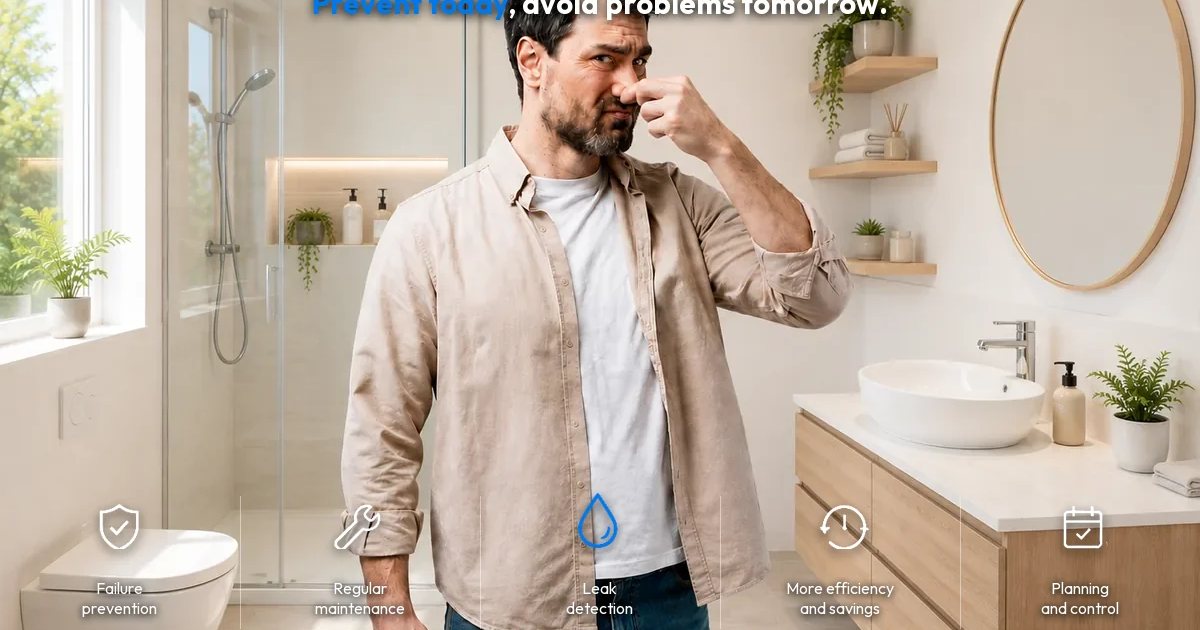
The unpleasant odour coming from drains, basins, shower trays or toilets is one of the most annoying household problems. Beyond the discomfort, sewer gases can carry bacteria and affect indoor air quality. In most cases the cause is technical and easy to solve once correctly diagnosed.
🔎 Symptoms & Initial Diagnosis
1) Smell only when you walk in after days away: the trap has dried out through evaporation — typical in holiday homes and rentals in Funchal, Caniço and Santa Cruz. 2) Smell that appears every time you flush: missing soil-stack ventilation or a faulty air admittance valve sucking water out of the other traps. 3) Constant smell at the basin or kitchen sink: decomposing waste and grease inside the trap. 4) Stronger smell on windy or rainy days: stack gases entering through a defective seal. 5) Floor gully bubbling when someone showers upstairs: pressure imbalance in the stack. 6) Simple test: cover the suspect drain with plastic and tape for a few hours; if the smell disappears, you have confirmed the source.
🧪 Main Causes
1) Dry or unbalanced traps: without the water seal, sewer gases rise freely through the pipework. 2) Build-up of waste, grease, hair and soap on the trap walls, which then decomposes. 3) Lack of drainage ventilation: when the stack has no vent pipe above roof level, or the air admittance valve has failed, every flush creates a vacuum and empties the traps around the house. 4) Blocked floor gully traps: in Madeiran bathrooms and kitchens the floor gully collects sludge and hair at the low point. 5) Defective toilet seal: a dried-out rubber seal or wax ring lets gases past the base of the pan. 6) Appliance and basin connections with no trap or a loose rubber cuff. 7) Untrapped floor gratings on terraces and balconies, common in older buildings in Funchal and Câmara de Lobos.
🛠️ Ideal Step-by-Step Fix
1) Start with the simplest step: run water in every drain, shower and toilet for a minute to restore the water seal. 2) If the smell persists, clean the basin bottle trap: bucket underneath, unscrew the cup by hand, remove the waste and hand-tighten again. 3) Open the floor gully grating, remove sludge and hair with gloves and a brush, and wash with hot water and detergent. 4) Check the toilet base: if you smell gases up close, the seal needs replacing — a plumber's job, as the pan must come off. 5) Confirm appliance hoses are properly seated and sealed. 6) In rarely used drains, add a spoon of cooking oil after running water: it slows evaporation and keeps the water seal during absences. 7) If the smell always returns after flushing, stop here: this is a stack ventilation problem requiring camera inspection and a smoke test.
🚫 What to AVOID
1) Caustic soda and acids: they damage PVC pipework, deform rubber seals and fix neither missing ventilation nor damaged seals. 2) Perfumes, air fresheners and blocks to mask the odour: they hide the symptom and delay diagnosis. 3) Large amounts of bleach down the drains, especially in houses with a septic tank: it kills the bacteria the biological process needs. 4) Permanently sealing drains and gratings with silicone: this creates build-up points and worsens the pressure imbalance. 5) Fitting anti-odour valves before checking ventilation: they move the smell elsewhere without fixing the cause. 6) Removing the toilet without shutting off the water and having a new seal ready.
🧰 Preventive Maintenance
1) Run water in every drain, shower and toilet at least once a week, especially in little-used guest bathrooms. 2) In holiday rentals, add flushing every water point between stays to the cleaning checklist. 3) Before a long absence, run water in all drains and add a little cooking oil to slow evaporation. 4) Clean basin traps every 3 to 4 months and floor gully traps twice a year. 5) Fit hair strainers in shower drains. 6) Check the air admittance valve and the vent stack outlet annually. 7) In apartment blocks, propose periodic inspection of the stack and its ventilation — repeated smells in several flats usually have a shared cause.
FAQ
Why does the bathroom only smell after being closed for a few days?
Because the water in the trap evaporates and the seal that blocks sewer gases disappears. Running water in the drains and toilet restores the barrier. Before long absences, add a little cooking oil to the drain to slow evaporation.
The smell always returns after flushing. Why?
That usually points to missing drainage ventilation or a faulty air admittance valve: the flush creates a vacuum and siphons water out of the other traps. It needs a technical inspection of the stack and cannot be solved with cleaning products.
Can I use caustic soda to remove the smell?
It is not advisable. In excess it damages PVC pipework and rubber seals, and in houses with a septic tank it kills the bacteria driving the biological process. It also does nothing for structural causes such as missing ventilation or a failed seal at the toilet base.
Need help now? Fast response on WhatsApp.
We solve sewer odours, dry traps and ventilation faults in Funchal, Câmara de Lobos, Caniço, Santa Cruz, Machico, Ribeira Brava and across the island of Madeira.