Sewer Smell in the Building or Kitchen: Stack and Venting Problems
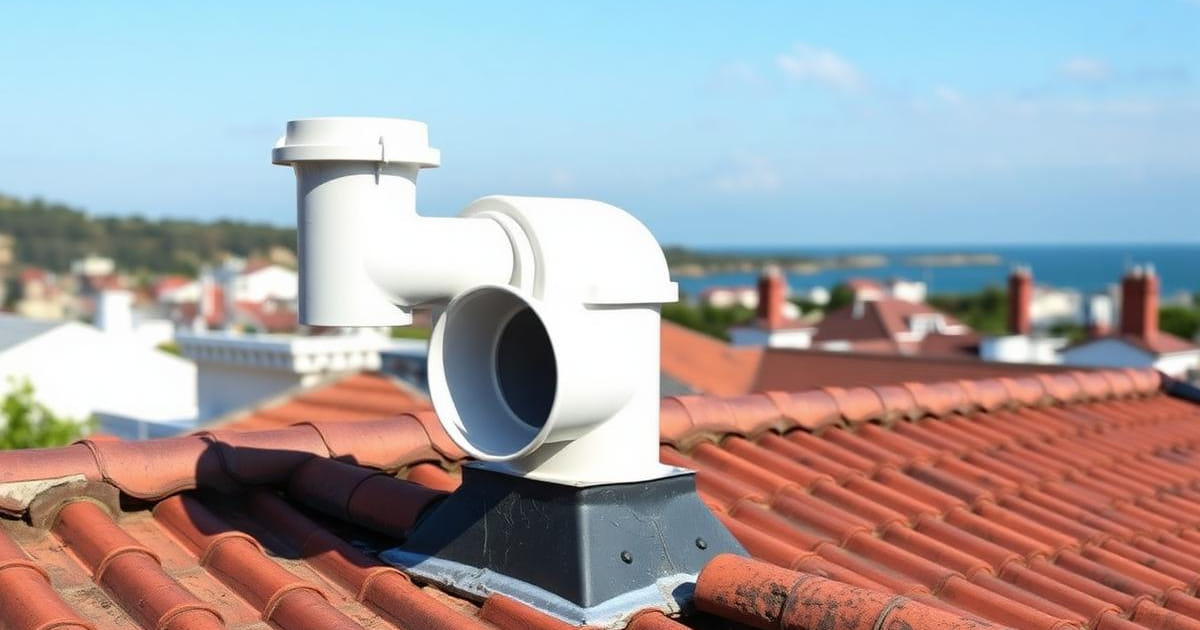
You flush the toilet and the kitchen sink glugs. You take a shower and the floor drain gurgles. A few days later a sewer smell appears with no visible blockage. These three symptoms almost always share the same cause and are not solved with plungers or chemicals: the drainage network is starved of air. When a stack discharges, falling water drags air with it and creates negative pressure. If that air cannot enter through a vent, it enters via the easiest route — through the appliance traps, sucking out the water that seals them.
🔎 Symptoms & Initial Diagnosis
1) Gurgling in the shower drain, shower tray or sink whenever the toilet is flushed or the washing machine drains. 2) A sucking noise followed by a sewer smell that lasts a few minutes and then fades. 3) The basin trap water level visibly lower after strong discharges elsewhere. 4) The problem worsens on upper floors of Funchal apartment blocks or when neighbours discharge simultaneously. 5) Slow flow with no real blockage: missing air holds the water back. 6) Quick test: fill the trap with water, flush the toilet and watch the level — if it drops, it is siphoning caused by poor venting.
🧪 Main Causes
1) A soil stack cut off at the top floor and capped, with no extension to roof level. 2) A vent cowl blocked by leaves, nests or paint left over from building works. 3) Branches that are too long or too steep, accelerating the water and creating a piston effect. 4) Appliances connected straight into the stack with no secondary venting, common in fast refurbishments. 5) Traps with a shallow water seal (under 5 cm), very vulnerable to suction. 6) New appliances added to an old network without recalculating venting — dishwashers and washing machines are the worst offenders.
🛠️ Practical Step-by-Step
1) Identify the appliance that triggers the effect (usually the toilet or washing machine) and the one that gurgles. 2) If it is safe, visually inspect the top of the stack at roof level: look for obstructions, caps or paint. 3) Check that every trap holds water by refilling with two litres. 4) Note whether the issue is permanent or only occurs at peak building usage. 5) Ask for a technical inspection: we check pipe sizes, falls and existing vent points. 6) Only then do we decide whether to clear the primary vent, extend it or add secondary venting.
🎯 Definitive Technical Solution
1) Complete primary venting: make sure the top of the main soil stack continues vertically, at the same diameter, and terminates at roof level with a vent grille or cowl. This extension is what lets gases out and air in freely during discharges, keeping atmospheric pressure stable inside the stack. 2) Secondary venting with an AAV: where extending pipework to the roof is impossible — apartments, basements, island kitchens, refurbishments in older Funchal buildings — fit an air admittance valve at the highest point of the branch discharge, above the appliance flood level, inside a vanity unit or an accessible ventilated bulkhead. The valve opens to admit air whenever negative pressure forms and closes by gravity, balancing pressure instantly and removing the suction that empties traps, without letting gases into the home. 3) An AAV never replaces the building's primary vent: it is a local complement. Installed with inspection access, it solves gurgling, noise and odours without breaking walls or working on the roof.
🚫 What to AVOID
1) Do not seal the drain with silicone or airtight caps — the air is still missing and the problem simply moves. 2) Do not bury the AAV behind masonry with no access: it has a membrane that needs inspection. 3) Do not fit the AAV below the appliance flood level, or water can enter the valve. 4) Do not cap the top of the stack at roof level to 'avoid smells': that is precisely what creates the suction. 5) Do not pour harsh chemicals hoping to fix what is an air pressure problem. 6) Do not add new appliances to an old network without assessing venting.
🧰 Preventive Maintenance
1) Check the roof vent cowl annually, especially after storms. 2) Inspect the AAV membrane every two years and replace it if stiff or dirty. 3) Top up traps in rarely used rooms, especially in holiday homes and short-term rentals. 4) Avoid prolonged simultaneous discharges on old networks. 5) In refurbishments, require venting to be part of the design rather than an afterthought. 6) Keep photographs of the connections before closing ceilings and cabinets.
FAQ
Does an AAV let sewer smell into the house?
No, when the correct valve is properly installed. An AAV is one-way: it opens only to admit air when negative pressure forms in the pipework and closes by gravity the rest of the time, keeping gases inside the network. It must be fitted above the appliance flood level and in a position where the membrane can be inspected.
Can an AAV replace the vent that goes up to the roof?
Not as a building-wide solution. The main stack always needs a primary vent open to atmosphere to balance pressure along the whole column. An AAV is a local, complementary device for branches and appliances where extending pipework to the roof is impossible — it stops gurgling and siphoning at that point, but it does not remove the need for the building's roof termination.
Gurgling drains at home? We will diagnose your drainage venting.
We solve drainage venting, siphoning and odour problems in Funchal, Câmara de Lobos, Caniço, Santa Cruz, Machico, Ribeira Brava, Ponta do Sol, Calheta, Santana, São Vicente and Porto Moniz, across Madeira Island.