Water Meter Running Without a Leak? The Oscillation Effect on Madeira's Slopes
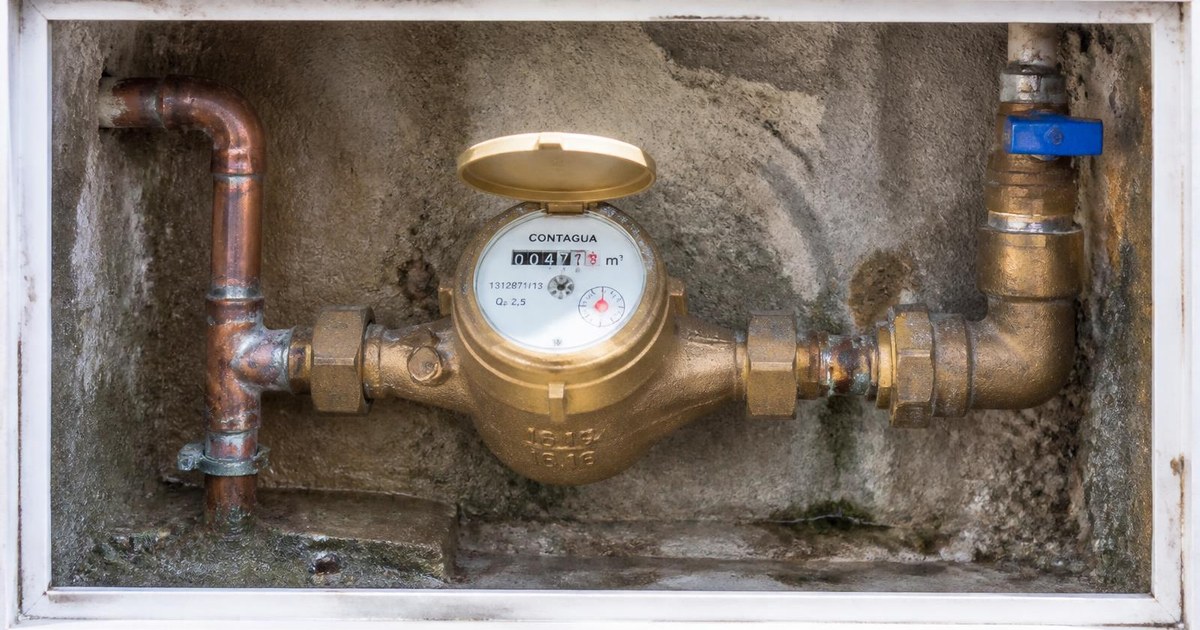
In Funchal, Monte, São Gonçalo and Santa Cruz there are homes where the water bill climbs month after month with no explanation: pressure tests show no leaks, walls and slabs are dry, and yet the meter keeps adding up. In most of these cases the problem is not inside the house but in how water behaves in steeply inclined pipework — the oscillation effect, typical of Madeira Island's steep lanes and ramps.
🔎 Symptoms & Initial Diagnosis
1) An abnormally high, continuous water bill with no change in habits and no extra guests at home. 2) The meter's dial and digits advancing even with every tap closed, cisterns still and appliances switched off. 3) A gauge pressure test confirming zero leaks in walls, slabs or the internal network: pressure holds steady throughout the test, which rules out a burst or a crack. 4) Clearly noticeable pressure oscillation at the neighbours' peak consumption hours, typically late afternoon and early evening, with taps spitting air and flow swings in the shower. 5) Neighbours on the same ramp or lane reporting the same unexplained consumption — a sign the cause is the mains, not your indoor plumbing.
🧪 Main Causes in Madeira
1) Homes on steep lanes and ramps — very common in Funchal, Monte, São Gonçalo and Santa Cruz — where the water column faces large height differences between the meter and the outlets. 2) Reduced public mains flow in the late afternoon, when overall consumption rises at lower altitudes and the pressure available higher up temporarily drops. 3) Backward and forward movement of water in inclined pipework: when pressure falls, part of the column tends to slip back by gravity and, when pressure recovers, it moves forward again. By factory specification the meter reads in one direction only (it only adds, it never turns back), so every one of those swings is counted as real consumption even though not a single litre was used. 4) The meter's built-in non-return valve damaged, jammed or clogged with grit and sediment from the public network, no longer blocking that backflow and making the effect worse. 5) Older installations with many vertical runs and no dedicated non-return protection downstream of the meter.
🛠️ Ideal Step-by-Step Solution
1) Technical confirmation of the phenomenon: closing the main stopcock and comparing meter readings over time to separate real consumption from mains oscillation. 2) Fitting a dedicated heavy-duty brass non-return valve (1/2" or 3/4", depending on the space in the meter niche) right after the meter: it blocks the water column from slipping back and eliminates the back-and-forth counting. 3) Installing a brass Y-strainer/mesh filter with a removable cup to stop grit and sediment arriving from the public network, which otherwise damages seals and the check valve itself. 4) Checking and protecting cisterns, taps and mixer cartridges against debris, cleaning aerators and internal filters that already hold particles. 5) Logging readings before and after the work for two to four weeks, documenting the drop in billed consumption and supporting any claim with the water utility.
🎯 Definitive Technical Solution
1) Spring-loaded stainless steel check valve: fitted immediately after the meter or at the property inlet, it stops water flowing back into the mains when external pressure drops — this is what halts the so-called pendulum effect of the meter gears. 2) Direct-acting compensated pressure reducer with gauge: mounted right after the check valve and set to 3.0–3.5 bar, it stabilises the household service pressure, protects taps, cisterns and flexible hoses and removes the pressure swings typical of the Madeira mains. 3) Piston water hammer arrestor: installed on the main pipe, it absorbs shock waves and air pockets from the mains, stopping the false rotation of the meter and the banging noise inside the walls.
🚫 What to AVOID
1) Paying inflated bills month after month without testing the mains backflow phenomenon: with no technical evidence there is no way to justify the anomalous consumption. 2) Replacing taps or breaking open walls and slabs without technical confirmation of a leak: expensive, messy and, in these cases, completely pointless. 3) Using low-quality plastic non-return valves: they give way under the pressure swings of the ramps, jam with grit and let backflow through again within months. 4) Fitting the valve somewhere inaccessible or with no maintenance room in the niche, making future cleaning and checks impossible. 5) Skipping the strainer: without it, grit from the public mains eventually jams the brand-new non-return valve.
🧰 Preventive Maintenance
1) Cleaning the brass strainer every six months by removing the cup and rinsing the mesh under running water — in the higher parts of Funchal and Monte, with more sediment after heavy rain, every three months is wiser. 2) Periodic inspection of the non-return valve's seal and travel, confirming it closes tightly with no limescale or grit build-up. 3) A monthly meter reading with the house closed up as a quick control test. 4) Checking cistern seals and mixer cartridges, especially after works on the public network. 5) In holiday rentals and second homes in São Gonçalo, Monte or Santa Cruz, adding these checks to the property's annual maintenance.
FAQ
Can the meter register consumption with no leak at all?
It can. With pressure swings and air in the mains, water oscillates inside the pipework and turns the meter gears in a pendulum effect. The fix is a stainless spring check valve after the meter, a pressure reducer with gauge set to 3.0–3.5 bar and a water hammer arrestor on the main pipe.
What pressure should the house pressure reducer be set to?
Between 3.0 and 3.5 bar, confirmed on the reducer's own gauge. Above that, leaks in flexible hoses, taps and cisterns increase; below it, showers and upper floors lose flow.
Can a water meter run backwards if the water flows back?
No. By factory specification, domestic meters read in one direction only: they add, never subtract. If the water column slips back down inclined pipework and then moves forward again, that swing is recorded as consumption even with no real use in the house. That is exactly why a dedicated non-return valve solves the problem at source.
Who should install the additional non-return valve?
A professional plumber, on the customer's pipework immediately downstream of the meter, respecting the flow direction, the niche space and the correct size (1/2" or 3/4"). The meter and the service connection belong to the water utility and must not be tampered with. We carry out this work in Funchal, Monte, São Gonçalo, Santa Cruz and across Madeira Island.
Can grit from the mains damage cisterns and taps in Funchal?
Yes. Grit and sediment travelling through the public network, especially after heavy rain or roadworks, scratch cistern seals, block aerators and damage mixer cartridges. A brass Y-strainer fitted after the meter traps those particles and extends the life of every fitting in the house.
Meter adding up with no consumption? Message us on WhatsApp now.
We install brass non-return valves and strainer filters in Funchal, Monte, São Gonçalo, Santa Cruz, Caniço, Câmara de Lobos and across Madeira Island, with special attention to homes on steep lanes and ramps.