Water Heater Safety Valve Discharging Water: Causes in Madeira
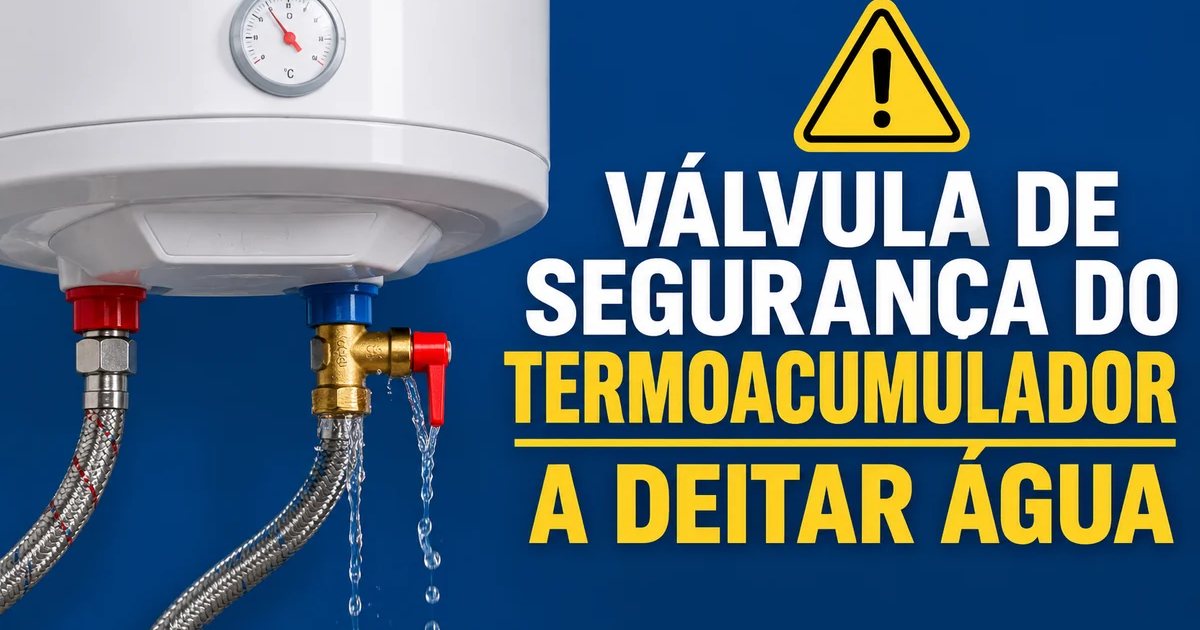
Seeing water coming out of the water heater safety valve is alarming, but it is not always a fault. The valve exists precisely to release excess pressure. The problem starts when it drips continuously, including outside heating cycles.
🔎 Symptoms & Initial Diagnosis
Watch when and how the water discharges, without scalding yourself (it can leave at 60–65 °C): 1) It drips only during the heating cycle and then stops — normal thermal expansion. 2) It drips continuously, even with a cold tank and no water use — excess mains pressure or a faulty valve. 3) A constant strong stream — valve blocked by sediment or wrongly rated. Simple test: fit a pressure gauge to a garden tap or washing machine point and read static pressure morning and evening. Never unscrew the valve while the tank is hot or pressurised.
🛠️ Main Causes
1) Thermal expansion: heated water expands by 2–3%; with a check valve or pressure reducer on the branch, that extra volume can only escape through the safety valve. 2) Mains pressure spikes: in lower Funchal, Caniço, Santa Cruz, Machico and Câmara de Lobos pressure swings widely through the day and can exceed 5 bar, opening a valve rated at 7 bar. 3) Sediment and mineral deposits on the valve seat, preventing a tight shut-off. 4) Corrosion accelerated by coastal sea air (maresia). 5) Exhausted anode and overheating from a mis-set thermostat, raising internal pressure. 6) Poorly routed discharge, which makes the leak look worse than it is.
✅ Immediate Action: Step-by-Step
1. Route the discharge to a drain or bucket to protect floors and furniture. 2. Lower the thermostat to 60 °C: less expansion, less discharge. 3. Measure static pressure with a gauge; above 5 bar the problem is the mains, not the valve. 4. Briefly lift the valve lever to flush sediment and check that it reseats. 5. If it drips continuously, close the cold water inlet to the heater and switch off the breaker. 6. Call a technician to fit a pressure-reducing valve and/or a potable expansion vessel and replace the safety group.
⚠️ What to AVOID
Never cap, block or plug the valve outlet — without pressure relief the tank can burst. Do not increase the valve rating or fit models incompatible with the tank. Do not delay the magnesium anode replacement. Never energise the element after draining the tank. Avoid over-tightening, excess PTFE tape and brass fittings without dielectric sleeves. Never ignore a continuous drip: it always ends in tank corrosion and a real leak.
🗓️ Preventive Maintenance
Operate the safety valve lever twice a year to flush sediment. Replace the safety group every 5 years or whenever it stops reseating. Check static pressure yearly (ideal 3–4 bar) and the expansion vessel pre-charge. Flush the tank annually. Check the magnesium anode every 2 years and replace it every 3–4 years.
FAQ
Is it normal for the safety valve to drip?
A slight drip only during heating is normal thermal expansion. Continuous dripping with a cold tank means excess mains pressure or a faulty valve.
Can I plug the valve outlet?
Never. Blocking it removes the overpressure protection and can rupture the tank. The correct fix is routing the discharge and correcting the pressure.
When do I need a pressure reducer or an expansion vessel?
A reducer whenever static pressure exceeds 5 bar; an expansion vessel when a check valve or reducer is fitted on the branch, to absorb hot water expansion.
Need help now? Fast response on WhatsApp.
We work in Funchal, Câmara de Lobos, Caniço, Santa Cruz, Machico, Ribeira Brava, Ponta do Sol, Calheta, Santana, São Vicente and across Madeira Island.