Water Heater Leaking or Not Heating? What to Do and When to Replace It
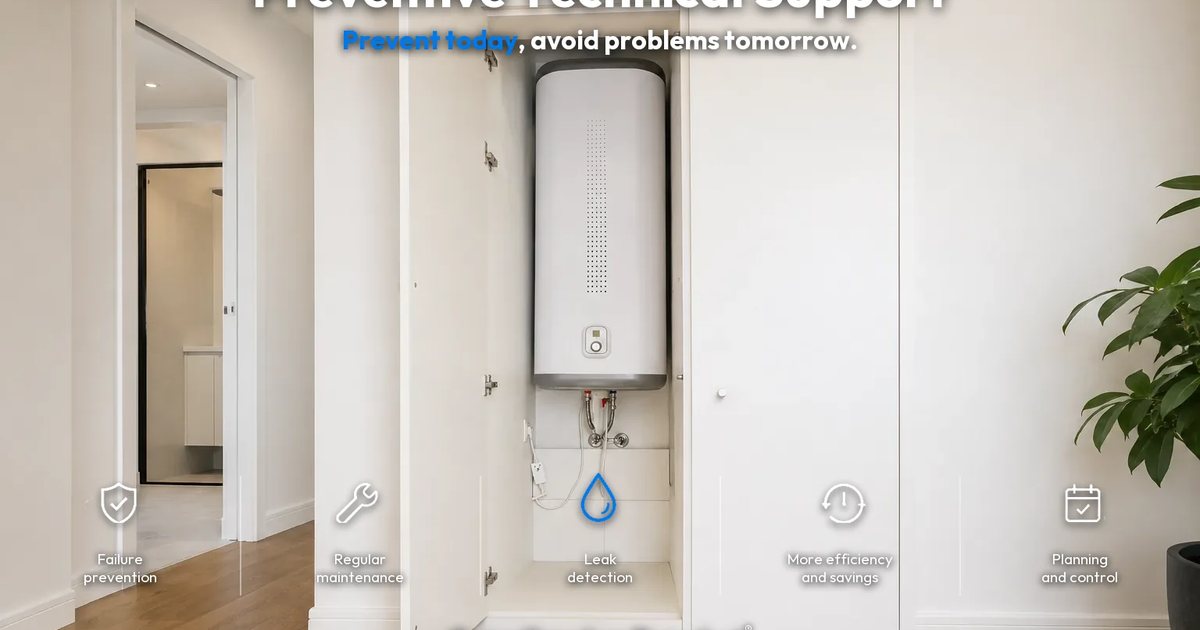
The water heater (or hot water cylinder) is one of the quietest and most forgotten appliances at home — until the day it stops heating, starts dripping or leaves a puddle on the floor. In Madeira, although mains water is soft and limescale-free, the high mains pressure, sea-air corrosion (maresia) and the natural build-up of sediment accelerate the wear of these units across Funchal, Caniço, Santa Cruz, Machico and Câmara de Lobos. Spotting the early warning signs and acting safely can be the difference between a small repair and having to buy a brand-new appliance.
🔎 Symptoms & Initial Diagnosis
Before touching any electrical component, calmly identify the symptom without risking a shock or a burn: cold water instead of hot, scalding water even on the lowest setting, a puddle on the floor of the cupboard or bathroom, boiling or cracking noises coming from the tank, the breaker tripping when the unit is switched on, or hot water that looks yellowish/brownish and smells burnt. Only touch the outside of the unit and never with wet hands — if water has pooled near electrical wiring, stay clear and switch off the main breaker at the panel before investigating further.
🛠️ Main Causes
1) Internal tank leak: a sign of advanced corrosion of the cylinder — this cannot be repaired, only replaced. 2) Heating element or thermostat failure: cold water, scalding water or a tripping breaker. 3) Sediment build-up at the bottom of the tank: reduces efficiency, causes noise and speeds up wear on the heating element. 4) Faulty non-return/check valve: lets heated water flow back into the cold mains, or causes constant dripping at the safety valve. 5) Worn magnesium anode: without this sacrificial protection, corrosion attacks the tank's steel shell directly. 6) Sea-air (maresia) corrosion: in coastal areas such as Funchal, Câmara de Lobos, Caniço, Santa Cruz and Machico, salty air speeds up oxidation of metal fittings and the technical cupboard. 7) Mains pressure spikes: Madeira's steep terrain generates high pressures that strain joints and the safety valve. 8) Thermal expansion: without a working safety group or expansion vessel, heating the water causes repeated overpressure inside the tank.
✅ Immediate Action: Ideal Step-by-Step Fix
1. Cut the power at the dedicated breaker for the water heater — never touch the unit while it is powered. 2. Close the cold-water inlet tap on the unit to stop the leak from being fed further. 3. Let the unit cool down for at least 30 to 60 minutes before any visual inspection, to avoid burns from hot water or steam. 4. Do the towel test: run a dry cloth or towel along the fittings, base and side of the tank to precisely locate the exact point the water is coming from (a union, the valve, or the tank shell itself). 5. Photograph the area and, with the breaker off and the water shut, contact a technician for a safe assessment.
⚠️ What to AVOID
Never block, tape over or disable the safety valve just because it is dripping — it is essential to prevent overpressure explosions. Don't delay replacing the magnesium anode hoping it will "still hold up" — without an anode, tank corrosion is irreversible. Never power the heating element with the tank empty or partly filled — it will burn out the element in seconds and can damage the thermostat. Don't connect dissimilar metal fittings without the mandatory dielectric bushings: missing these insulators causes accelerated galvanic corrosion and voids the manufacturer's warranty.
🗓️ Preventive Maintenance
Check the magnesium anode every 2 years, replacing it every 3–4 years (or as required by the manufacturer's manual). Flush the tank once a year to remove sediment build-up at the bottom. Manually test the safety valve every 6 months by lifting the lever to confirm it isn't seized. Check the pressure-reducing valve annually, especially relevant in Madeira's higher areas with elevated mains pressure. This routine, followed in homes and short-term rentals across Funchal, Caniço, Santa Cruz, Machico and Câmara de Lobos, prevents most sudden breakdowns.
FAQ
How often should I change the magnesium anode?
In Madeira we recommend checking the anode every 2 years and replacing it every 3–4 years, always following the intervals required by the manufacturer's manual. Keep the maintenance report as proof — without it, the equipment's warranty is voided in the event of a failure.
Is it safe to try to locate the leak myself?
Yes, as long as you cut the power at the breaker first and close the water inlet. Once the unit has cooled down, a safe towel test lets you pinpoint the source without risking an electric shock or a burn.
How long does a water heater last in Madeira?
With proper maintenance, correctly installed dielectric bushings and a timely anode replacement, between 10 and 15 years. Without maintenance, or in areas more exposed to sea air such as Funchal or Câmara de Lobos, the average lifespan can drop to 5 to 7 years due to galvanic corrosion and sediment build-up.
Need help now? Fast response on WhatsApp.
We inspect, repair and replace water heaters in Funchal, Câmara de Lobos, Caniço, Santa Cruz, Machico and the remaining municipalities of Madeira.