Water Hammer Arrestors: How to Eliminate Banging and Hydraulic Shock in Pipework
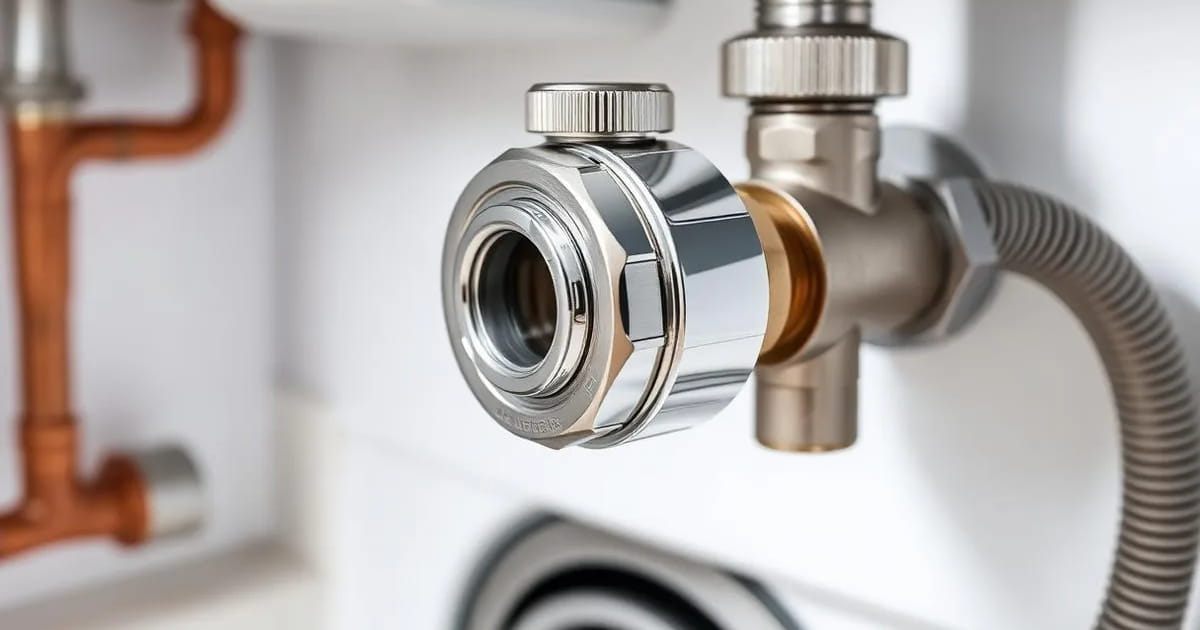
That sharp bang in the wall when the washing machine shuts off the water is not a fault in the machine: it is hydraulic energy hitting the pipe. When a solenoid valve closes in milliseconds, the moving column of water stops abruptly and turns its inertia into a pressure spike that races through the installation. That is water hammer. It sounds like a knock or a hammer blow, but what it does is far worse than annoying: it fatigues solder joints and press fittings, loosens clips, upsets mixer seals, and is the silent origin of many leaks in concealed pipework. A water hammer arrestor absorbs that spike where it is created, and it is one of the cheapest and most effective interventions in domestic plumbing.
⚡ How the Pressure Spike Is Created
1) Moving water has mass and inertia: the greater the flow and pipe length, the more energy is stored. 2) A fast closure stops that movement in milliseconds and converts the inertia into an instant overpressure. 3) The pressure wave travels through the pipe at the speed of sound in water and reflects at the ends, repeating the impact. 4) Spikes several times the working pressure are normal in this phenomenon, even in domestic systems. 5) Washing machine and dishwasher solenoid valves are the classic case, because they shut abruptly. 6) Single-lever and quick-closing taps, timed urinals and irrigation valves produce the same effect. 7) High mains pressure and rigid pipework with no elastic element sharply increase the intensity.
🔧 Piston and Diaphragm Arrestors
1) A piston arrestor has a gas-charged chamber and a sealed piston that moves when the spike arrives. 2) It is compact, holds its performance over time and suits very fast closing points. 3) A diaphragm arrestor separates water from an air cushion with an elastic membrane that absorbs the wave. 4) Larger units, similar to a potable expansion vessel, serve whole systems and complement local protection. 5) There are 1/2" threaded versions that connect directly to the machine supply valve. 6) Dead-leg air columns were once used, but the air dissolves into the water and the protection disappears. 7) Always choose a model certified for drinking water with a nominal pressure rating suited to the system.
📍 Where to Fit It for Maximum Effect
1) The golden rule is to fit as close as possible to the fast-closing device, ideally within half a metre. 2) On washing machines, the ideal point is between the supply valve and the machine's flexible hose. 3) On quick-closing taps, it goes on the branch immediately before the outlet. 4) In irrigation, one arrestor per solenoid valve prevents the impact at every closing cycle. 5) On a distribution manifold, one properly sized arrestor protects several branches at once. 6) The position must allow inspection and replacement, never sealed inside a wall. 7) Placing the arrestor far from the source of the hammer drastically reduces its effectiveness.
🛠️ Correct Installation and Common Mistakes
1) Isolate the supply, release the pressure and drain the section before working on the pipe. 2) Use suitable thread sealing and proper tools, without over-tightening brass bodies. 3) Respect the manufacturer's orientation — many models require a vertical position. 4) Clip the pipe properly with rubber-lined clips, because loose pipe keeps vibrating even with an arrestor. 5) Do not substitute an arrestor with a simple air-filled U pipe: it loses effectiveness within weeks. 6) Check mains pressure: above 5 bar, fit a pressure reducing valve upstream first. 7) After installation, test with several consecutive closures and confirm the banging has gone.
🛡️ Protecting the Whole Installation
1) The arrestor protects fittings, seals and cartridges that would otherwise work under constant fatigue. 2) Appliance flexible hoses last far longer when they are not hit by repeated spikes each cycle. 3) In PEX and multilayer pipe it prevents the sudden movement that opens cracks at concealed press fittings. 4) Water heaters and heat exchangers benefit from reduced impact on the cold water inlet. 5) Combining arrestor, pressure reducing valve and potable expansion vessel stabilises the whole domestic network. 6) Correct pipe clipping and acoustic insulation at wall penetrations complete the quiet result. 7) In apartment buildings, solving water hammer prevents neighbour complaints about structural noise.
📋 Quick Diagnosis and Maintenance
1) Hearing a bang every time the washing machine shuts the water? That is water hammer, not an appliance fault. 2) Knocks when closing single-lever taps show that local damping is needed. 3) If the noise disappears when you close the tap slowly, the diagnosis is confirmed. 4) Measure static pressure: readings above 5 bar require reduction before any other measure. 5) Check the arrestor periodically: loss of response can mean a stuck piston or a fatigued diaphragm. 6) Include the check in the annual service, along with hoses, isolating valves and mains pressure. 7) Want the banging gone from your pipework? Message us on WhatsApp.
FAQ
Why do the pipes bang when the washing machine shuts off?
Because the solenoid valve closes in milliseconds and the moving water column converts its inertia into a pressure spike. That spike travels through the pipework and is heard as a sharp bang in the wall.
Where should a water hammer arrestor be fitted?
As close as possible to the fast-closing device, ideally within half a metre. On a washing machine, between the supply valve and the machine hose, keeping access for inspection.
Does an arrestor replace a pressure reducing valve?
No. The reducer lowers and stabilises the system working pressure; the arrestor absorbs instantaneous closing spikes. Above 5 bar, you ideally want both.
Can water hammer cause leaks?
Yes. Repeated spikes fatigue press fittings, solder joints, seals and hoses, and are a frequent cause of leaks in concealed pipework, often noticed only when damp appears on a wall.
Want the banging and hydraulic shock gone from your pipework? Message us on WhatsApp.
We work in Funchal, Câmara de Lobos, Caniço, Santa Cruz, Machico, Ribeira Brava, Ponta do Sol, Calheta, Santana, São Vicente and across Madeira Island.