Toilet Macerator and Sewage Lifting Pump: Blockage Diagnosis and Maintenance
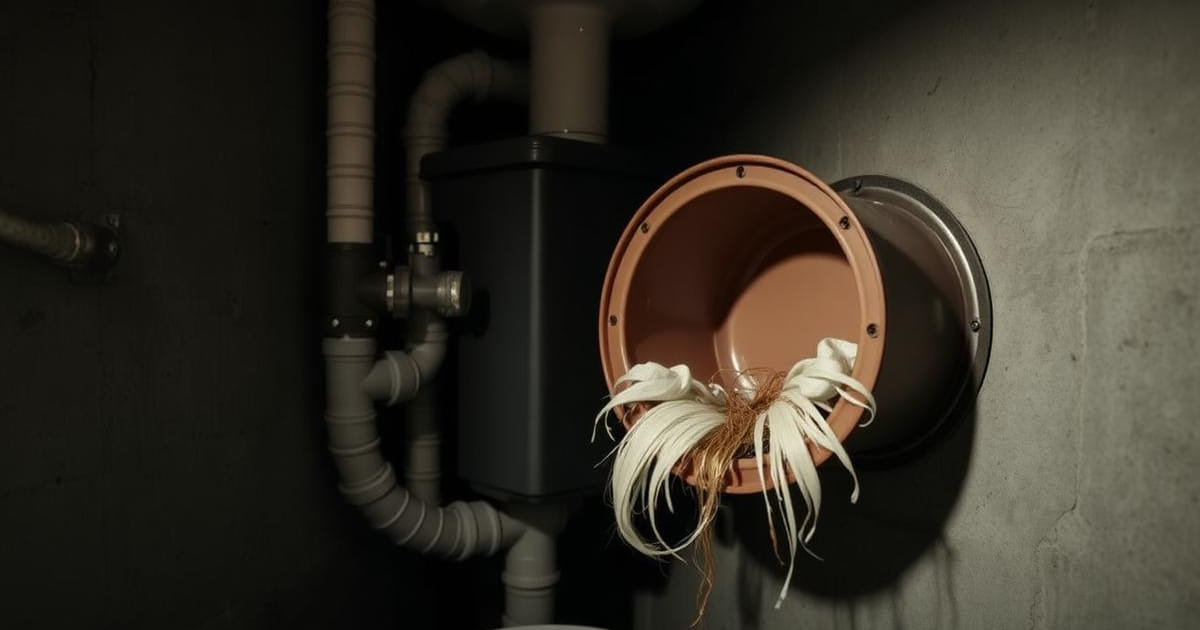
In many homes in Funchal, Câmara de Lobos and Caniço, the basement, annexe or ground-floor bathroom sits below the level of the public sewer. There, discharge is not gravity-driven: it depends on a macerator pump (or a submersible sump pump) that cuts solids and lifts them under pressure to the riser. It is reliable equipment — as long as nobody treats it as a bin. This guide explains what causes blockages, how to clear them without damaging the motor, and which maintenance prevents burnout in the middle of the short-term rental high season.
🔧 How a Pumped Drainage System Works
1) The toilet and shower discharge into a small sealed tank with a level sensor. 2) At the trigger level the motor starts and a steel blade macerates solids into a fine slurry. 3) The pump lifts the effluent through a small-bore pipe (28 to 40 mm) to the riser or sewer. 4) A non-return valve stops effluent falling back into the tank when the pump stops. 5) Carbon-filtered venting prevents negative pressure and odour on start-up. 6) In submersible sump pumps there is no fine maceration: they rely on solids passage and are more sensitive to rags and wipes.
🚫 What Actually Blocks a Macerator
1) Wet wipes, even those labelled "biodegradable": they do not break down in water and wrap around the shaft. 2) Hair and dental floss, forming a tough braid around the blade. 3) Cotton buds, condoms and feminine hygiene products. 4) Kitchen grease discharged into the same circuit, solidifying in the chamber and gluing debris together. 5) Grit, building debris and cement — the most destructive cause, because it wears the impeller. 6) Limescale from Madeira's hard water, reducing blade clearance and overloading the motor.
🔍 Symptoms and Step-by-Step Diagnosis
1) The motor starts and runs longer than usual: the first loss of performance. 2) Humming without discharge: the motor turns but the impeller is blocked or the blade jammed. 3) Repeated starts with no toilet discharge: dirty non-return valve or obstructed rising pipe. 4) Water rising in the shower tray when the toilet flushes: high tank level, pump losing flow. 5) Persistent odour: saturated carbon filter or a poorly sealed lid. 6) Breaker tripping: motor under strain, failing start capacitor or mechanical jam — isolate the supply and do not keep trying.
🛠️ Safe Unblocking and Technical Cleaning
1) Mandatory first step: isolate the electrical supply at the breaker — never open the unit live. 2) Shut off the water and empty the tank with a hand pump or wet vacuum. 3) Open the inspection port and remove, with gloves, the mass of wipes and hair wrapped around the shaft. 4) Strip the body, clean the blade and impeller and check clearances and wear. 5) Descale with a product designed for macerators, never with aggressive acids that attack seals and the plastic body. 6) Clean the non-return valve and check the rising pipe — the blockage is often in the pipe, not the pump.
🚨 Fault Alarms and Recommended Protection
1) Fit an audible and visual high-level alarm: it warns before the overflow, not after. 2) In basement and annexe bathrooms the alarm should be visible outside the room. 3) For short-term rentals we recommend a module with dry contact or a phone notification to the manager. 4) An additional non-return valve on the riser, to stop sewer backflow during heavy rain. 5) A floor moisture sensor next to the pump for early detection of tank leaks. 6) A discreet sign in the bathroom: "no wipes down the toilet" dramatically reduces emergency calls.
🛡️ Preventive Maintenance and Good Practice
1) Annual descaling and technical cleaning in domestic use; every six months in rentals and catering. 2) Check the carbon filter and lid seals at every visit. 3) Never discharge grease, solvents or building products into the circuit. 4) During long vacancies, run water weekly to stop solids drying out and causing odour. 5) Log the service date and the run time per flush — the trend reveals wear before failure. 6) Want macerator maintenance or unblocking in Madeira? Message us on WhatsApp.
FAQ
Can I use chemical drain cleaner in a macerator pump?
No. Caustic products attack seals and the plastic body and do not dissolve wipes. The blockage is mechanical and is solved by opening and cleaning.
How long does a sanitary macerator last?
With correct use and regular maintenance, 8 to 12 years. With wipes and no descaling we see burnt motors in 2 to 3 years.
What is the difference between a macerator and a sump pump?
A macerator cuts solids before pumping and uses small-bore pipe. A sump pump is submersible, relies on solids passage and uses larger pipe — typical of drainage and stormwater chambers.
Is a fault alarm mandatory?
Not mandatory, but it is the best value protection available: it prevents wastewater overflows in basements and damage far exceeding the cost of the module.
Macerator jammed, humming or overflowing in the basement? Message us on WhatsApp.
We work in Funchal, Câmara de Lobos, Caniço, Santa Cruz, Machico, Ribeira Brava, Ponta do Sol, Calheta, Santana, São Vicente and across Madeira Island.