Thermal Crossover in Plumbing: Hot Water Coming Out in the Toilet Cistern or Washing Machine
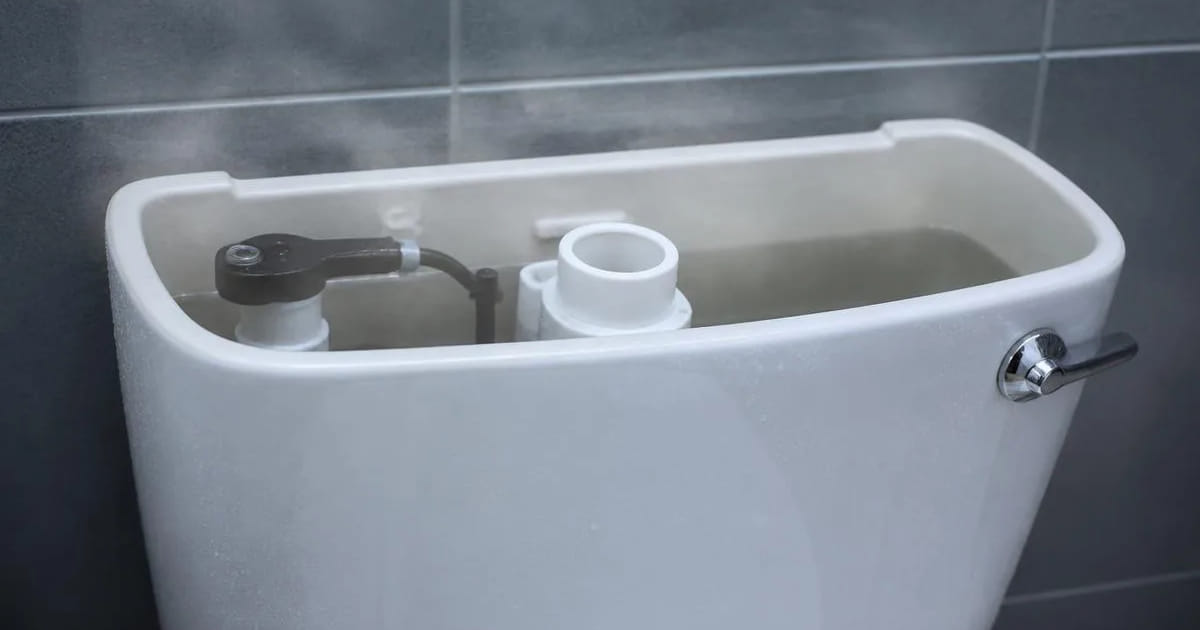
One fault confuses almost everyone because it shows up where nobody expects it: the toilet cistern fills with warm or hot water, the kitchen cold tap runs lukewarm after a few seconds, and the washing machine takes hot water on a cold programme, shrinking or fading the laundry. It is neither imagination nor an appliance defect: it is thermal crossover, also called hot water backflow. It means heated water from the cylinder or heat pump is being pushed into the home's cold water network. At Canalizador Funchal® we tackle this with differential pressure measurement, because only that identifies the exact point where the two circuits communicate.
🌡️ The Symptom: Warm Water Where It Should Be Cold
The picture is consistent and worsens over time. 1) The cistern fills with warm water and the ceramic lid shows condensation on the outside. 2) The cold tap runs lukewarm in the first seconds, especially after someone has showered. 3) The washing machine or dishwasher takes hot water on cold programmes, with oddly low electricity use. 4) Cold water only cools down after running for a long time. 5) The cylinder reheats far more often than actual consumption justifies, because it loses heat into the cold network. 6) Small ticking noises come from embedded pipework, caused by thermal expansion in pipes that should be cold. 7) In peak months the energy bill rises with no change in habits.
🔁 The Technical Cause: Backflow Between Hot and Cold
Thermal crossover is always a matter of pressure and non-return protection. 1) As water heats inside the cylinder it expands and raises the hot circuit pressure above that of the cold circuit. 2) If the check valve in the safety group is faulty, scaled up or simply absent, that pressure pushes hot water backwards into the cold network. 3) The same happens with heat pumps and solar thermal systems, where daily thermal expansion is even greater. 4) A second very common cause is single-lever or thermostatic mixers with a worn cartridge: internally they stop sealing and create a direct hot-cold connection inside the tap body. 5) Old concealed shower valves and bidet mixers are classic points for this internal communication. 6) Badly executed connections during refurbishment — a hot branch wrongly joined to a cold branch — produce the same effect permanently. 7) The absence of a potable expansion vessel makes everything worse, as there is nowhere to absorb the increased volume of heated water.
⚠️ Damage and Risks: Seals, Laundry and Energy
This is not just discomfort: it carries real material cost. 1) Cistern seals and the fill valve are not made for hot water; they deform and leak continuously into the pan. 2) The plastic of the flush mechanism becomes brittle and cracks, forcing premature replacement. 3) Laundry washed cold with hot water shrinks, fades and loses elasticity in technical fibres. 4) Appliances with a cold-only inlet can suffer damage to solenoid valves and temperature sensors, voiding warranties. 5) Energy waste is high: the appliance constantly reheats water that is escaping into the cold network. 6) Cold pipework undergoes thermal cycles it was never sized for, accelerating fatigue in joints and fittings. 7) Where heated water stagnates in the cold network, the thermal environment also becomes unfavourable from a hygiene standpoint.
🔎 Diagnosis: Differential Pressure Test with a Dual Gauge
Finding the crossover requires method, not trial and error. 1) We close the cylinder supply and check whether the symptom disappears — the first filter separating appliance from tap. 2) We fit gauges on hot and cold circuits and compare static pressures at rest and after a heating cycle. 3) A difference that equalises on its own over time indicates passage between circuits. 4) We isolate point by point: closing each tap's service valve and repeating the reading until the symptom stops. 5) We use a contact thermometer or thermal camera on the pipework to follow the heat path inside the wall. 6) We check the safety group, the expansion vessel and the incoming mains pressure. 7) We record values before and after the work, as documented proof of the fix.
🛠️ Professional Technical Fix: Effective Non-Return at the Right Points
The repair restores one-way flow. 1) We replace the cylinder safety group with a new unit including check valve, calibrated safety valve and accessible drain. 2) We fit high-integrity check valves at the relevant isolation points, sized for low pressure loss. 3) We install or replace a correctly pre-charged potable expansion vessel to absorb thermal expansion without pressurising the network. 4) We repair or replace single-lever and thermostatic cartridges that are communicating internally. 5) We correct swapped connections on badly executed branches, with clear hot and cold identification. 6) We adjust incoming pressure with a reducing valve to keep a stable balance between circuits. 7) We finish with a new differential pressure test and temperature checks at every cold outlet in the property.
🚫 Mistakes to Avoid
These approaches only delay or worsen the problem. 1) Do not blame the appliance or replace the machine before testing the network. 2) Do not just swap the cistern mechanism: without removing the cause, the new one deforms too. 3) Do not fit cheap, oversized check valves that seize with scale within months. 4) Do not add non-return protection without an expansion vessel: the system becomes closed and pressure spikes on every heating cycle. 5) Do not disable the safety group's relief valve to stop dripping — it is a mandatory protection device. 6) Do not ignore mild symptoms: a small crossover always worsens as the cartridge wears. 7) Do not close out the job without measuring real temperatures at all cold outlets.
🗓️ Prevention in Madeira: Equipment, Pressure and Maintenance
The local context makes maintenance even more worthwhile. 1) Widespread heat pumps and solar thermal on the island increase daily thermal expansion and demand well-sized non-return and expansion protection. 2) Moderately hard water encourages old check valves to seize — they must be checked periodically. 3) In buildings with unbalanced pressures between risers, a reducing valve is essential to prevent backflow. 4) In short-term rentals the symptom goes unnoticed by the owner and is reported late by guests: preventive inspection pays off. 5) After any bathroom or kitchen refurbishment, circuit separation should be verified. 6) We recommend annual checks of the safety group, expansion vessel pre-charge and the cartridges of the most used mixers. 7) Our maintenance plans include these tests, avoiding inflated energy bills that go unexplained for months.
FAQ
Why does hot water come out of a cold tap?
Because the two circuits are connected somewhere: usually a failed check valve in the cylinder safety group or a worn mixer cartridge. Hot circuit pressure, higher after heating, pushes water into the cold network.
Does hot water in the cistern damage anything?
Yes. Seals and the fill valve deform with heat and start leaking into the pan, causing continuous consumption. The plastic flush mechanism also becomes brittle and fails early.
Is fitting a check valve enough?
Only if the cause really is the appliance's non-return and a suitable expansion vessel exists. Closing the system with a check valve without absorbing expansion makes pressure spike on every heating cycle. That is why we test first.
How do I know if it is the tap or the cylinder?
By closing the cylinder supply and testing again. If the symptom disappears, the cause is the appliance or its safety group; if it persists, we look for the mixer communicating internally.
Hot water where it should be cold? Talk to us on WhatsApp.
We work in Funchal, Câmara de Lobos, Caniço, Santa Cruz, Machico, Ribeira Brava, Ponta do Sol, Calheta, Santana, São Vicente and across Madeira island.