Submersible Pumps for Sewage and Flooding: How to Choose and Install Them Properly
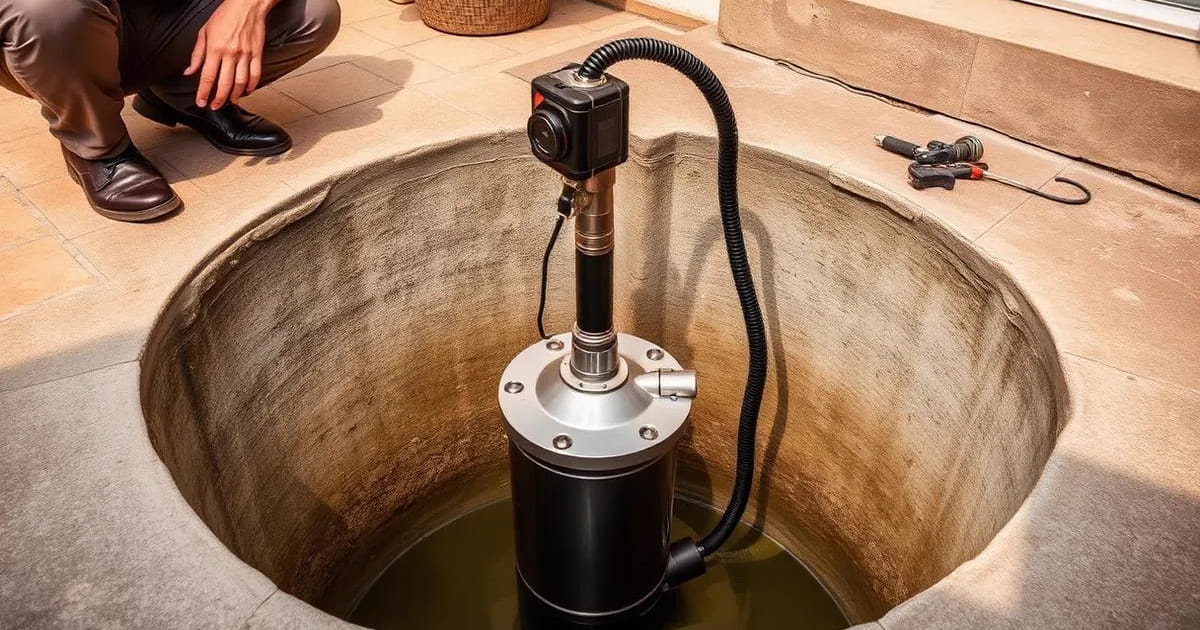
In Madeira, basement garages, hillside house cellars, ground floors below street level and terraces with poor drainage all depend on the same piece of equipment: a submersible pump. Chosen and installed well, a downpour becomes a non-event. Undersized, with the wrong float or no check valve, the result is water indoors at exactly the worst moment. This guide explains how to choose and install correctly.
💧 Three Pump Families and What They Are For
1) Clean-water pumps: for rainwater, seepage or tank water, they pass only very small solids (about 5 mm) and are the right choice for garages and drainage sumps. 2) Solids-handling pumps: larger free passage (20 to 50 mm), tolerating silt, leaves and sand, suited to stormwater chambers and plant rooms. 3) Grinder pumps: they cut solids and paper before pumping, and are mandatory where a toilet, shower or basin sits below the sewer invert. 4) Vortex pumps: the recessed impeller creates a whirl and lets solids pass without direct contact, ideal for fibrous wastewater. 5) Materials: stainless steel or cast iron bodies last far longer in a marine environment than technical plastics. 6) Never use a clean-water pump on foul drainage: it blocks within a week. 7) Never use a grinder pump on sandy rainwater: the cutter wears out for nothing.
📐 Sizing Flow and Total Head
1) You need two figures: flow (m³/h or L/min) and total head (metres of water column). 2) Total head adds the real level difference, pipework losses and the residual pressure needed at the discharge point. 3) 90° bends, narrow hoses and long runs consume useful head and cut effective flow. 4) A classic mistake is reading only the catalogue maximum flow, which applies at zero head — a condition that never exists in practice. 5) In garages we size for the known worst case: local rainfall intensity and the area draining into the sump. 6) For emergency drainage, build in redundancy: two alternating pumps on a dedicated panel. 7) The discharge pipe must be equal to or larger than the pump outlet, never smaller.
🔌 Floats, Control and Electrical Safety
1) A magnetic float switch is the most reliable control in narrow pits: far less prone to jamming than a tethered float. 2) The float sets start and stop levels — badly set, it makes the pump run dry or never stop. 3) Allow enough slack for the float cable to move freely, clear of the pit wall. 4) On critical installations, add a high-level alarm float wired to a siren or phone alert. 5) Always supply via a dedicated 30 mA RCD with overload protection; never temporary extension leads. 6) Keep electrical connections outside the pit, in a sealed enclosure, with no submerged joints in the cable. 7) Three-phase pumps need rotation direction checked: reversed, flow halves with no obvious symptom.
🛠️ Discharge Pipework and Check Valve
1) The vertical discharge needs a check valve immediately above the pump, so the water column cannot fall back into the pit. 2) Without it, every stop returns water to the pit and the pump restarts — short cycling that burns the motor. 3) Above the valve, a union coupling lets the pump be lifted without cutting pipe. 4) An isolating valve (ball or gate) makes maintenance and testing straightforward. 5) The high point of the discharge should sit above possible sewer backflow level, forming an anti-backflow loop. 6) Avoid permanent flexible hose: it collapses, kinks and reduces flow; use pressure PVC or HDPE. 7) Provide drain-down points and access for cleaning: what cannot be inspected eventually fails without warning.
🏝️ Madeira Reality: Slopes, Downpours and Backflow
1) Island rainfall is concentrated: within minutes a garage ramp channels an enormous flow to the lowest point. 2) In areas such as São Martinho, Santo António, Caniço or Machico we regularly find cellars below sewer level — pumping is structural, not an accessory. 3) Sand and soil washed off the slopes call for a sump with a settling zone and periodic cleaning. 4) We always pair pumping with a backwater valve on the connection, to stop the public sewer backing up in heavy rain. 5) In holiday rentals a pump failure is a claim with guests inside: preventive maintenance is worth far more than the repair. 6) Power cuts coincide with storms: high-risk properties should plan alternative supply. 7) Keep photographic records of installations and maintenance — it helps in insurance claims.
✅ Maintenance and Testing Before the Rainy Season
1) Manually test the pump at the start of autumn by filling the pit and watching start and stop. 2) Clean the suction strainer and remove silt and leaves from the pit floor. 3) Check that the check valve seals: hearing water fall back means a worn valve. 4) Confirm the float moves freely and no debris is caught on its cable. 5) Inspect the cable for damage and test the RCD with its test button. 6) Time the emptying cycle and compare with last year: slower means wear or partial blockage. 7) Replace pumps over 8 years old in critical service as a precaution. Need a pump installed or serviced? Send WhatsApp photos of the pit and discharge.
FAQ
What is the difference between clean-water and solids-handling pumps?
Clean-water pumps pass only very small solids and suit rainwater and seepage. Solids-handling pumps have a 20 to 50 mm free passage and tolerate silt, leaves and sand, typical of stormwater chambers.
When is a grinder pump mandatory?
Whenever a toilet, shower or basin sits below sewer invert level. The grinder reduces solids and paper before pumping, preventing blockages in a small-diameter discharge pipe.
Why does my pump start and stop within seconds?
Usually there is no check valve, or it is worn, so water in the discharge column returns to the pit and raises the level again. A float set with too small a level difference causes the same effect.
Does a pump make a backwater valve unnecessary?
No. They do different jobs: the pump lifts water, while the backwater valve stops the public sewer flowing back into the property in heavy rain. In basements we always recommend both.
Basement or garage at risk of flooding? Message us on WhatsApp.
We work in Funchal, Câmara de Lobos, Caniço, Santa Cruz, Machico, Ribeira Brava, Ponta do Sol, Calheta, Santana, São Vicente and across Madeira Island.