Single-Flow vs Double-Flow Ventilation: Which Is Best for Madeira Apartments?
When deciding to fit controlled mechanical ventilation in an apartment, the first technical question is always the same: single flow or double flow? The honest answer is that it depends on the building, the budget and the available ceiling void — no system is universally better. In Madeira's climate, with high outdoor humidity and little heating demand, the decision criteria differ from mainland Europe. This article compares flow rates, consumption, noise and real moisture removal, applied concretely to bathroom and kitchen refurbishments.
🌀 How Each System Works
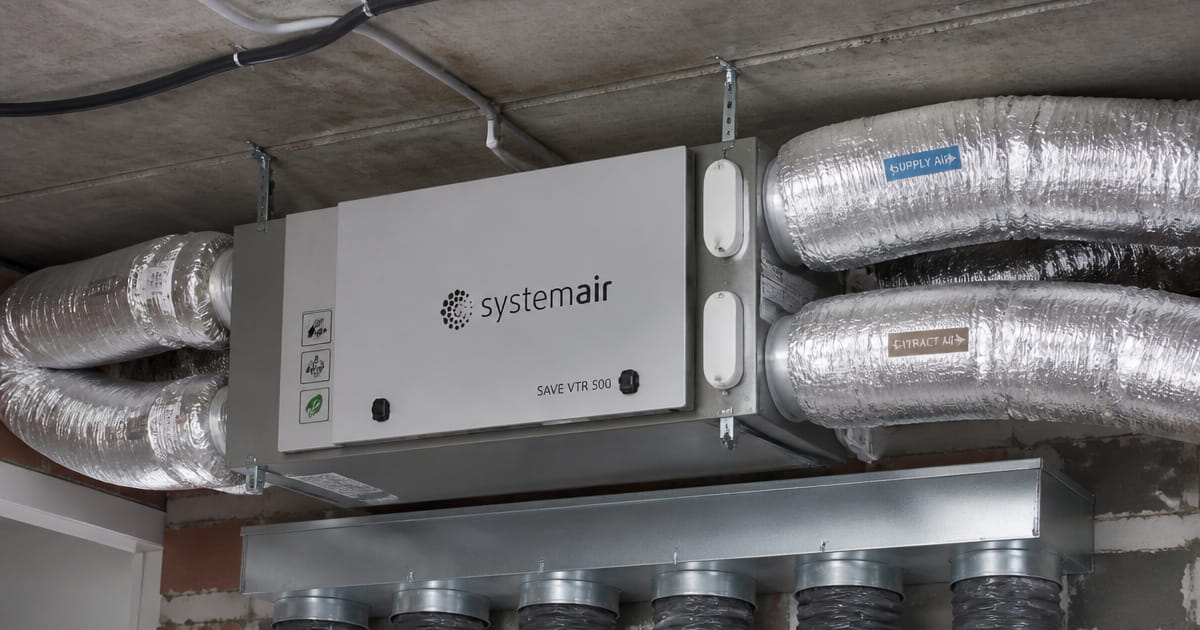
1) In single flow, fans extract air from wet rooms — bathroom, kitchen, laundry. 2) Fresh air enters through inlet grilles in windows or walls of bedrooms and the living room. 3) Air travels from dry to wet rooms, stopping odours and vapour from spreading. 4) In double flow there are two networks: one supplies filtered air to bedrooms and living room, the other extracts from wet rooms. 5) The central unit houses a heat exchanger where extracted air warms incoming air without mixing. 6) Double flow is a balanced, closed system; single flow relies on airtightness and inlets.
📊 Flow Rates in m³/h: What Practice Says
1) Bathroom: 60 to 90 m³/h intermittent extract, or 15 to 30 m³/h continuous with a boost peak. 2) Kitchen: 90 to 135 m³/h general extract, plus the hob hood, which is separate equipment. 3) Bedrooms on double flow: 22 to 30 m³/h supply per room depending on occupancy. 4) Overall useful flow is around 0.5 air changes per hour of habitable volume in steady state. 5) In humidity-controlled single flow, the terminals open with RH and flow self-adjusts to real activity. 6) Without anemometer measurement at the grille, all these figures are just theory.
⚡ Energy Consumption and Heat Recovery
1) A modern single-flow unit with an EC motor typically draws 8 to 25 W running continuously. 2) A residential double-flow unit typically draws 20 to 60 W, with two fans and more duct pressure loss. 3) Double flow recovers 70% to 90% of the sensible heat in extracted air. 4) In Madeira, with mild winters, that recovery is worth far less than in northern Europe. 5) The real gain here is comfort, filtration and the absence of cold draughts. 6) In apartments using air conditioning in summer, recovery also cuts the cooling load.
🔇 Noise in dB(A): The Acceptance Criterion
1) The target in bedrooms is under 30 dB(A), ideally near 25 dB(A) at night. 2) In single flow, noise concentrates at the extract terminals and the fan. 3) In double flow, noise comes from the central unit and travels along ducts without silencers. 4) Flexible silencers, gentle bends and air velocity under 3 m/s in ducts are decisive. 5) Undersized grilles whistle: the problem is rarely the fan, it is the free area. 6) Anti-vibration mounting of the unit prevents structural noise transmitted to the neighbour's slab.
💧 Real Moisture Removal Efficiency
1) To remove vapour, continuous flow in wet rooms matters more than peak power. 2) Humidity-controlled single flow is very effective at this and far simpler to install. 3) Double flow adds control of incoming air: filtered and tempered, avoiding RH spikes in bedrooms. 4) In a humid climate, supplying untreated outdoor air at 85% RH can erode the benefit. 5) Units with an enthalpy exchanger also transfer part of the moisture, which helps here. 6) In both cases extraction must run 24 hours at base flow: switching it off at night cancels the effect.
🚿 Practical Application in Bathroom and Kitchen Refurbishments
1) In an occupied apartment, single flow is almost always the realistic route: it uses existing ventilation risers. 2) The bathroom refurbishment chases are used to run rigid 100 to 125 mm duct to the riser. 3) Double flow needs a false ceiling or at least 25 to 30 cm of free height in a corridor for ducts and plenums. 4) It makes sense in full renovations, new builds or apartments with generous ceiling height. 5) Never connect the kitchen hood to the ventilation extract riser: flows and grease are incompatible. 6) Want to know which is feasible in your apartment? Message us on WhatsApp for an on-site assessment.
FAQ
Which is cheaper to install?
Single flow, by a wide margin. It uses one extract network, fewer ducts and often reuses existing risers. Double flow costs more in equipment and above all in labour and false ceilings.
Is double flow worth it in Madeira's climate?
Mainly for filtration, control of incoming air and acoustic and thermal comfort. Heating savings are modest here, so the decision should rest on comfort and air quality.
Can I fit ventilation without a ventilation riser?
Yes, using decentralised wall units or individual extraction through the facade. That is the typical solution in older apartments with no shared duct.
How often is maintenance needed?
Grille cleaning every 3 to 6 months, filter replacement on double flow every 6 to 12 months, and flow verification with an anemometer at least every 2 years.
Want properly sized mechanical ventilation in your apartment? Message us on WhatsApp.
We work in Funchal, Câmara de Lobos, Caniço, Santa Cruz, Machico, Ribeira Brava, Ponta do Sol, Calheta, Santana, São Vicente and across the whole island of Madeira.