Shower Tray Smell Only When the Bathroom Extractor Runs: Vacuum Effect and Siphonage
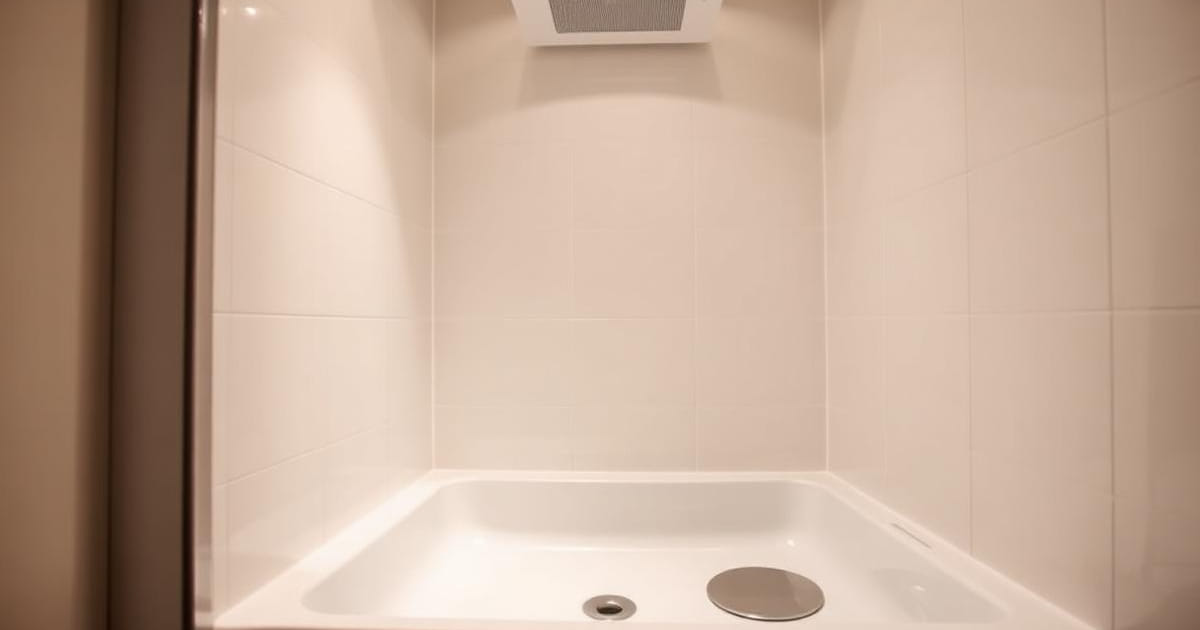
It is one of the most misread diagnoses we meet in Funchal: the bathroom is clean, the drain was cleared recently, yet the moment the extractor starts, sewer odour appears at the shower tray. The cause is not hygiene — it is physics. A mechanical extractor in a room with no compensating air inlet creates negative pressure and draws air from the path of least resistance: the drainage pipework, through the waste. This guide explains how to confirm the vacuum effect, tell siphonage from an evaporated water seal, and fix it permanently.
🌀 The Physics of the Vacuum Effect in a Bathroom
1) A typical bathroom extractor moves 80 to 150 m³/h of air. That volume has to come in somewhere. 2) Sealed doors, tight thresholds and sealed PVC windows remove the traditional air paths. 3) With no compensating inlet, the room drops into a negative pressure of a few pascals. 4) Air is then sucked in by the easiest route: the shower tray waste, if the water seal is shallow or the membrane absent. 5) In the low-profile traps of shower trays, the seal is 20 to 30 mm — not enough to resist that pressure difference. 6) The result: the extractor stops expelling odour and starts pulling it in from the sewer.
🔍 How to Confirm the Diagnosis in 5 Minutes
1) Paper test: with the extractor running, hold a paper strip near the waste — if it is pulled in, air is being drawn through the drain. 2) Door test: open the door 5 cm and run the extractor. If the odour vanishes, the vacuum effect is confirmed. 3) Water test: fill the trap with 2 litres. If odour only returns with the extractor on, it is pressure, not evaporation. 4) Check whether the odour is also noticed at the toilet or basin — if so, the stack venting is the issue. 5) No odour with the extractor off for 24 hours closes the diagnosis. 6) Gurgling at the waste when neighbours discharge indicates insufficient stack ventilation.
💧 Siphonage, Evaporation and Lost Water Seals
1) Induced siphonage: a heavy discharge in the stack drags air along and pulls water out of your trap. 2) Pressure siphonage: the extractor does the same thing, continuously and silently. 3) Evaporation: in lightly used showers the seal disappears within 2 to 3 weeks in Madeira. 4) Low-profile traps, mandatory in shower trays, are the most vulnerable to all three mechanisms. 5) Wastes connected to a bend instead of a real trap — common in older works — have no seal at all. 6) A lost water seal combined with negative pressure is the exact recipe for permanent odour.
🛠️ Technical Solution: Dry Trap with Non-Return Membrane
1) Fit a dry trap with a silicone membrane or a magnetic non-return air valve: it seals by elasticity or magnet, even without water. 2) The membrane opens under the weight of discharged water and closes immediately, blocking sewer air. 3) Compatible with the shallow profile of shower trays, in many cases with no floor work. 4) On existing trays, an insert model fits inside the current waste body. 5) Choose material resistant to cleaning products and hard water — quality silicone lasts 5 to 8 years. 6) Final check with the extractor running and the paper test repeated.
🌬️ Balancing Bathroom Ventilation
1) The complete solution needs an air inlet: a door grille, a 10 to 15 mm undercut, or a self-regulating façade inlet. 2) Size the extractor to the real room volume: 6 to 8 air changes per hour, not the most powerful model in the shop. 3) Humidity-sensing (RH) extractors avoid unnecessary continuous running. 4) Check the duct: long, crushed ducts or a blocked external grille increase local negative pressure. 5) Never connect a bathroom extractor to the drainage or vent stack — an error we see often. 6) In flats with communal ventilation, confirm the shared duct valve is not blocked.
🛡️ Prevention and Maintenance
1) Pour 2 litres of water weekly into lightly used showers and floor wastes. 2) Clean the extractor filter and blades once or twice a year — dirt reduces flow and increases strain. 3) Annual check of the non-return membrane: remove, wash and confirm elasticity. 4) In short-term rentals, check after long vacant periods. 5) Never fully seal a bathroom door where a mechanical extractor is fitted. 6) Want the shower odour solved for good? Message us on WhatsApp.
FAQ
Why does it only smell when the extractor is on?
Because the extractor creates negative pressure and, with no air inlet, pulls sewer air through the waste. With the fan off the pressure difference vanishes and so does the odour.
Is topping up the trap with water enough?
Only temporarily. If the negative pressure remains, the shallow water seal is overcome again. The stable fix is a non-return membrane plus an air inlet.
Should I buy a more powerful extractor?
Usually not. Increasing airflow without an inlet worsens the vacuum effect. Balance the air supply first, then reassess the flow rate.
Does a non-return membrane slow the shower drainage?
In quality models the reduction is marginal and unnoticeable in normal use. Cheap models with rigid membranes can restrict flow — which is where technical selection matters.
Sewer smell in the shower whenever the extractor runs? Message us on WhatsApp.
We work in Funchal, Câmara de Lobos, Caniço, Santa Cruz, Machico, Ribeira Brava, Ponta do Sol, Calheta, Santana, São Vicente and across Madeira Island.