Sewer Smell in the Bathroom? Why Secondary Ventilation Matters
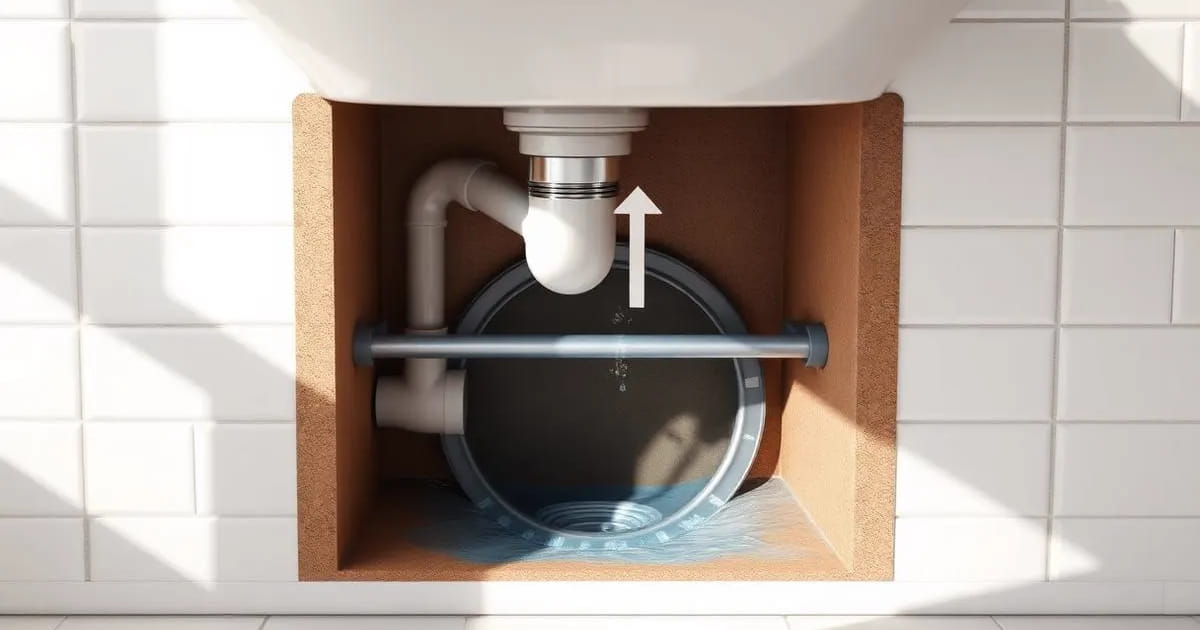
A sewer odour in the bathroom is a common complaint across Madeira. Owners usually assume a broken pipe or a badly sealed toilet, but the real cause is often an invisible engineering fault: missing or failed ventilation on the drainage stack.
💧 The Water Seal Is Your Only Barrier
1) The water seal is the water held at the bottom of traps, floor gullies and toilets. 2) It is the only physical barrier stopping sewer gases entering the home. 3) A healthy seal is typically 50 to 60 mm deep. 4) Losing just a few centimetres is enough for odour to pass. 5) If the smell comes and goes in cycles, the cause is almost always air pressure — not dirt.
🌀 Vacuum and Trap Siphonage
When the system has no vent to the roof and no air admittance valve: 1) Flushing a toilet upstairs sends a large mass of water down the main stack. 2) With no air entering from above to balance pressure, the falling water acts like a syringe plunger and creates a vacuum behind it. 3) That vacuum literally sucks the water out of the basin, shower or bidet traps on the floors below. 4) The pipe is left open and sewer gases pass freely. 5) The classic symptom is gurgling drains seconds after someone flushes on another floor.
🚩 Other Common Causes of Seal Loss
1) Guest bathrooms or holiday rentals left unused: trap water evaporates within weeks. 2) Floor gullies and trapped chambers with no maintenance. 3) Bottle traps dismantled during renovation and badly reassembled. 4) Washing machines connected straight into the pipe with no dedicated trap. 5) Roof vent terminal blocked by bird nests, leaves or paint.
🎯 The Definitive Technical Fix
To restore pressure balance and remove the odour for good, Canalizador Funchal® first confirms the diagnosis: we refill every trap, trigger flushes on the upper floors and watch which fixture loses its water seal. Once siphonage is confirmed, we fit air admittance valves (AAVs) — compact mechanical devices that let air in under suction and seal shut to block odours — at the high point of the branch, above the flood level and in a ventilated, accessible position. In parallel we clear the roof vent terminal and, where needed, correct branches with excessive fall or missing traps. Where the odour is structural, a camera inspection confirms whether the stack also has an open joint or cracked pipe.
🚫 What to AVOID
1) Do not cover drains with plastic or silicone: it hides the odour and worsens the vacuum. 2) Do not pour bleach down the drains expecting a fix — the problem is air, not bacteria. 3) Do not seal the top of the roof vent. 4) Do not install AAVs inside closed, inaccessible walls. 5) Do not replace traps with plain bends during renovation.
🧰 Preventive Maintenance
1) Run water through rarely used drains and basins every 1 to 2 weeks. 2) In holiday rentals, add this check to the cleaning routine between guests. 3) Clean floor gully traps twice a year. 4) Inspect the roof vent terminal annually. 5) Test fitted AAVs: odour near the valve means the seal is worn and it needs replacing.
FAQ
The smell only appears when the neighbour upstairs flushes. Why?
That is the clearest sign of siphonage from missing ventilation: the upstairs flush creates a vacuum in the stack and pulls the water out of your trap. The fix is to admit air into the system, usually with an air admittance valve on your branch.
Does an air admittance valve replace the roof vent pipe?
It solves local siphonage in nearly every flat and house, but it does not replace a building's primary stack ventilation. We assess case by case and, in apartment blocks, recommend keeping or restoring the vent up to roof level.
Sewer smells at home or in your building? We diagnose the ventilation and fix it without breaking walls.
We work in Funchal, Câmara de Lobos, Caniço, Santa Cruz, Machico, Ribeira Brava, Ponta do Sol, Calheta, Santana, São Vicente and across Madeira island.