Sewer Inspection Chambers and Grease Separators: Maintenance and Installation Guide
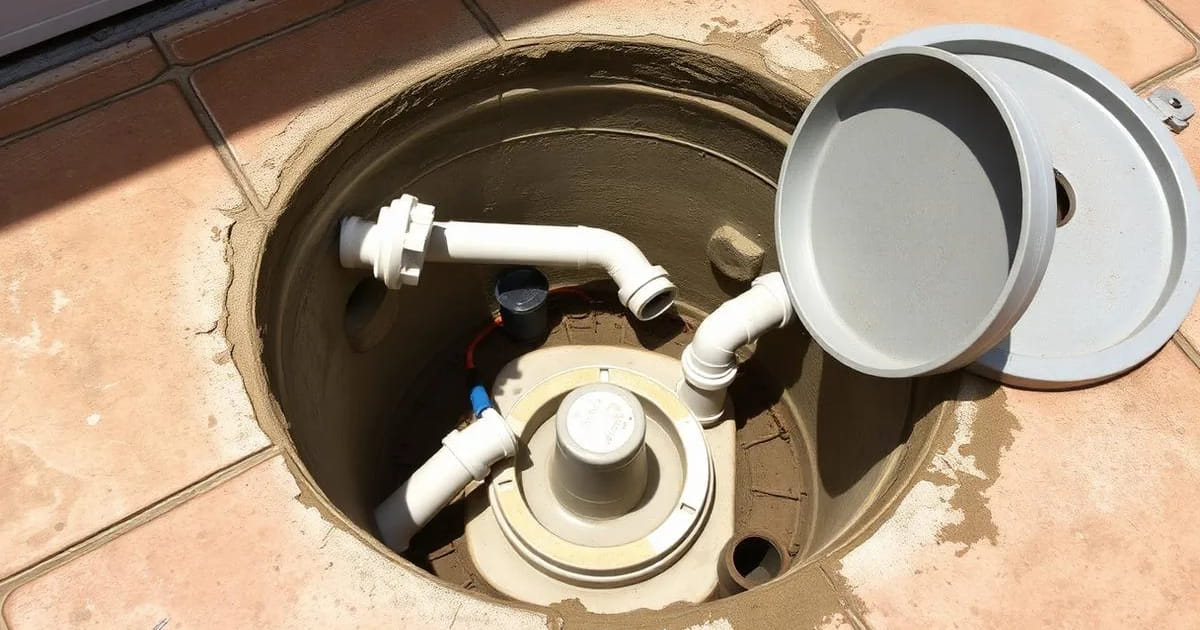
Two invisible components decide whether a blockage is cleared in twenty minutes or requires breaking floors: the inspection chamber and the grease separator. The first gives access to the network without building work; the second stops kitchen grease from reaching pipes and septic tanks. In houses across Funchal, Caniço and Santa Cruz — and especially in holiday rentals with heavy kitchen use — these two items are the border between planned maintenance and chaotic emergency.
🧱 What an Inspection Chamber Is and Does
1) An inspection chamber (or manhole/branch chamber) is an access point to the drainage network, where several branches meet a single outlet. 2) It lets us insert an electric auger, a locator rod or an inspection camera without opening pipework. 3) It also handles direction changes: instead of tight bends buried in walls or slabs, the change happens somewhere accessible. 4) The base should have a shaped benching that guides flow without creating stagnation. 5) The cover must be odour-tight and rated for the expected load — pedestrian or vehicle. 6) Common materials: prefabricated PVC/PP for homes and concrete for larger or street chambers. 7) Rule of thumb: a chamber at every significant direction change, at every branch junction and at regular intervals along long runs.
💧 The Water Seal: Why Bad Smells Appear
1) Sewer odour only enters a building when the water barrier between network and room is missing. 2) In trapped gullies and trapped branch chambers, that barrier is a chamber holding a permanent water level. 3) The seal is lost by evaporation in rarely used areas, by suction when the stack lacks venting, or by an incorrectly built benching. 4) Plain inspection chambers are not trapped: placed indoors or in garages without an airtight cover, the odour escapes. 5) In Madeira, with heavy rain and undersized stacks, pressure swings inside the pipe literally pull water out of the trap. 6) The fix is rarely chemical: restore the water level, ensure an airtight cover and check stack ventilation. 7) Where water cannot be held, membrane anti-odour valves are used, always in an accessible position.
🍳 Grease Separators: How They Work
1) The separator uses density differences: grease floats, solids settle, and water leaves at an intermediate level. 2) Internal plates or compartments slow the flow down — no retention time, no separation. 3) Sizing depends on flow and kitchen type: a family home differs from a holiday rental cooking daily, or from a restaurant. 4) It is fitted as close to the source as possible, downstream of the sink and dishwasher, but never on the bathroom foul branch. 5) Installation requires clear access for cleaning and adequate ventilation. 6) An undersized separator fills quickly, loses efficiency and returns grease into the network. 7) A separator never cleaned is worse than none: it becomes a septic tank with concentrated odour.
🗓️ Realistic Maintenance Intervals
1) Family home with normal cooking: six-monthly check and annual cleaning. 2) Holiday rental with guest cooking: quarterly check and six-monthly cleaning. 3) Professional kitchen: monthly cleaning or by level indicator, with written records. 4) Outdoor inspection chambers: visual check twice a year, especially before autumn, when Madeira rains carry leaves and sand. 5) Correct cleaning removes the grease layer and bottom sediment, then restores the water level. 6) Grease waste must be handled as waste, never tipped into the downstream network. 7) We recommend photographing each cleaning: in condominiums and insurance claims, records are what carry responsibility.
🚫 Installation Mistakes We See Often
1) Chambers sealed with cement and then tiled over — they force demolition at the first emergency. 2) Connecting rainwater to foul chambers: in heavy rain the chamber overflows. 3) Fitting a grease separator without ventilation, causing pressure issues and odours. 4) Undersized chambers for the number of branches, creating turbulence and sedimentation. 5) Flat bases where solids stop instead of flowing. 6) Non-airtight covers indoors or in garages. 7) Reverse fall between chamber and outlet caused by ground settlement — very common on the island's slopes and detectable by camera survey.
✅ Best Practice and Prevention Plan
1) Map and mark every chamber location: a simple sketch saves hours in an emergency. 2) Keep covers accessible, free of furniture, planters or bonded flooring. 3) Never pour oils and fats down the sink — collect and take them to a recycling point. 4) Fit a sink strainer and, in holiday rentals, a multilingual waste notice. 5) In heavy-use kitchens, run periodic hot water flushes with a degreasing detergent. 6) Schedule a camera survey every 2 to 3 years in homes with a blockage history. 7) Bundle all of it into an annual maintenance plan. Want your network assessed? Send WhatsApp photos of the chambers and separator and we will advise the right interval.
FAQ
Do I really need a grease separator in a private house?
It is not mandatory everywhere, but it is strongly advisable with heavy kitchen use, with a septic tank, or where blockages have already happened. It protects pipework and the tank and greatly reduces emergency risk.
The chamber in my patio smells. What should I do?
Start by checking the cover and whether the trapped chamber still holds water. Odour usually comes from a non-airtight cover, a dry trap or missing stack ventilation. Chemicals only mask the symptom.
How often should a grease separator be cleaned?
In a home, typically once a year with a six-monthly check. In a holiday rental, every six months with quarterly checks. In a professional kitchen, monthly or according to the level indicator.
Can you locate chambers buried under flooring?
Yes. We use a locator rod and inspection camera to determine route and depth, opening only the point required. That avoids exploratory demolition.
Need chamber or grease separator inspection and cleaning? Message us on WhatsApp.
We work in Funchal, Câmara de Lobos, Caniço, Santa Cruz, Machico, Ribeira Brava, Ponta do Sol, Calheta, Santana, São Vicente and across Madeira Island.