Sanitary Macerator Pumps: Installation, Maintenance and Unblocking
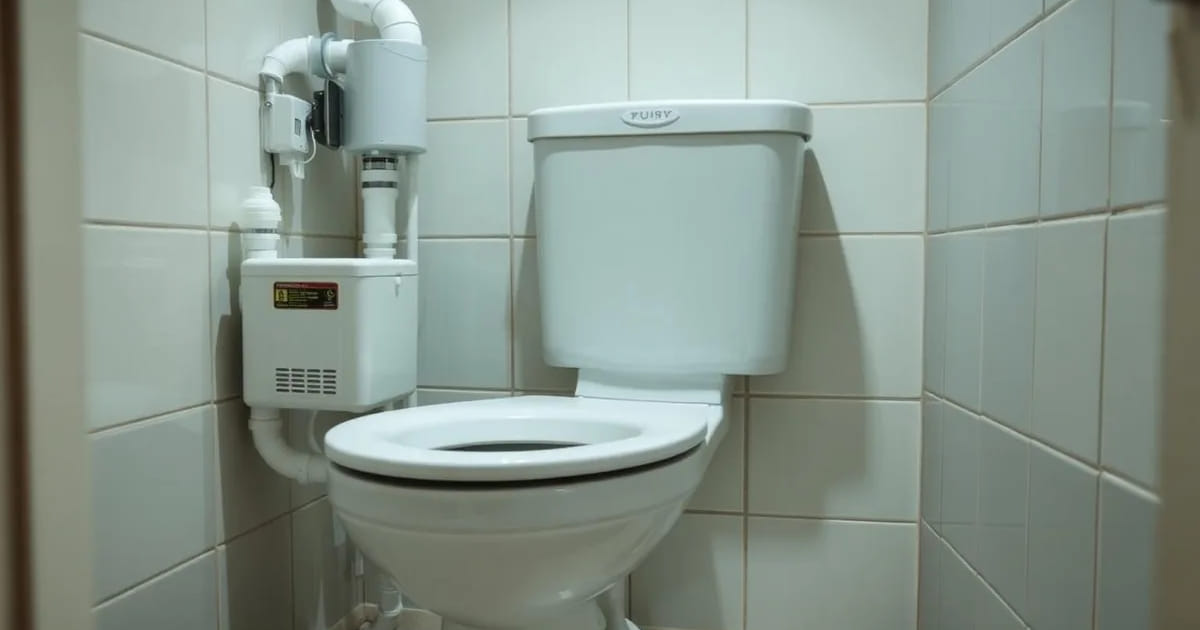
Many homes in Madeira have the perfect spot for an extra bathroom — a basement, a loft, a store room, a studio carved out of a ground floor — but no gravity drain downstream. A sanitary macerator solves exactly that: it grinds the waste and pumps it through a small-diameter pipe up to the existing stack, even above the level of the pan. It is an excellent solution when properly installed and properly used, and a constant source of emergency call-outs when it is not. The difference nearly always comes down to three things: installation quality, discipline about what goes into the pan, and preventive maintenance.
⚙️ How a Macerator Ejector Pump Works
1) The unit receives the flush into a sealed chamber with a small accumulation volume. 2) A level sensor — pressure switch or diaphragm — detects the rising liquid and starts the motor automatically. 3) The cutter blade reduces solids and paper to a slurry able to pass through small-diameter pipework. 4) The impeller pumps that mixture into the discharge pipe, overcoming height and length up to the soil stack. 5) The cycle lasts a few seconds and ends when the level drops below the start point. 6) A non-return valve on the discharge stops effluent flowing back into the chamber after each cycle. 7) Some models also accept side inlets from a basin, shower or bidet, provided the flow is compatible.
🧰 Correct Installation: What Determines Reliability
1) Always respect the manufacturer's limits for lift height and horizontal run — exceeding them guarantees failures. 2) Rise vertically first and only then run horizontally, with a continuous slight fall towards the stack. 3) Avoid ninety-degree bends: use two forty-five-degree bends to cut pressure loss and deposits. 4) The discharge pipe must never have back-falls or bellies where slurry settles between cycles. 5) The connection to the stack must be above any possible backflow level and never against the direction of flow. 6) The unit needs a socket with its own RCD protection and a ventilated location that is accessible for maintenance. 7) The activated carbon vent filter must stay accessible: it is what keeps odours out of the room.
🚫 Products and Habits That Destroy the Unit
1) Wet wipes, even those sold as biodegradable, are the number one cause of blockage: they do not break down under maceration. 2) Dental floss, cotton buds, sanitary products, condoms and hair wrap around the shaft and burn out the motor. 3) Cat litter, building debris and kitchen grease settle in the chamber and seize the blade. 4) Harsh cleaners, concentrated acids and chemical drain openers attack seals and the sensor diaphragm. 5) Use only neutral detergents and descalers specifically made for macerators, at the stated doses. 6) Excess bleach hardens rubber gaskets and brings forward leaks at the inspection cover. 7) In holiday rentals, a clear and discreet notice by the toilet prevents most guest-related incidents.
🧪 Periodic Descaling and Cleaning the Level Sensor
1) Hard water leaves limescale in the chamber, on the blade and above all on the level sensor diaphragm. 2) An encrusted sensor stops sensing correctly and causes either permanent running or no start at all. 3) Descaling must be done with a proper product, respecting contact time and never mixing chemicals. 4) Six-monthly is typical, but in harder water areas quarterly may be needed. 5) Cleaning the chamber and inspection cover should include checking the condition of the sealing gasket. 6) Always confirm the non-return valve seats correctly after any intervention. 7) A descaled unit draws less current, starts faster and lasts substantially longer.
🛠️ Unblocking and Fault Diagnosis
1) Before any work, isolate the electrical supply at the plug or the dedicated breaker. 2) A humming motor that does not pump means the blade is jammed by textile, hair or a hard object. 3) Repeated short starts point to a dirty non-return valve or an internal leak on the discharge. 4) Cycles that never stop suggest an encrusted level sensor or a cistern permanently passing water. 5) Slow discharge with the unit running normally means deposits in the pipe or a badly executed route. 6) Persistent odours reveal a saturated carbon filter, a damaged gasket or a blocked vent. 7) If there is water at the base of the unit, stop using it immediately: there is a leak and an associated electrical risk.
✅ When It Is Worth It, and the Alternatives
1) A macerator is the right choice when no gravity drain exists at a usable level. 2) If gravity drainage with adequate fall is possible, that solution is always preferable and needs no electricity. 3) For full bathrooms with shower and basin, choose models with side inlets and adequate power. 4) For heavy use, prefer units with stainless steel blades and easy access to the inspection chamber. 5) Keep the model reference: parts, covers and sensors are not interchangeable between brands. 6) An annual maintenance plan drastically reduces emergency calls with a toilet out of service. 7) Want a sanitary macerator installed or serviced? Message us on WhatsApp.
FAQ
Can I install a toilet in a basement with no gravity drain?
Yes, that is precisely what a sanitary macerator is for. It grinds the waste and pumps it through small-diameter pipe to the existing stack, within the manufacturer's height and length limits.
Can I flush wet wipes down a macerator toilet?
No. Wipes do not break down under maceration and wrap around the blade shaft. They are the most frequent cause of blockages and burnt-out motors in these units.
How often should a macerator be descaled?
Usually every six months, with a purpose-made product. In harder water areas or heavy use such as holiday rentals, shortening that to three months makes sense.
Are macerators very noisy?
They run for a few seconds per flush and current models are fairly restrained. Excessive noise signals a fault: an obstructed blade, worn bearing or a discharge pipe clipped without acoustic isolation.
Need a sanitary macerator installed, repaired or unblocked? Message us on WhatsApp.
We work in Funchal, Câmara de Lobos, Caniço, Santa Cruz, Machico, Ribeira Brava, Ponta do Sol, Calheta, Santana, São Vicente and across Madeira Island.