Rainwater Harvesting in Houses: Filtration, Tanks and Reuse
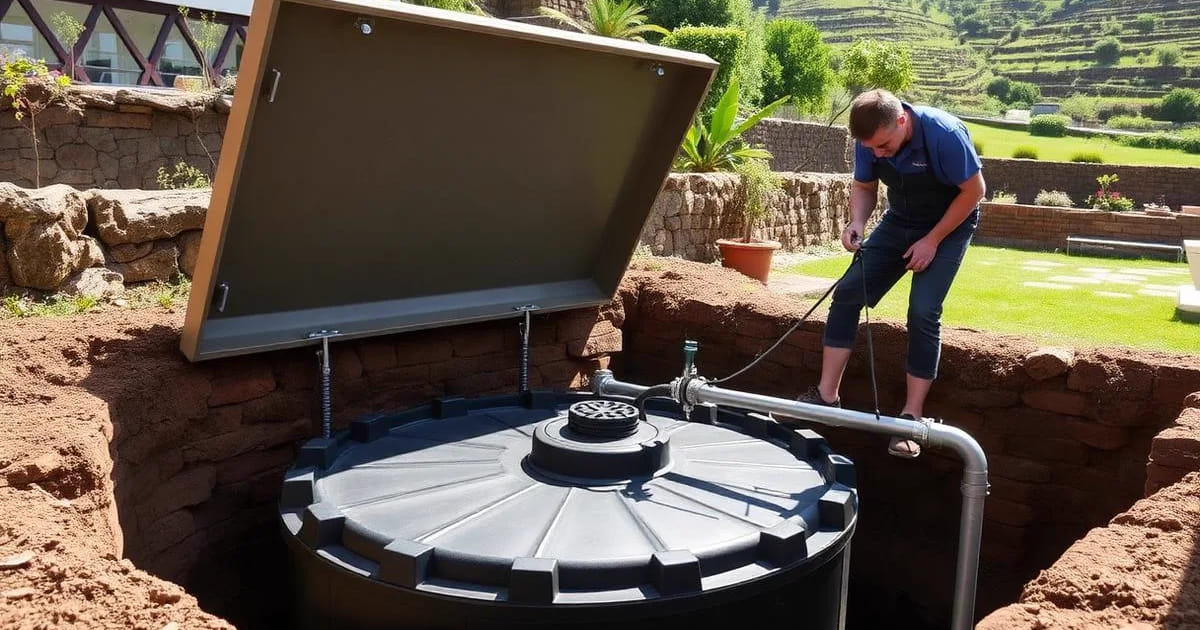
Madeira has a clear advantage for anyone wanting to cut their water bill: it rains well, mainly between October and March, and houses usually have both a roof and a garden. A properly built rainwater harvesting system covers irrigation, outdoor washing and toilet flushing, which together are a significant share of domestic use. Built badly, it becomes a tank of leaves, larvae and bad smells. This guide explains how to size, filter and connect it correctly.
🌧️ How Much Your Roof Can Actually Collect
1) The base calculation is simple: roof plan area × rainfall × runoff coefficient. 2) On clay tiles or a waterproofed roof the practical coefficient is around 0.8, because some water evaporates or is retained. 3) A 100 m² roof in an area with 600 mm annual rainfall can realistically yield in the order of 45 to 50 m³ per year. 4) On the island, rainfall varies hugely with altitude and orientation: northern slopes and high ground receive far more than the southern coastal strip. 5) The distribution is seasonal and concentrated, so cistern volume must reflect the dry weeks, not the annual average. 6) Roofs with chemical treatments or old asbestos cement should not feed indoor reuse systems. 7) Consider what lands on the roof too: trees, pigeons and chimneys all change collected water quality.
🛢️ Sizing the Cistern and Tank
1) Useful rule of thumb: size for 3 to 4 weeks of the demand you want to replace, avoiding huge cisterns that never fill. 2) For an average garden plus family toilet use, 3,000 to 5,000 L covers most cases. 3) Buried polyethylene cisterns keep water cool and dark, holding back algae growth — better than tanks in the sun. 4) If the tank is above ground it must be opaque, covered and shielded from direct light. 5) The inlet must be calmed (a diffuser) so it does not stir up bottom sediment. 6) The overflow needs a diameter equal to or larger than the inlet, discharging somewhere safe and never against the foundations. 7) Always include a sealed inspection cover, insect mesh on the vent and a bottom cleaning point.
🧪 Filtration: First-Flush, Screens and Fine Filters
1) The first filter is mechanical: stainless mesh or leaf basket in the gutter and at the top of the downpipe. 2) A first-flush diverter discards the first litres of each shower, which carry dust, bird droppings and salt from sea spray. 3) A practical criterion is discarding around 0.5 mm of rainfall per m² of roof before routing water to the cistern. 4) Next comes a self-cleaning or cartridge filter for fines, protecting the pump and solenoid valves. 5) For toilets a 100 to 50 micron filter is enough; for drip irrigation it is essential. 6) Rainwater is not potable and must not feed drinking taps, showers or the dishwasher. 7) Real maintenance means cleaning filters: a system with no cleaning plan degrades within months.
🔁 Automatic Switchover to the Mains
1) When the cistern empties, the system must draw from the mains with no user action. 2) The technically correct solution is switchover via a break tank with the mains inlet discharging in free fall above maximum level — total physical discontinuity. 3) Alternatively, use a certified switchover valve with adequate backflow protection. 4) Never connect the mains directly to rainwater pipework: that is an unacceptable, prohibited contamination risk. 5) Indoor rainwater pipework must be labelled «non-potable water» at every point, and outdoor taps should have a removable key. 6) Level probes control pump and switchover, preventing dry running. 7) A meter on the mains top-up lets you quantify real savings year on year.
🏡 Suitable Uses in a Madeira House
1) Garden and vegetable irrigation: the ideal use, with modest quality requirements and peak demand in summer. 2) Toilet flushing: steady demand all year, often 20 to 30% of total household use. 3) Washing patios, terraces, paving and vehicles, with immediate savings. 4) Topping up ornamental ponds and automatic irrigation systems. 5) On hillside houses, a high-level cistern can feed gravity irrigation with no pump at all. 6) In holiday rentals the system cuts running costs and communicates genuine sustainability to guests. 7) We do not recommend use in showers, basins, kitchen or dishwasher: the benefit does not justify the health risk.
✅ Maintenance and Mistakes to Avoid
1) Clean gutters, screens and leaf baskets at the start of autumn and after storms. 2) Check and clean the first-flush device at least twice a year. 3) Inspect cistern bottom sediment every two years and vacuum it if needed. 4) Confirm insect mesh integrity on every vent. 5) Test mains switchover by simulating an empty cistern. 6) Avoid the classic errors: oversized cistern, undersized overflow, no first-flush and unlabelled rainwater pipework. 7) Log maintenance: it helps with insurance and property value. Want to assess your house's potential? Send WhatsApp photos of the roof, gutters and garden.
FAQ
What cistern volume should I install?
Size for 3 to 4 weeks of the demand you want to replace. For irrigation plus family toilet use with an average garden, 3,000 to 5,000 L covers most Madeira cases without oversizing.
Can I use rainwater in toilet cisterns?
Yes, it is one of the best uses because demand is steady all year. It requires separate, clearly labelled non-potable pipework, adequate filtration and a safe switchover arrangement to the mains.
What is first-flush and is it really necessary?
It diverts the first litres of each rain event, which carry dust, sea salt and bird residues. It is necessary: without it the cistern receives all the roof dirt and water quality degrades quickly.
Can rainwater share the same pipework as the mains?
No. Separate networks are mandatory, and top-up must keep physical discontinuity, typically a free-fall mains inlet into a break tank. A direct connection is a contamination risk.
Want to harvest rainwater? Message us on WhatsApp.
We work in Funchal, Câmara de Lobos, Caniço, Santa Cruz, Machico, Ribeira Brava, Ponta do Sol, Calheta, Santana, São Vicente and across Madeira Island.