Plumbing checklist for holiday rentals in Madeira: a technical routine between stays
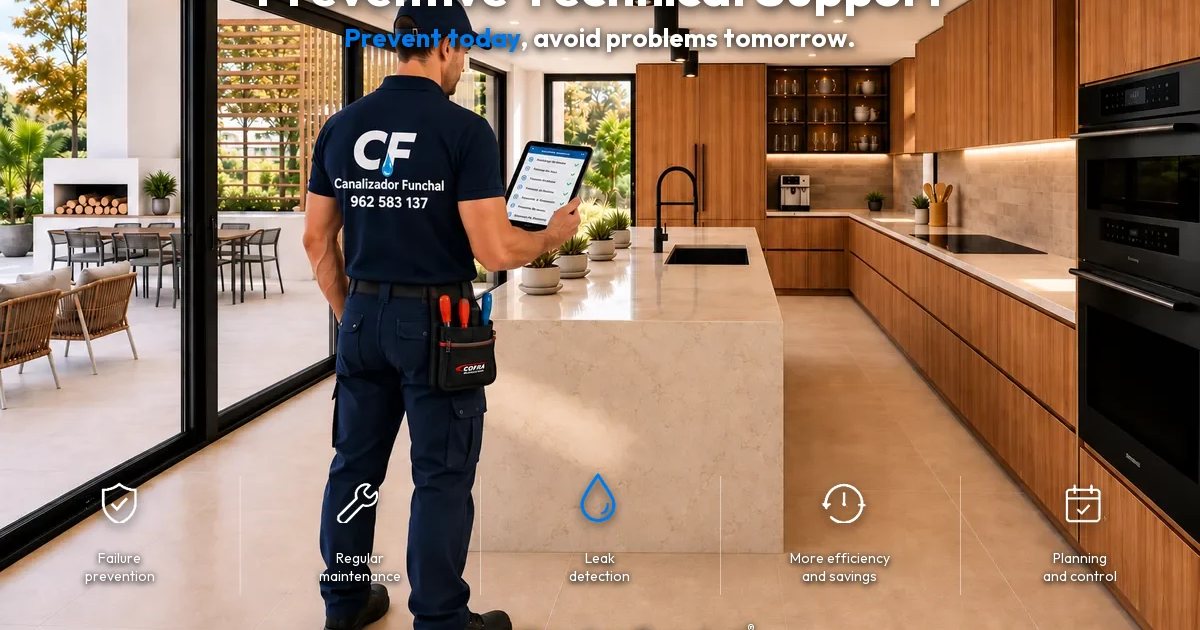
A plumbing failure during a guest's stay at a holiday rental (Alojamento Local) in Madeira means a bad review, a refund request and often cancellations of upcoming bookings. Since mains water on the island is soft, the most common problems are not limescale but fine sediment, sea-air (maresia) corrosion in coastal areas (Funchal, Caniço, Santa Cruz, Machico), pressure spikes in the network and wear accelerated by the intensive back-to-back use typical of short-term rentals. This technical checklist helps rental managers in Funchal, Câmara de Lobos, Ribeira Brava, Ponta do Sol and across the island stay ahead of failures before they ever reach a guest.
🔎 Symptoms & Initial Diagnosis
1) Pressure and flow: between stays, open all taps and the shower at once for 1 minute — sudden pressure drops point to sediment build-up in the pressure reducer or aerators. 2) Banging noise in pipes when taps are shut quickly suggests water hammer, common in old stone buildings with rigid risers. 3) Slow drainage in showers and basins after check-out is the first sign of hair, soap and grease accumulating in the traps — always test before the next guest arrives. 4) Damp stains, musty smell or warped skirting under basins and behind concealed cisterns point to hidden leaks that only regular hands-on inspection can catch, as water can run inside a wall with no immediate visible sign.
🧪 Main Causes / Local Challenges
1) Intensive guest use: unlike a private home, a rental may have 3-4 check-ins per week, each with back-to-back showers that push the water heater's recovery capacity to its limit. 2) Sea air and corrosion: in coastal properties in Funchal, Caniço and Machico, metal fittings and safety valves corrode faster, raising the risk of a leak at the heating element or anode. 3) Topography and pressure: Madeira's terraced network creates high-pressure zones that speed up wear on flexible hoses and joints in old stone buildings. 4) Guest behaviour unfamiliar with the property: wipes, hair and food waste flushed down toilets or drains, especially in properties with a lifting pump, where a blockage can push sewage back into the apartment.
🛠️ Ideal Step-by-Step / Technical Planning
1) Routine between stays (housekeeping): test drainage of every drain and trap, check the shower silicone seals, confirm there is no dripping from taps or the cistern. 2) Monthly pressure and flow test: measure pressure at the meter outlet and compare with the previous reading — drops greater than 0.5 bar indicate the filter or reducer needs cleaning. 3) Annual water heater check: inspect the magnesium anode (replace if more than 50% corroded), manually test the safety valve, confirm the thermostat and calculate the recovery time between consecutive showers — essential for properties hosting groups. 4) Hidden leak inspection: feel around the base of concealed cisterns and inside the cabinet under basins at every guest turnover, checking for damp or a musty smell before structural damage appears.
🚫 What to AVOID
1) Do not ignore a small drip at the water heater or the base of a toilet hoping it "will not get worse" — unattended between stays, a small leak can flood the floor below. 2) Do not rely solely on guest feedback to catch failures — many will not report slow drainage or a running cistern for fear of being blamed. 3) Do not regularly use harsh chemical drain cleaners in traps: they corrode joints and worsen the problem over time. 4) Do not delay replacing flexible hoses older than 5 years just because they are not visibly leaking yet — in a rental, the cost of a flood (repairs + refunds + bad reviews) far outweighs a preventive replacement.
🧰 Preventive Maintenance & Best Practices
Recommended calendar — Weekly: check drains, traps and silicone seals between check-outs, confirm no dripping taps. Monthly: test pressure and flow at all taps, check the water heater's recovery time with consecutive showers. Annual (ideally before high season): full inspection of the water heater's magnesium anode and safety valve, replacement of flexible hoses older than 5 years, tightness test on concealed cisterns and a check of the lifting pump, if fitted. Having a technical contact to request urgent assistance outside usual hours, subject to availability and location, helps protect the property's reputation and keeps a one-off failure from disrupting bookings.
FAQ
How often should I run preventive maintenance on a holiday rental?
Quick checks between each stay, a monthly pressure and flow test, and a full technical inspection (water heater, hoses, concealed cisterns) before high season and every 6 months.
How do I know if the water heater can handle back-to-back guest showers?
Time its recovery: after one shower, measure how long it takes to have enough hot water for the next. If it takes over 20-30 minutes under normal use, the anode, heating element or unit sizing should be reviewed.
Can a hidden leak behind a concealed cistern go unnoticed for months?
Yes. Without regular hands-on inspection at the base of the toilet and inside the cabinet under the basin, a slow leak can seep into the wall and only become visible once there is already structural damage and a musty smell.
Need help now? Fast response on WhatsApp.
We provide preventive maintenance and emergency plumbing for holiday rentals in Funchal, Câmara de Lobos, Caniço, Santa Cruz, Machico, Ribeira Brava and across Madeira Island.