Overflowing Grease Trap or Inspection Chamber in the Yard: Correct Greywater and Foul Water Separation in Madeira
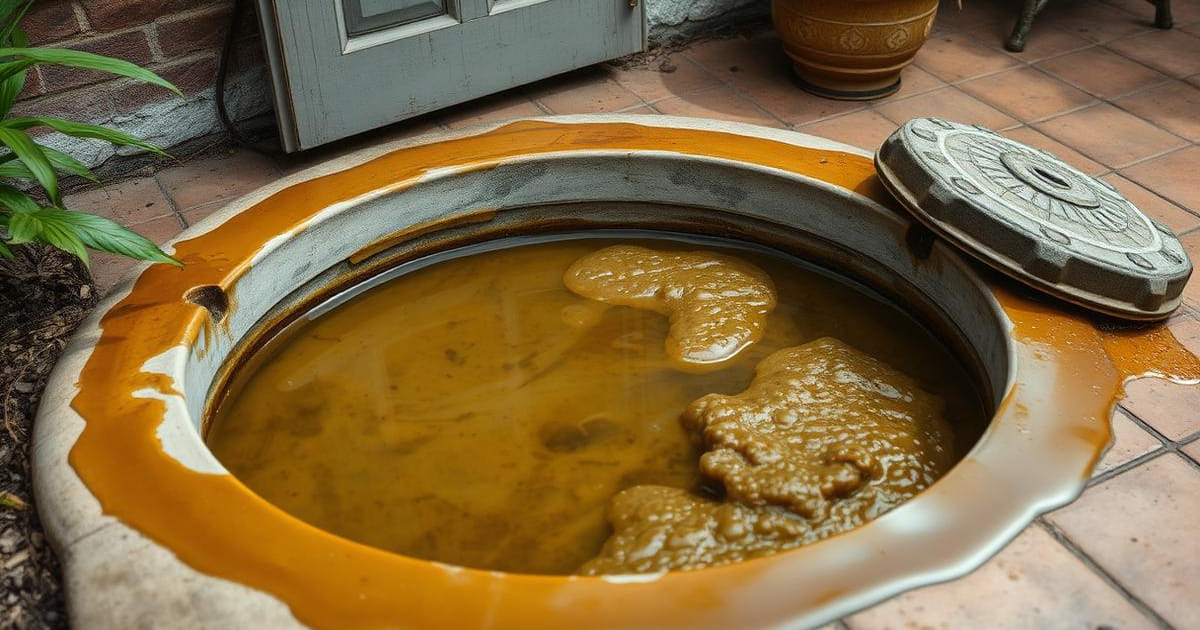
The yard chamber is the most forgotten part of any installation. It receives water from the sink, the washing machine and the shower, and in many older houses in Funchal and Câmara de Lobos it also receives foul discharge with no separation at all. Over time, kitchen grease and soap form a thick crust that reduces the useful section, traps solids and forces sewage to overflow around the lid. The result is always the same: dark water on the paving, persistent summer odour and insects by the door. This guide shows how to diagnose, clean and properly separate the circuits again.
🧭 What Each Chamber Is and What It Does
1) Grease trap (grease separator): receives only kitchen greywater and retains fats at the surface, letting cleaner water pass underneath. 2) Inspection chamber: an access point to the sewer, for rodding and direction changes. 3) Trapped gully: has a water seal and serves floors and drains. 4) A grease trap must never receive foul discharge: solid organic matter clogs the compartment within weeks. 5) An inspection chamber should not receive the kitchen sink without a separator upstream. 6) In Madeira houses it is common to find everything connected to the same chamber — that, not the cleaning, is the root problem.
🔍 Diagnosis: Why It Overflows and Smells
1) A grease crust 5 to 20 cm thick at the surface: total loss of useful section. 2) Soap emulsified with hard-water lime, forming a compact paste that will not drain. 3) A permanently high level in the chamber: downstream blockage in the branch or the sewer. 4) Strong smell with no overflow: a lid without a gasket or a lost water seal. 5) Water backing up in the sink or washing machine on discharge: back pressure in the chamber. 6) Visible roots in the chamber walls: root intrusion from fig, bougainvillea or banana plants, very common in Madeira yards.
🚰 Correct Greywater and Foul Water Separation
1) Greywater (sink, shower, basin, machines) should pass through the grease trap before the sewer. 2) Foul water (toilet) should go straight to the sewer on its own branch, bypassing the separator. 3) Each circuit needs proper venting to avoid siphoning and odours. 4) Rainwater must never be connected to foul drainage: it overloads the chamber and causes overflow in heavy rain. 5) Wherever possible, an inspection chamber is fitted downstream of the separator for inspection without excavation. 6) Re-routing the pipework is often cheaper than years of emergency cleaning.
🛠️ Cleaning and Mechanical Maintenance
1) Full mechanical removal of the crust and bottom sludge, with correct collection and disposal of the waste. 2) Washing walls and inlets/outlets with controlled pressure jetting, without damaging the render. 3) Checking the height of internal baffles — if broken, the chamber separates nothing. 4) Inspecting the downstream branch with a rodding machine or camera to confirm no residual blockage. 5) Cutting intrusive roots and sealing the joints they enter through. 6) Before-and-after photographic records: essential for management companies, insurers and rental operators.
🧪 Enzymatic Treatment and Odour Sealing
1) After mechanical cleaning, an enzymatic/bacterial treatment progressively digests residual grease. 2) Enzymes do not replace cleaning: they are maintenance, not unblocking. 3) Dose overnight, with the circuit at rest, for maximum contact time. 4) Avoid chlorine and caustic products between doses: they destroy the active bacterial flora. 5) Replace the lid with an airtight model with a rubber gasket and, if needed, a sealed frame — this removes yard odour. 6) In trafficked areas, use a lid with the right load class, level with the paving and with a lifting handle.
🛡️ Prevention Plan for Madeira
1) Clean the grease trap every 6 months in domestic use and every 2 to 3 months in catering or short-term rentals. 2) Never pour cooking oil down the sink — collect it and take it to a recycling point. 3) Fit a sink strainer basket for solid scraps. 4) Monthly maintenance enzyme dosing. 5) Annual inspection of connections to confirm nobody has connected rainwater or the toilet to the separator. 6) Want technical cleaning and a rework of your yard chambers? Message us on WhatsApp.
FAQ
Can I fix the overflow with enzyme products alone?
No. Once there is a crust and an overflow, the accumulated grease must be removed mechanically. Enzymes come afterwards, to keep the chamber clean between visits.
Can the toilet be connected to the grease trap?
It should not. Foul solids clog the separator and turn it into an improvised septic pit, with intense odour and very frequent cleaning.
How often should a grease trap be cleaned?
Normal domestic use: every 6 months. Large families, rentals or catering: every 2 to 3 months. The real criterion is crust thickness, not the calendar.
Does an airtight lid solve the smell?
It solves odour escaping through the lid, but not the cause. First we clean and confirm flow; the airtight lid is the final step of the solution.
Yard chamber overflowing or smelling? Message us on WhatsApp.
We work in Funchal, Câmara de Lobos, Caniço, Santa Cruz, Machico, Ribeira Brava, Ponta do Sol, Calheta, Santana, São Vicente and across Madeira Island.