Magnetic Dirt Separators: Protection Against Magnetite and Sludge in Hot Water Systems
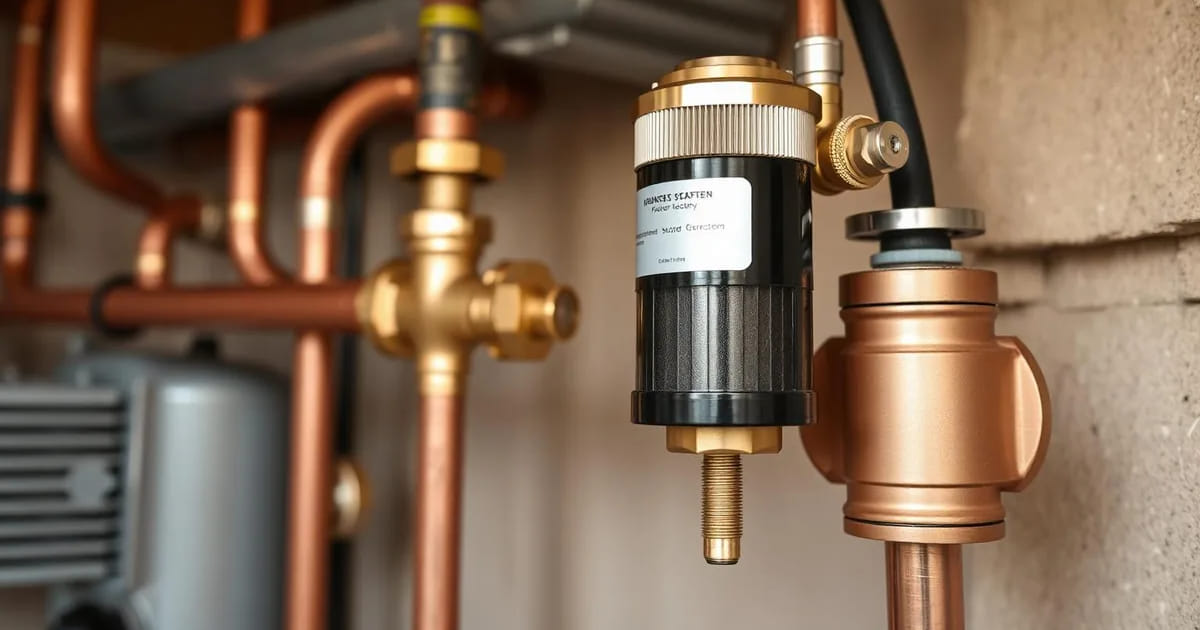
When a hot water circuit loses performance for no obvious reason, the culprit is often suspended in the water itself: magnetite. It is a black, magnetic and highly abrasive iron oxide that forms in any installation where water, oxygen and ferrous components coexist. As it circulates it settles where velocity is lowest, blocks plate heat exchangers, unbalances circulators and turns into a sludge that cuts flow and raises consumption. A magnetic dirt separator is the simple, definitive answer: it traps that magnetite at an accessible point where it can be removed in seconds, instead of letting it reach expensive equipment.
🧪 What Magnetite Is and How It Forms
1) Magnetite is iron oxide produced by internal corrosion of pipes, radiators and metallic bodies in the circuit. 2) It forms whenever dissolved oxygen meets iron, even in apparently sealed circuits. 3) Repeated filling and draining introduces fresh oxygen and sharply accelerates the process. 4) The material is as fine as dust but hard, which makes it abrasive to seals, shafts and valve seats. 5) Part of it stays in suspension and part settles at low points and in low-velocity zones. 6) In systems with plastic pipe lacking an oxygen barrier, continuous diffusion keeps feeding sludge formation. 7) Hard water makes it worse, because limescale and magnetite combine into a hard, adherent deposit.
⚠️ Damage to Circulators, Exchangers and Valves
1) The plate heat exchanger suffers first: narrow channels block and useful output falls quickly. 2) The circulator loses flow, runs hot and eventually seizes with the rotor gripped by abrasive deposit. 3) Thermostatic and zone valves stop closing properly as sludge builds up on their seats. 4) Radiators cold at the bottom and hot at the top are the classic sign of accumulated internal sludge. 5) Energy use rises because the system must run longer for the same result. 6) Circulation noise, whistling and vibration appear as the useful passage narrows. 7) In advanced cases, chemical cleaning plus component replacement costs far more than a separator ever would.
🧲 Neodymium Magnetic Separators: How They Work
1) The filter body creates a low-velocity zone where denser particles separate out by gravity. 2) The neodymium magnet, housed in an external pocket, captures suspended ferrous particles that gravity cannot separate. 3) The magnet sits outside the flow, so it can be withdrawn without opening the system or losing pressure. 4) An internal mesh or deflector also retains non-magnetic particles such as sand and seal debris. 5) The lower chamber acts as a sump where sludge stays until the next flush. 6) Brass bodies handle temperature and pressure better than economy plastic housings. 7) Always choose a model matched to the circuit diameter, with an easily accessible bottom drain valve.
🔧 Where and How to Install It Correctly
1) The separator is fitted on the return, immediately before the heat generator or the exchanger being protected. 2) It must follow the flow direction marked on the body — reversed, it loses most of its effectiveness. 3) Fit isolating valves upstream and downstream so it can be serviced without draining the installation. 4) Leave clearance below for the flushing container and above to withdraw the magnet pocket. 5) Mount it vertically or exactly as the manufacturer specifies, never against the intended orientation. 6) On new installations, bring the separator into service at the very first fill, when construction debris is highest. 7) Adding an automatic air vent and a controlled filling valve reduces oxygen ingress.
🚿 Direct Flushing Without Draining the System
1) The great advantage of a separator is that it can be cleaned with the installation pressurised and in service. 2) Start by withdrawing the magnet pocket: with the magnetic field gone, particles release and fall into the lower chamber. 3) Place a container or hose at the bottom drain valve before opening anything. 4) Open the drain for a few seconds: dark water with magnetite comes out until it visibly clears. 5) Close the drain, wipe the magnet pocket with a cloth and refit it in the correct position. 6) Check circuit pressure afterwards and top up if needed, avoiding excessive filling. 7) Recommended frequency is six-monthly in the first year and annually thereafter, adjusted to the deposit observed.
📋 Preventive Maintenance and Warning Signs
1) Record how the flushed water looks at each service: the colour trend shows whether corrosion is under control. 2) Consistently very dark flushing, year after year, reveals active corrosion that needs inhibitor treatment. 3) A suitable corrosion inhibitor, dosed after cleaning, reduces the formation of new magnetite. 4) Combine the separator with a particle filter on the make-up water supply to the installation. 5) Avoid draining the system needlessly: every fresh fill introduces oxygen and restarts the cycle. 6) Build the separator flush into the annual service of the hot water and heating system. 7) Want a magnetic separator fitted or your circuit flushed? Message us on WhatsApp.
FAQ
What exactly is magnetite in a circuit?
It is black, magnetic iron oxide produced by internal corrosion of pipes and ferrous components. It circulates in suspension, is abrasive, and settles in heat exchangers, circulators and low-velocity points.
Where should a magnetic separator be installed?
On the return, immediately before the heat generator or the exchanger you want to protect, following the marked flow direction and with isolating valves upstream and downstream.
Must the system be drained to clean the filter?
No. Withdraw the magnet pocket, open the bottom drain valve for a few seconds with the system still pressurised, and the deposit comes out. Then wipe the magnet and confirm circuit pressure.
How often should the separator be flushed?
Usually every six months in the first year, to gauge the sludge load, then once a year. If flushed water stays very dark, there is active corrosion to treat with an inhibitor.
Want your hot water circuit protected from magnetite and sludge? Message us on WhatsApp.
We work in Funchal, Câmara de Lobos, Caniço, Santa Cruz, Machico, Ribeira Brava, Ponta do Sol, Calheta, Santana, São Vicente and across Madeira Island.