Limescale and Hard Water: How to Protect Pipes and Water Heaters in Madeira
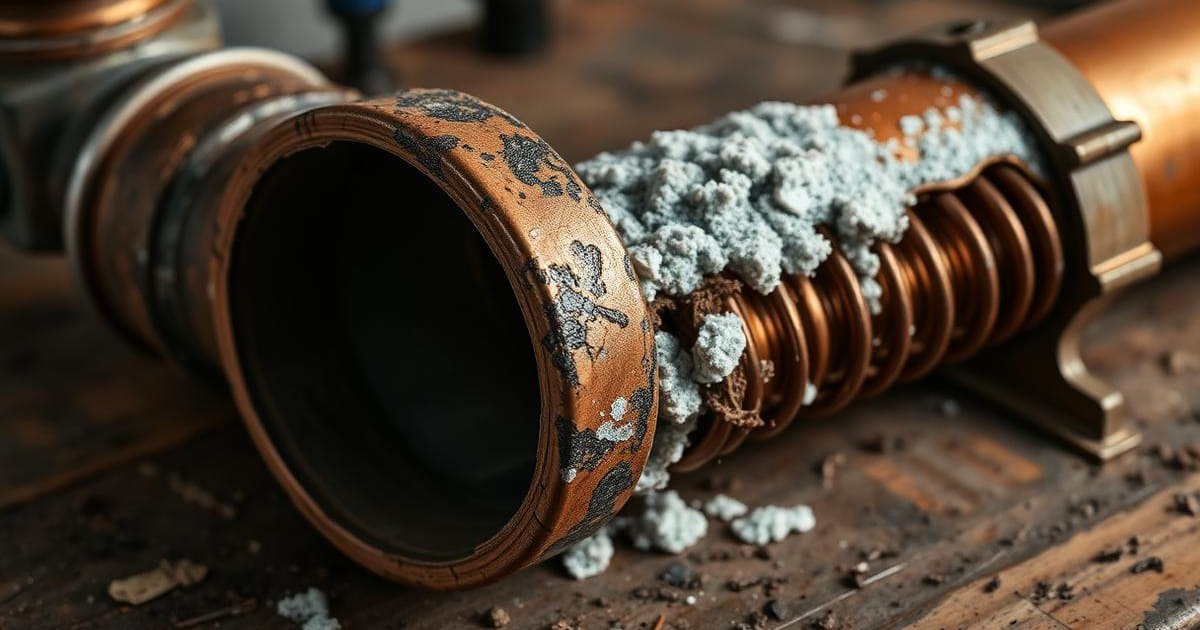
Limescale gives no warning. It settles slowly inside pipes, on the water heater element and in mixer cartridges until, one day, the hot water arrives weak, the appliance consumes more and the tap starts dripping. In several areas of Funchal, Caniço, Santa Cruz and Machico the water is hard enough to cause visible scaling within a few years. The good news: this is one of the few plumbing problems you can solve before it happens — with the right equipment fitted at the inlet.
🔎 Symptoms & Initial Diagnosis
1) Hot water that takes longer to arrive and flows with less force than two years ago — a sign of restriction caused by scaling. 2) A water heater that ticks, rumbles or shows rising electricity consumption: the scale layer insulates the element and forces it to run longer. 3) Persistent white marks on taps, shower trays and screens that return days after cleaning. 4) Shower heads with blocked jets and mixers that stiffen or start dripping because the ceramic cartridge is blocked. 5) An element or anode pulled from the tank with a thick whitish crust — the definitive proof. 6) Simple test: fill a glass with water and let it dry; a marked white halo means hard water.
🧪 Main Causes
1) High levels of calcium and magnesium ions in the supply water, which crystallise when heated. 2) Storage temperature set too high and left uncontrolled: above 65-70 °C calcium carbonate precipitation accelerates exponentially. 3) Low-flow areas and elbows where water stagnates, creating preferential deposit points. 4) Older copper or galvanised steel installations whose internal roughness anchors the crystals. 5) No treatment at all at the property or appliance inlet — the most common scenario we find. 6) No water heater maintenance: without periodic tank cleaning, scale builds up at the bottom and buries the element.
🛠️ Practical Step-by-Step
1) Confirm water hardness with a test strip or ask us for an on-site measurement — the value defines the treatment. 2) Check the water heater temperature and set it to 60-65 °C, a balance between sanitary safety and scale formation. 3) Schedule a tank inspection: remove the element, mechanically clean the scale and check the magnesium anode. 4) Fit dedicated protection on the appliance cold water inlet (see next section). 5) Replace shower heads and cartridges already blocked — reviving a scaled mixer rarely pays off. 6) Log the intervention date and set an 18 to 24 month maintenance cycle.
🎯 Definitive Technical Solution
1) Polyphosphate cartridge doser on the cold water inlet of the water heater or boiler: the polyphosphate is released in micro-doses and prevents calcium and magnesium ions from crystallising and adhering to metal surfaces and to the heating element. It is the cheapest and most effective appliance protection, with a simple annual cartridge change. 2) High-frequency pulse electronic descaler at the main property inlet: it emits pulses that change the crystal structure of suspended minerals, keeping the calcium in an inert form that no longer scales inside pipes. It uses no salt, does not alter the water for consumption and produces no reject water, which makes it ideal for Funchal apartments and for houses with individual meters. 3) Combining both — pulses at the main inlet and polyphosphates at the hot water appliance — is the configuration we recommend in high-hardness areas.
🚫 What to AVOID
1) Do not use aggressive acids (hydrochloric acid or industrial descalers) inside the tank: they attack the enamel lining and open the door to corrosion. 2) Do not raise the thermostat to 'compensate' for the lack of hot water — you are only accelerating scale formation. 3) Do not install decorative magnets or devices with no proven technical specification; many have no effect on water at all. 4) Do not rely on sediment filters alone: they trap sand, they do not stop calcium crystallisation. 5) Do not ignore a scaled element — it runs overheated and eventually burns out or trips the RCD.
🧰 Preventive Maintenance
1) Replace the polyphosphate cartridge once a year, or according to household flow. 2) Check and clean the water heater tank every 18-24 months, replacing the magnesium anode at the same time. 3) Remove and clean tap aerators and shower heads every six months with vinegar or a mild descaler. 4) Keep the temperature stable and avoid large swings. 5) In holiday homes and short-term rentals, flush the system before each occupancy period. 6) Keep a maintenance record — it helps with warranties and insurance claims.
FAQ
Does a polyphosphate doser make the water unfit to drink?
No. The polyphosphates used in domestic plumbing are food grade and released in micro-doses, within the legal limits for drinking water. Their job is not to treat the water but to stop calcium and magnesium from crystallising and sticking to the element and pipe walls. The cartridge should be replaced yearly to keep the dosage correct.
Does an electronic descaler replace a salt-based softener?
To protect pipes, water heaters and taps, yes: high-frequency pulses keep the calcium inert and prevent scaling, with no salt, no reject water and no chemical maintenance. What it does not do is reduce the measured hardness, so if your goal is genuinely soft water for skin or very demanding appliances, then a resin softener with salt is worth evaluating.
Hard water ruining your water heater? Talk to us today on WhatsApp.
We install polyphosphate dosers and electronic descalers in Funchal, Câmara de Lobos, Caniço, Santa Cruz, Machico, Ribeira Brava, Ponta do Sol, Calheta, Santana, São Vicente and Porto Moniz, across Madeira Island.