Ideal Toilet Drain Diameter: Why Bigger Is Not Always Better
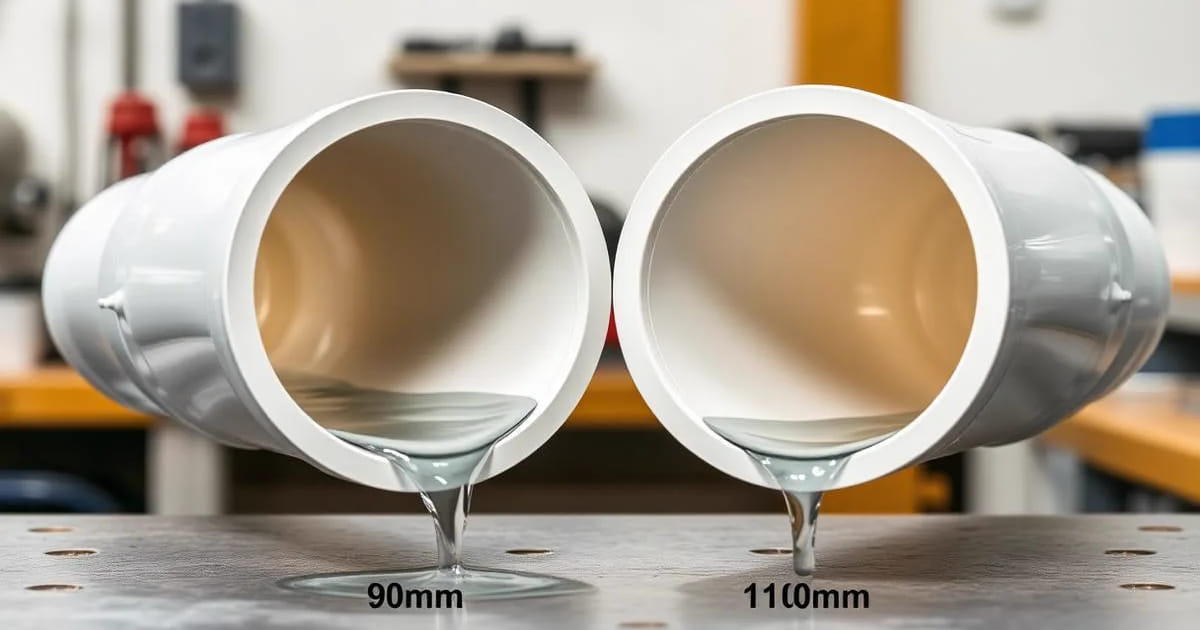
There is a common myth that the larger the toilet drain pipe, the lower the risk of blockages. Hydraulic flow physics shows the opposite: an oversized pipe can be the direct cause of serious obstructions, especially in Madeira homes and holiday rentals used intermittently.
🔎 The Physics of Hydraulic Flow in a Toilet
When you flush, a limited amount of water is released — usually 6 to 9 litres. To carry solids efficiently to the main stack, that volume must fill the pipe section and create a hydraulic piston effect. 1) 90 mm pipe (DN90): the flush fills the entire internal section; water surrounds and pushes the solids along the whole run at constant velocity. 2) 110 mm pipe or larger (DN110+): with a single toilet flush, the water spreads across the bottom without filling the pipe; it runs underneath or over the solids and leaves them behind. 3) Self-cleansing velocity: below roughly 0.7 m/s the flow stops dragging solids — exactly what happens when the diameter is excessive for the available flow.
⚠️ The Danger of Dried Residue (e.g. Holiday Periods)
When solids are not fully carried away because of excess diameter: 1) They settle on the internal walls and bottom of the pipe. 2) During long absences — holidays or gaps between guests in a short-term rental — the residue dries and hardens inside the pipework. 3) On your return, the dried residue becomes a rigid obstacle, causing immediate blockages with the next flushes. 4) Toilet paper makes it worse: it clings to rough areas and joints, forming the core of a plug that grows with every use.
📐 Correct Sizing of the Network
1) Individual toilet branch: 90 mm pipe with 45° bends is the ideal choice for full washing and efficient transport. 2) Building main stack or junction of several toilets: 110 mm should be used where multiple branches join and the accumulated water volume justifies the larger diameter. 3) Slope: keep 1 to 2 cm per metre on the branch — excessive slopes make water outrun the solids. 4) Length: the longer the branch, the more critical a tight diameter and correct slope become. 5) Venting: ensure stack ventilation so the flush does not lose energy to negative pressure.
🎯 Definitive Technical Solution
The definitive fix is to size the individual toilet branch at 90 mm, using 45° bends instead of 90° elbows, and reserve 110 mm for the main stack where several branches meet. For recurring blockages we run a camera inspection to confirm actual diameter, slopes and adhered deposits; where an oversized, inaccessible 110 mm branch exists, the correction is high-pressure jetting and, whenever the works allow, replacing the section with 90 mm and a proper layout.
🚫 What to AVOID
1) Do not 'upgrade' a single toilet branch to 110 or 125 mm hoping to prevent clogs. 2) Do not use 90° elbows on the toilet branch. 3) Do not mix poorly made reducers that leave internal lips catching paper. 4) Do not fit very low-volume cisterns (3–4.5 litres) on long, oversized branches. 5) Do not rely on repeated chemical drain cleaners: they fix neither geometry nor diameter and degrade joints.
🧰 Preventive Maintenance
1) Before long absences, run two or three full flushes in a row to clear the branch. 2) On your return, pour a 10-litre bucket in one go before normal use. 3) In holiday rentals, keep a weekly flush on all toilets and drains. 4) Camera-inspect every 3 to 5 years in buildings with a history of blockages. 5) In renovations, require the branch diameter and bend type to be stated in the quote.
FAQ
My toilet branch is 110 mm. Do I have to replace it?
Not necessarily. If there are no recurring blockages, stronger maintenance is enough: full flushes and periodic flushing with volume. Replacing it with 90 mm is justified when obstructions repeat or when the bathroom is already being renovated.
Does a 90 mm pipe comply with standards for toilets?
Yes. For the individual discharge branch of a single toilet, 90 mm is a common and suitable diameter; 110 mm is required on the main stack and where several fixtures join. What matters is respecting slope, venting and 45° bends.
Recurring toilet blockages? We check the diameter, slope and layout of your drainage system.
We work in Funchal, Câmara de Lobos, Caniço, Santa Cruz, Machico, Ribeira Brava, Ponta do Sol, Calheta, Santana, São Vicente and across Madeira island.