Home Water Efficiency: How to Cut Water Use Without Losing Pressure
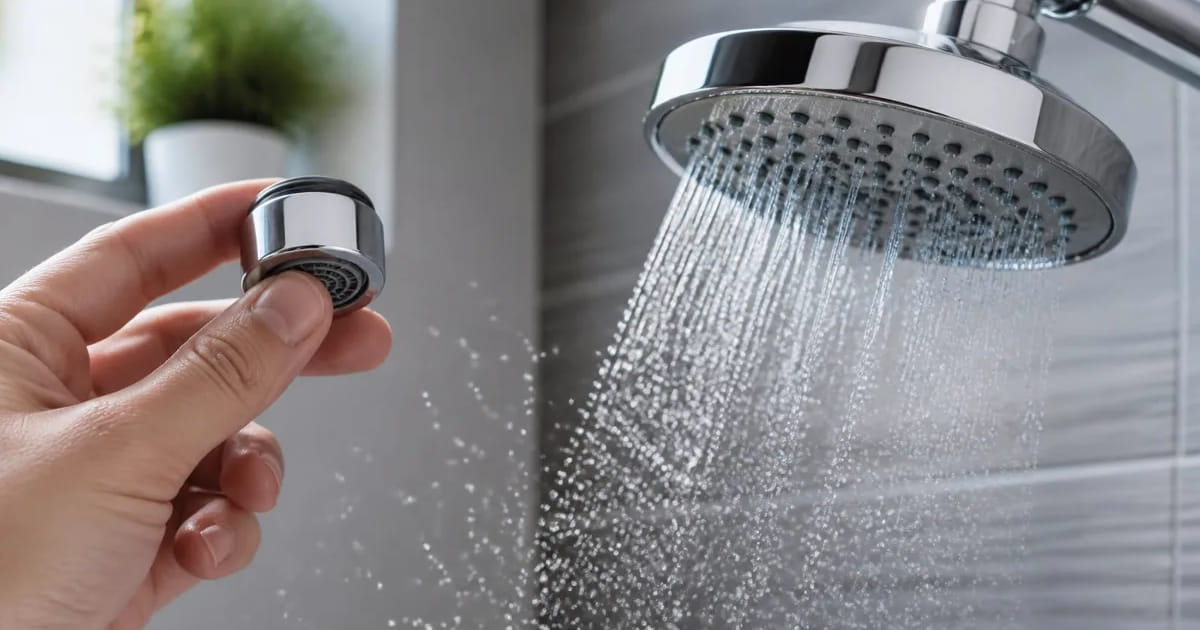
Cutting household water use is usually framed as sacrifice: short showers and weak taps. In practice, most domestic savings come from equipment and settings, not from going without. A proper water audit finds where water is lost with no benefit at all — excessive flow rates, leaking cisterns, over-high supply pressure, silent leaks — and corrects each one. Done sensibly, the result is a smaller bill with the same feeling of pressure in the shower. That is what separates water efficiency from plain restriction.
📊 Audit: Measure Before You Change
1) Start at the meter: close every water point and confirm the test dial or digit is completely still. 2) Any movement with everything closed means a leak and must be investigated before any efficiency measure. 3) Measure the actual flow at each point with a graduated container and a stopwatch, in litres per minute. 4) Also record static pressure with a gauge at the garden tap or the inlet: above four bar there is structural waste. 5) Compare measured values against references: around six litres per minute at a basin, seven to nine at a shower. 6) Note meter readings at the start and end of a normal week to learn the property's real consumption. 7) Only after these measurements should you decide where to invest: otherwise you buy equipment without knowing what it fixes.
💧 Low-Flow Aerators and Flow Regulators
1) A low-flow aerator mixes air with water and keeps the feel of a full jet with less actual flow. 2) At basins, dropping from twelve to six litres per minute is imperceptible in normal use and halves consumption at that point. 3) At kitchen sinks, avoid aggressive reductions: filling pans and washing up needs usable flow. 4) Always check the thread before buying: male and female sizes differ, and cheap adaptors cause leaks. 5) On installations with an instantaneous water heater, too low a flow can stop the appliance igniting. 6) In-line flow regulators fitted on the hose solve cases where the aerator cannot be replaced. 7) Every aerator needs periodic cleaning: limescale and sediment quickly cancel out the gain achieved.
🚿 Air-Injection and Venturi Shower Heads
1) Efficient shower heads use the Venturi effect: a narrow passage accelerates water and draws in air, increasing the apparent volume of the spray. 2) A conventional head can use over fifteen litres per minute; a good efficient model sits between seven and nine. 3) The shower is usually the biggest hot water use in the home, so the saving is double: water and energy. 4) With low pressure, choose models designed for reduced flow instead of restricting a conventional head. 5) Multi-jet heads and very wide rain plates are incompatible with genuine water efficiency. 6) Descale the shower head regularly: blocked holes distort the spray and lead people to open the tap further. 7) Pairing an efficient head with a thermostatic mixer also cuts the time spent finding the right temperature, which is water straight down the drain.
🚽 3L/6L Dual-Flush Cisterns
1) The toilet is the second largest domestic use, and older cisterns discharge nine litres or more per flush. 2) A well-adjusted 3L/6L dual-flush mechanism reduces that directly, with no loss of comfort. 3) On many cisterns only the internal mechanism needs replacing, without changing the ceramic. 4) Check that the short flush is genuinely enough for that pan: double flushing because of insufficiency cancels the saving. 5) An internal cistern leak is the most common invisible waste: a permanent thread of water down the porcelain for months. 6) Test with dye in the cistern water: if colour reaches the pan without flushing, the valve is passing. 7) Concealed cisterns need the correct brand components: identify the flush plate before buying parts.
🎯 Pressure, Temperature and Whole-Home Optimisation
1) Excessive supply pressure raises flow at every point and accelerates wear on seals and flexible hoses. 2) A properly set pressure reducer, typically three to four bar, saves water across the whole house at once. 3) Shortening the run between hot water production and use cuts the volume wasted waiting for heat. 4) On long circuits, a correctly sized hot water return loop eliminates litres lost at every use. 5) Set the water heater to a suitable, stable temperature: erratic temperatures cause constant mixer adjustments. 6) Dishwashers and washing machines on efficient programmes use less than the equivalent manual washing. 7) Drip irrigation on a timer beats the hose comfortably, especially in Madeira's gardens.
🏅 ANQIP Labelling and Choosing Equipment
1) ANQIP water efficiency labelling rates taps, showers and cisterns by performance, with categories identified by letters. 2) Choosing labelled products avoids the common mistake of buying equipment marketed as efficient with no verification at all. 3) The most efficient category is not always the right choice: at low pressure, comfort in use must be confirmed. 4) Keep the references of installed products: it makes buying compatible spares years later far easier. 5) In holiday rentals, efficient equipment lowers running costs and is a genuine sustainability argument with guests. 6) Review flow rates annually and take a control meter reading: efficiency without verification degrades over time. 7) Want a water audit of your property, with measurements and an optimisation proposal? Message us on WhatsApp.
FAQ
Won't reducing flow make the shower weak?
Not with the right equipment. Air-injection heads keep the feel of a full spray at seven to nine litres per minute, because the apparent volume comes from mixed-in air rather than from more water.
How much do aerators and an efficient shower head save?
It depends on the starting flow rates, but in homes with old fittings it is common to cut a significant share of both water use and the energy spent heating it, with low investment and quick payback.
Is it worth replacing the whole cistern?
Often not. On most cisterns it is enough to replace the internal mechanism with a well-adjusted dual-flush unit, which is considerably cheaper than changing the ceramic.
What is ANQIP certification?
It is the Portuguese water efficiency labelling scheme that rates taps, showers and cisterns by performance. It gives an objective reference for choosing, instead of relying on a product's marketing description.
Want a smaller water bill without losing comfort? Message us on WhatsApp.
We work in Funchal, Câmara de Lobos, Caniço, Santa Cruz, Machico, Ribeira Brava, Ponta do Sol, Calheta, Santana, São Vicente and across Madeira Island.