Heat Pump vs. Electric Water Heater in Madeira: Which One for Your Home?
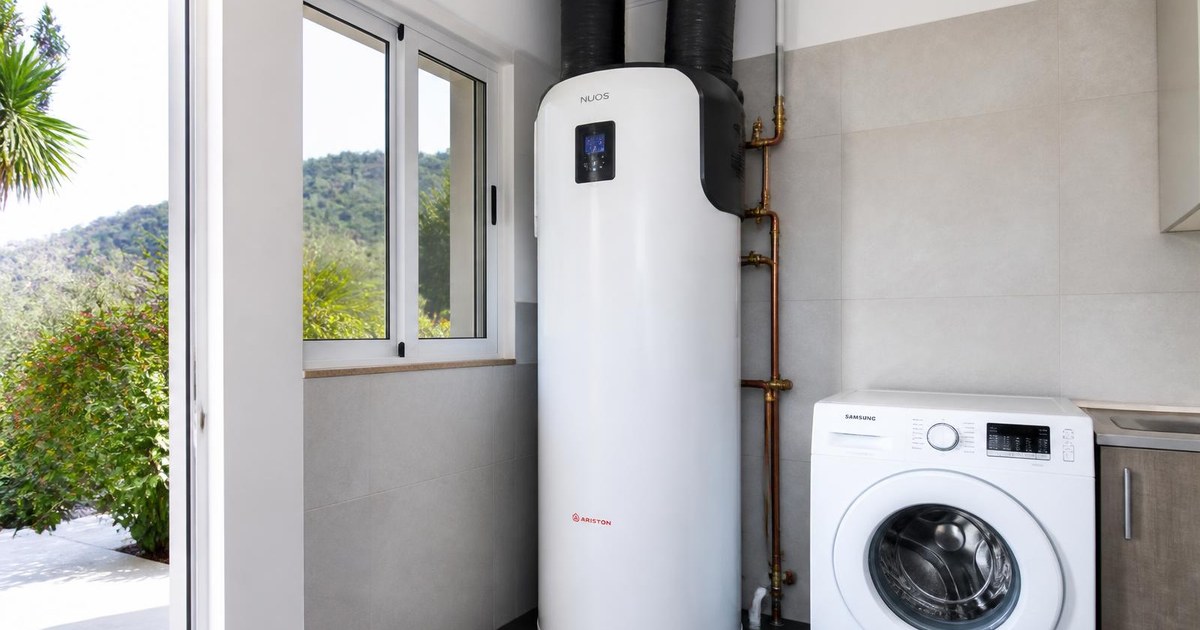
In most homes on Madeira Island, heating water is the single largest share of the electricity bill. When the old appliance starts failing, the same question always comes up: invest in a heat pump water heater or keep the simplicity of an electric storage heater? The answer depends on the local microclimate — the warm coast of Funchal and Calheta versus the cooler, damper highlands — on the available space, and on the usage profile, especially in holiday rental properties.
🔎 Symptoms & Initial Diagnosis
1) A persistently high electricity bill at the end of the month with no change in habits, with water heating typically accounting for 30% to 40% of household consumption. 2) An ageing water heater causing constant trouble: water going cold mid-shower, breaker tripping, limescale noise from the element, dripping safety valve or rust marks at the base. 3) The technical dilemma between upfront investment and real payback in Madeira, made worse by quotes that compare only equipment price and ignore annual consumption, technical space and maintenance. 4) Recurring guest complaints in holiday rentals about running out of hot water at peak times. 5) A storage heater over 10 years old with no record of magnesium anode replacement — a sign the tank is near the end of its life.
🧪 Main Causes in Madeira
1) The island's microclimates: on the warm coastal strip — Funchal, Caniço and Calheta — air temperature stays mild all year, which favours heat pump performance; in the damp highlands, with cold nights and high humidity, the COP drops and the unit falls back on the backup electric element more often. 2) Available space: many utility rooms, garages and apartment kitchens in Funchal are small, closed compartments without the minimum air volume (usually 20 m³ or dedicated ducts) a heat pump requires. 3) Usage profile: a resident family with steady consumption pays a heat pump back quickly; a holiday rental with intermittent occupancy and concentrated morning peaks may need a larger tank and smart scheduling. 4) Sea spray along the coast, which accelerates corrosion of outdoor components and metal connections. 5) Moderately hard water in several municipalities, causing limescale build-up that lowers electric element efficiency.
🛠️ Ideal Step-by-Step Solution
1) Technical efficiency comparison: an electric storage heater turns 1 kWh of electricity into roughly 1 kWh of heat (~100% efficiency); a heat pump, drawing energy from ambient air, reaches a typical COP (Coefficient of Performance) of 3 to 4 in mild climates — producing 3 to 4 kWh of heat per 1 kWh consumed and cutting water-heating energy by 60% to 75%. 2) A survey of real demand: number of users, daily showers and peak hours, to size between 100 and 200 litres of storage. 3) Space requirements: the heat pump needs air volume and ventilation, with intake and extraction ducts when installed in a closed room, plus headroom for the upper module and a drain connection for condensate; the storage heater is compact, wall-mounted and solves tight spaces. 4) Investment and payback analysis in the Autonomous Region of Madeira: a heat pump costs several times more in equipment and installation, but with steady consumption the annual saving gives an average payback of 4 to 7 years and a longer service life. 5) Checking the electrical installation, pipe diameters and mains pressure, fitting a pressure reducer whenever it exceeds 5 bar. 6) Setting time scheduling to use the cheapest tariff window and, where present, on-site solar production.
🎯 Definitive Technical Solution
1) Twin coil / auxiliary heat exchanger: in buildings located in cold-winter areas, at higher altitude or exposed to heavy humidity and sea spray, choose monobloc or split heat pumps fitted with a twin coil or a secondary auxiliary heat exchanger. This allows a backup heat source — solar thermal panels or a boiler — to be connected, securing hot water with good efficiency even on the coldest days, when the COP naturally drops. 2) Mandatory anti-corrosion coating: specify evaporators and heat exchangers with Blue Fin or Gold Fin protective coating. This treatment prevents the accelerated degradation of aluminium and copper caused by salt spray and continuous acidic condensation, keeping the COP high all year round and greatly extending equipment life in Madeira's coastal areas.
🚫 What to AVOID
1) Installing heat pumps in closed rooms with no cold-air extraction ducts: the unit cools and dries the very air it needs, the COP collapses and consumption approaches that of a plain storage heater. 2) Choosing low energy class storage heaters with no smart scheduling, keeping water hot 24 hours a day for no reason. 3) Sizing by price rather than real demand, ending up with too little storage for the household or rental peaks. 4) Ignoring the safety valve and expansion vessel, both required to absorb thermal expansion. 5) Placing the unit on balconies exposed to sea spray without proper protection. 6) Postponing magnesium anode replacement to save money now — the fastest route to a punctured tank and a flood.
🧰 Preventive Maintenance
1) Cleaning the heat pump's air filters every 3 to 6 months depending on dust and sea spray, keeping airflow and the advertised COP. 2) Replacing the magnesium anode in the storage heater regularly, typically every 2 years, or yearly with harder water, inspecting and descaling the element at the same time. 3) An annual safety valve test and expansion vessel pressure check. 4) Confirming a service temperature around 60 °C: protects against legionella with no energy waste or scalding risk. 5) Checking heat pump condensate drainage and the state of hot water pipe insulation. 6) In holiday rentals in Funchal, Caniço, Santa Cruz or Calheta, add these checks to the annual maintenance plan before high season.
FAQ
Do heat pumps lose efficiency in the cold winter of Madeira's highlands?
Yes, the COP drops with cold air. In the highlands and damper areas the right choice is a model with a twin coil or auxiliary heat exchanger, which accepts backup from solar thermal panels or a boiler and keeps hot water available without relying permanently on the electric element.
Does sea spray damage a heat pump?
It does if the unit is unprotected. In coastal areas only evaporators and heat exchangers with Blue Fin or Gold Fin anti-corrosion coating should be installed, as they stop the corrosion of aluminium and copper caused by salt and acidic condensation.
Does a heat pump work well in Madeira's cold highlands?
It works, but with lower performance than on the coast. In the damp, higher areas of the island, with cold nights, the COP drops and the unit uses the backup electric element more often, reducing savings. There we choose a model with good low-temperature performance, install it in a ventilated yet sheltered spot and size the tank to avoid repeated start-ups. In Funchal, Caniço and Calheta, with mild weather all year, performance is clearly better.
How much can I save on my bill by switching to a heat pump?
Because a heat pump produces 3 to 4 kWh of heat per kWh consumed, the energy used to heat water typically falls by 60% to 75% compared with an electric storage heater. For a family of four in Madeira with steady consumption, that means several hundred euros a year and an average payback of 4 to 7 years. In occasionally used homes savings are smaller, and a good energy class storage heater with time scheduling may remain the more balanced choice.
Which takes up less space in an apartment kitchen or utility room?
The storage heater. It is compact, wall-mounted and fits the tight spaces common in Funchal apartments. A heat pump needs air volume, headroom for the upper module, a condensate drain and, in closed rooms, intake and extraction ducts. We assess the space on site before recommending a solution.
Want to know which system suits your home? Message us on WhatsApp.
We install and service heat pump water heaters and electric storage heaters in Funchal, Caniço, Santa Cruz, Câmara de Lobos, Ribeira Brava, Calheta and the highlands across Madeira Island, including houses and holiday rental properties.