Dripping Tap or Low Water Pressure? How to Solve the Problem for Good
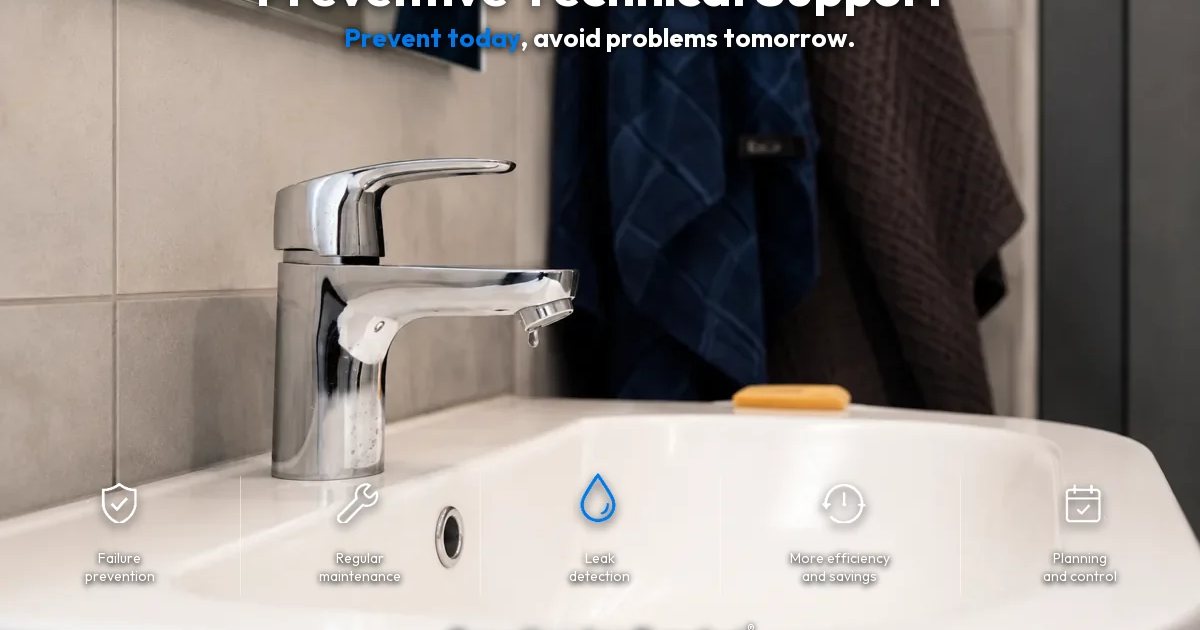
A dripping tap isn't just annoying — it easily wastes thousands of litres of water a year and quietly pushes your bill up. And when pressure drops and the shower turns into a trickle, the daily frustration is even worse. In Madeira, the island's steep terrain causes significant pressure differences between higher and lower areas, which speeds up wear on seals, cartridges and isolation valves in homes across Funchal, Caniço, Santa Cruz, Machico, Câmara de Lobos, Ribeira Brava, Ponta do Sol, Santana, São Vicente and Porto Moniz. The good news is the cause is almost always simple to identify, and a proper fix lasts for years.
🔎 Symptoms & Initial Diagnosis
1) Constant or intermittent dripping from the spout or under the handle, even with the tap fully closed. 2) Weak or irregular flow from just one tap, usually a sign of a clogged aerator. 3) Generally low pressure throughout the house, especially in higher areas of Funchal, Câmara de Lobos or Santana. 4) A whistling or vibrating noise when opening the tap, linked to pressure spikes or worn seals. 5) Permanent dampness under the washbasin or counter, near the isolation valve, indicating a leak at the threaded connection. 6) A stiff handle that turns with effort, or a cartridge that no longer closes fully — a sign of a worn ceramic cartridge or sediment build-up.
🧪 Main Causes
1) Pressure spikes between higher and lower areas of the island: Madeira's terrain creates sharp pressure differences between high elevations (Monte, Santana, São Vicente) and areas near the sea, fatiguing seals and cartridges every time a tap is opened. 2) Sea air (maresia): in Funchal, Câmara de Lobos and Machico, salty air speeds up oxidation of brass nuts and fittings, especially in isolation valves under the counter. 3) Natural wear of internal seals (o-rings, rubber or ceramic washers) that lose elasticity with daily use. 4) Flow differences between Madeira's network and mainland Portugal: distribution pressure can be higher here, requiring correctly set pressure reducers. 5) Mechanical expansion of metal fittings from hot/cold water temperature changes, which loosens threads and warps seals over the years. 6) Fine sediment and loose metal particles from old pipework that build up in the aerator and inlet filter, even though Madeira's water itself is soft.
🛠️ Ideal Step-by-Step / Immediate Action
1) Close the individual isolation valve under the counter or washbasin before dismantling any part. 2) Unscrew the aerator with a suitable wrench (never pliers), soak it in white vinegar for 30 minutes and brush the holes to remove sediment. 3) If dripping continues, remove the handle and replace the ceramic cartridge with a quality equivalent — never force the fit. 4) Also clean the inlet filter at the hose connection, removing debris that reduces flow. 5) Reseal threads with fresh PTFE tape, tighten with moderate firmness and open the isolation valve slowly to test without a pressure shock. 6) If low pressure affects the whole house, contact a technician immediately to check the main pressure reducer and the state of the pipework.
🚫 What to AVOID
1) Do not postpone replacing old flexible hoses just because it's “only a drip” — a degraded hose can fail suddenly and without warning, risking a flood. 2) Never use unsuitable tools (needle-nose pliers, screwdrivers) on brass or copper fittings: it scratches the thread, deforms the nut and creates permanent leak points. 3) Do not overtighten joints hoping to stop a drip — excess force cracks the brass, crushes the internal seal and worsens the leak instead of fixing it. 4) Do not mix cartridges or parts from different brands without confirming exact model compatibility. 5) Do not ignore whistling or vibration noises in the pipework: they are early signs of pressure spikes that progressively damage seals and cartridges throughout the house.
🧰 Preventive Maintenance
Visually inspect all isolation valves under counters and washbasins every 6 months, making sure they turn freely. Clean aerators and shower heads at least twice a year by soaking them in white vinegar. Check the main pressure reducer annually, especially in homes at higher elevations in Funchal, Câmara de Lobos and Santana. Replace connection hoses every 5 years and never exceed 8 years of use. This simple routine, followed in homes and holiday rentals across Madeira, prevents most sudden leaks and pressure drops.
FAQ
Why does only one tap have low pressure while the others are fine?
When the problem affects only one point, the cause is almost always local: a sediment-clogged aerator or a partially blocked ceramic cartridge. Remove it, clean it in white vinegar and test before suspecting the mains network.
How often should I replace a ceramic cartridge?
A professional-grade cartridge lasts between 8 and 15 years under normal use. In areas with sharp pressure spikes, such as higher elevations of Funchal or Câmara de Lobos, replacement may be needed a little sooner.
Is it worth installing individual isolation valves?
Yes. They let you shut off water at just that one point (washbasin, toilet, washing machine) without affecting the rest of the house, making maintenance easier and drastically reducing the risk of flooding in case of a leak.
Need help now? Fast response on WhatsApp.
We replace, repair and install professional taps and mixers in Funchal, Câmara de Lobos, Caniço, Santa Cruz, Machico and across Madeira.