«Dead Leg Syndrome»: When an Inactive Pipe Creates Invisible Odours and Leaks
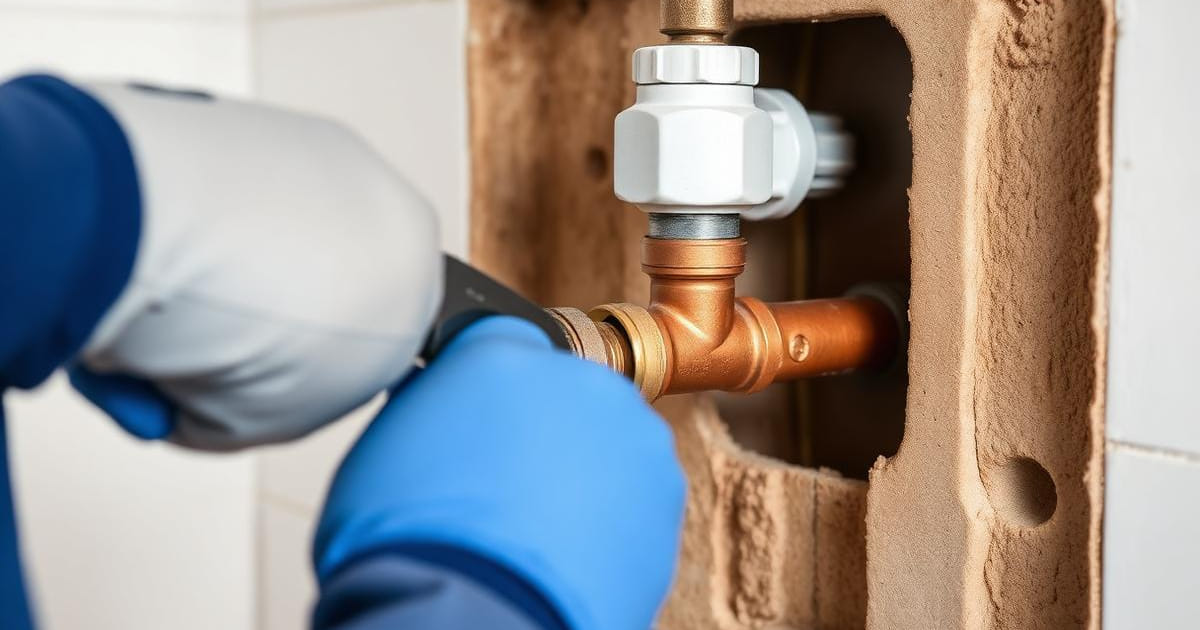
Many older homes and renovations in Madeira hide a rare but persistent problem: a plumbing pipe that was decommissioned, cut partway and capped at the end, instead of being removed at the source at the main stack or branch. On the surface the installation looks properly closed. But inside that «dead leg» water sits still for months or years. That is where unexplained odours begin, where damp patches appear and disappear, and where leaks no one can locate start. At Canalizador Funchal® we call it «Dead Leg Syndrome» — and the only cure is surgical.
🦠 The Danger of the «Dead Leg»
A dead leg is any pipe branch that no longer has flow and retains stagnant water inside. 1) Without flow, the residual chlorine from the public supply disappears within days, leaving the water unprotected microbiologically. 2) Madeira's mild indoor temperatures (15–25 °C) accelerate the growth of bacteria, biofilm and yeast inside the pipe. 3) Microbiological decomposition releases gases smelling of rotten eggs, sewage or damp rust that rise through nearby taps, drains or joints. 4) The problem is insidious: the odour may appear in a bathroom unrelated to the dead leg because gases migrate through the network. 5) In severe cases stagnant water can harbour Legionella and other potentially pathogenic bacteria. 6) The solution is never to seal the end better — it is to remove the dead leg at the source.
🔧 Stagnation Corrosion and Hidden Leaks
Lack of flow does more than create smells: it accelerates the degradation of the pipe itself. 1) Stagnant water cycles between oxygenation and deoxygenation, promoting pitting corrosion in copper, galvanised steel and brass fittings. 2) In copper pipes, prolonged stagnation encourages concentration-cell corrosion, with tiny holes that start on the inside and only reveal themselves once the wall is already damp. 3) Network pressure constantly pushes water into the dead leg, even when no water is being used: every pressure fluctuation stretches and compresses the trapped air, forcing droplets through forming cracks. 4) Because the pipe is inside the wall, the leak is invisible until plaster or paint begins to blister. 5) The resulting moisture feeds saltpetre and masonry deterioration, multiplying repair costs. 6) The longer the dead leg remains, the greater the structural risk.
🗺️ Diagnosis: How to Locate a Dead Leg
Diagnosis requires method, because the symptom rarely coincides with the cause. 1) Interview the owner: renovation history, old taps or sanitaryware that were removed, and the timeline of odours. 2) Visual inspection of access points: visible caps, old stopcocks or forgotten junction boxes are clear clues. 3) Static and dynamic pressure tests to detect abnormal losses in an apparently closed network. 4) Thermal imaging camera to identify wall areas with different temperature, matching stagnant water or leaks. 5) Endoscopic camera, where access exists, to confirm biofilm, corrosion or a poorly fitted cap. 6) Complete mapping of the installation: draw the active network and cross-check it with the house layout until the abandoned branch is found.
✂️ Permanent Fix: Cut at the Source
Capping the end of the pipe is a cosmetic fix. Professional correction means disconnecting the dead leg from the live network. 1) Locate the main stack or branch where the leg originates. 2) Cut the pipe as close as possible to the origin, removing the entire inactive length. 3) Physically extract the dead leg from the wall if accessible, or leave it dry and ventilated when access is impossible. 4) Close the branch with a proper cap or pass-through elbow, ensuring watertightness. 5) Flush the active network with a prolonged discharge and, when necessary, controlled disinfection. 6) Record the intervention on the plumbing map for future renovations. 7) Only then do the odours and leak risk disappear for good.
⚠️ Mistakes to Avoid
1) Do not seal a dead-leg end with silicone or putty — network pressure will keep pushing water inside. 2) Do not rely only on disinfectant or bleach: without removing the dead leg, biofilm regenerates. 3) Do not cut the pipe halfway and leave the rest in the wall — the remaining section remains stagnant. 4) Do not ignore odours because «the bathroom is clean»: the source may be another room or floor. 5) Do not patch leaks without mapping first — a visible leak may be the consequence of a dead leg upstream.
🛡️ Prevention During Renovations
The best way to avoid dead leg syndrome is to act at source during the works. 1) Whenever a sanitary fixture, tap or branch is removed, eliminate it at the stack or main branch. 2) Never leave a pipe capped at the end «for now» with the idea of fixing it later. 3) Update the plumbing schematic after every alteration. 4) Test the renovated network with pressure tests and visual inspection of every cut point. 5) In Madeira's old stone houses, where pipework has been adapted over decades, prior mapping prevents expensive surprises. 6) Hire a plumber who documents the work: the hydraulic map is the best insurance for the future.
FAQ
Why does a capped pipe still smell bad?
Because network pressure pushes water into the dead leg, where it stagnates. Without circulation, bacteria and biofilm form and release foul-smelling gases, even if the end appears sealed.
Can a dead leg cause leaks inside a wall?
Yes. Stagnation accelerates internal corrosion of the pipe and fittings. Over time micro-cracks appear that leak water slowly, staining plaster, paint or the neighbour's ceiling.
What is the difference between cutting the end and cutting at the source?
Cutting and capping the end leaves the dead leg full of stagnant water. Cutting at the source (stack or main branch) completely disconnects that branch from the active network, eliminating stagnation and leak risk.
Unexplained odours or leaks? We map your pipework and remove the dead leg permanently.
We work in Funchal, Câmara de Lobos, Caniço, Santa Cruz, Machico, Ribeira Brava, Ponta do Sol, Calheta, Santana, São Vicente and across Madeira Island.