Condensate Drainage: How to Avoid Leaks and Bad Odours in Air Conditioning
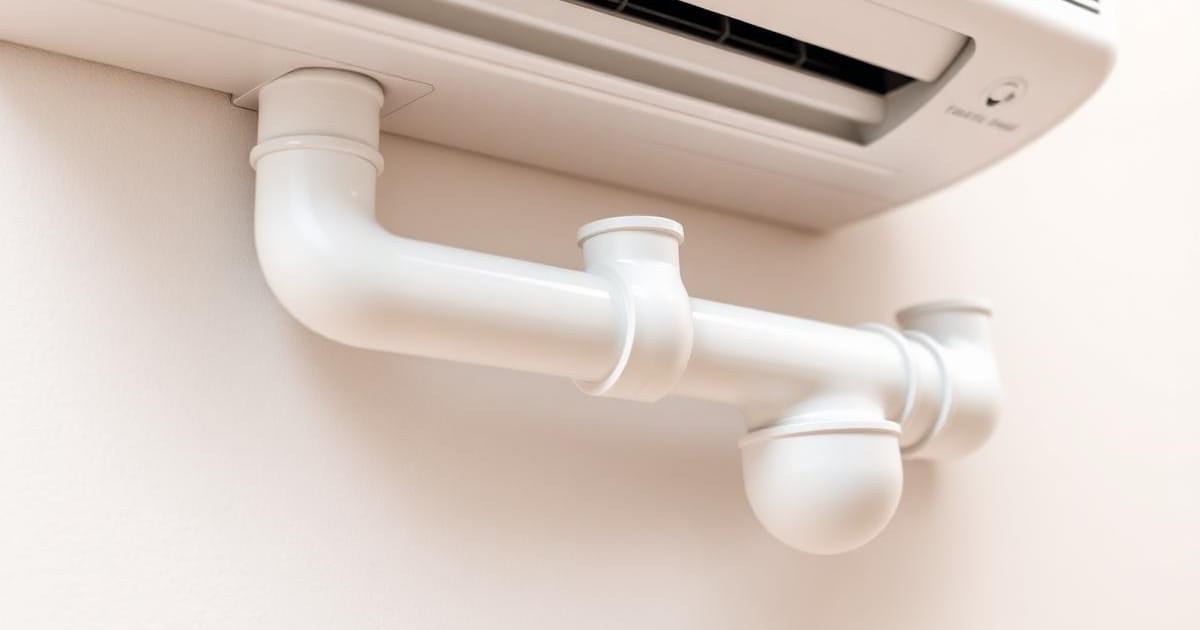
Air conditioning produces water. A lot of it. A typical indoor unit pulls several litres of moisture out of the room every day, and in a humid climate like Madeira's that figure rises sharply in summer. If the condensate line is badly designed, that water shows up where it should not: on the wall, on the neighbour's ceiling or behind the skirting. And with no odour seal, the condensate pipe becomes an open channel for drain smells. This guide explains how condensate drainage is done properly.
💧 Why Air Conditioning Drips Water
1) The indoor evaporator is colder than room air, so moisture condenses on the coil and runs into the drain pan. 2) That pan has a single outlet, usually 16 to 20 mm, and any obstruction makes it overflow. 3) The most common causes are biological slime in the pan, dust build-up in the filters and pipework with no slope. 4) In heat pump mode in winter the outdoor unit also produces condensate and defrost water, which must be routed away rather than dumped on the balcony. 5) In Madeira, high relative humidity increases condensate flow and speeds up biofilm growth. 6) Sea spray adds salts and dust that bind into the slime, making blockages worse. 7) Water dripping from a split unit is rarely an equipment fault: it is nearly always drainage that is dirty or badly built.
📐 Slope and Choosing the Pipework
1) The golden rule is a continuous falling slope, at least 1 to 2 cm per metre, with no back-falls. 2) Any sag in the pipe holds water, breeds slime and turns into a plug. 3) With flexible clear tubing, use clips every 40 to 50 cm to stop deformation and sagging. 4) On long or concealed runs, prefer rigid 25 to 32 mm PVC, which is more stable and can be cleaned. 5) Avoid diameter reductions along the route and tight 90° bends; use sweeping bends instead. 6) Always provide an accessible inspection and cleaning point, especially where the pipe is buried in the wall. 7) The discharge must never sit submerged at the final point, since that creates back pressure and stops flow.
🌀 Ball-Type Anti-Odour Trap
1) Connecting condensate straight into the drain with no seal is the most common mistake and the biggest source of smell complaints. 2) A traditional U-trap depends on retained water: outside the cooling season it dries out and lets odours through. 3) A ball trap (gravity check seal) keeps the seal even with a dry line — the correct solution for air conditioning. 4) It should be fitted as close to the unit as possible and always reachable for cleaning. 5) Seal height must suit the fan pressure so the seal is neither sucked out nor blown through. 6) Membrane anti-odour valves are an equally effective alternative if cleaned regularly. 7) Never improvise with tape or silicone: it seals the pipe, but it also blocks flow and the overflow appears on the wall.
⚙️ Condensate Pumps: When You Need One
1) When the discharge point is above the drain pan or no sloping route exists, a condensate pump is mandatory. 2) Built-in pumps (inside the split or in a box beside the unit) keep renovated rooms visually clean. 3) The discharge tube rises to a high point and then falls by gravity to the drain, with an anti-odour trap downstream. 4) The pump must have level detection and an alarm contact that stops the compressor on failure — that is what prevents floods. 5) Small reservoirs need periodic cleaning: slime jams the float and the pump stops starting. 6) The pump discharge tube is small bore and clogs easily; it should be flushed at every annual service. 7) Power must be taken from the unit with proper protection, never from improvised extension leads.
🦠 Mould, Odours and Indoor Air Quality
1) Condensate overflow soaks plasterboard, timber and skirting — perfect material for mould within days. 2) Dark stains on the ceiling under an indoor unit are nearly always condensate, not a pressurised water leak. 3) The sock-like or musty smell when the unit starts comes from biofilm in the pan and on the coil. 4) Chemical pan cleaning and coil disinfection solve the problem at source; air fresheners only mask it. 5) Treatment tablets or blocks in the pan slow slime growth between services. 6) In holiday rentals, a smelly split unit reaches the reviews faster than almost any other defect. 7) Persistent damp in an affected wall must be dried out fully before any repainting.
✅ Preventive Maintenance and Checklist
1) Wash filters monthly during heavy-use season. 2) Check and clean the anti-odour trap and pan outlet once a year, before summer. 3) Flush water through the condensate route to confirm free flow and no sags. 4) Confirm the outdoor discharge is not blocked by leaves, dust or bird nesting. 5) Test the condensate pump and its level alarm. 6) Visually inspect ceiling and walls under the unit for early staining. 7) Log every intervention — that is what separates real maintenance from emergency repair. Stains on the ceiling or a smell when the unit starts? Send photos on WhatsApp and we will assess the condensate line.
FAQ
My air conditioner drips water indoors. Is that a serious fault?
Usually not. In almost every case it is the condensate drainage: a slimed pan, pipework with no slope or a blockage. It is solved by cleaning the line, correcting the slope and fitting a proper anti-odour trap.
Can I connect condensate straight into the drain?
Only with an odour seal. Without a ball trap or anti-odour valve the pipe becomes a direct channel for drain smells, especially when the line dries out outside the cooling season.
What minimum slope should the condensate pipe have?
At least 1 to 2 cm per metre, always falling and with no back-falls. With clear tubing, clip it every 40 to 50 cm so it cannot sag into pockets where water stagnates.
When is a condensate pump required?
When the discharge point is above the drain pan or there is no sloping route, as in rooms with concealed pipework. It should include a level alarm that shuts the equipment down on failure.
Dripping condensate or a smell when the AC starts? Message us on WhatsApp.
We work in Funchal, Câmara de Lobos, Caniço, Santa Cruz, Machico, Ribeira Brava, Ponta do Sol, Calheta, Santana, São Vicente and across Madeira Island.