Concealed Cistern Running Water: How to Repair It Without Breaking the Wall
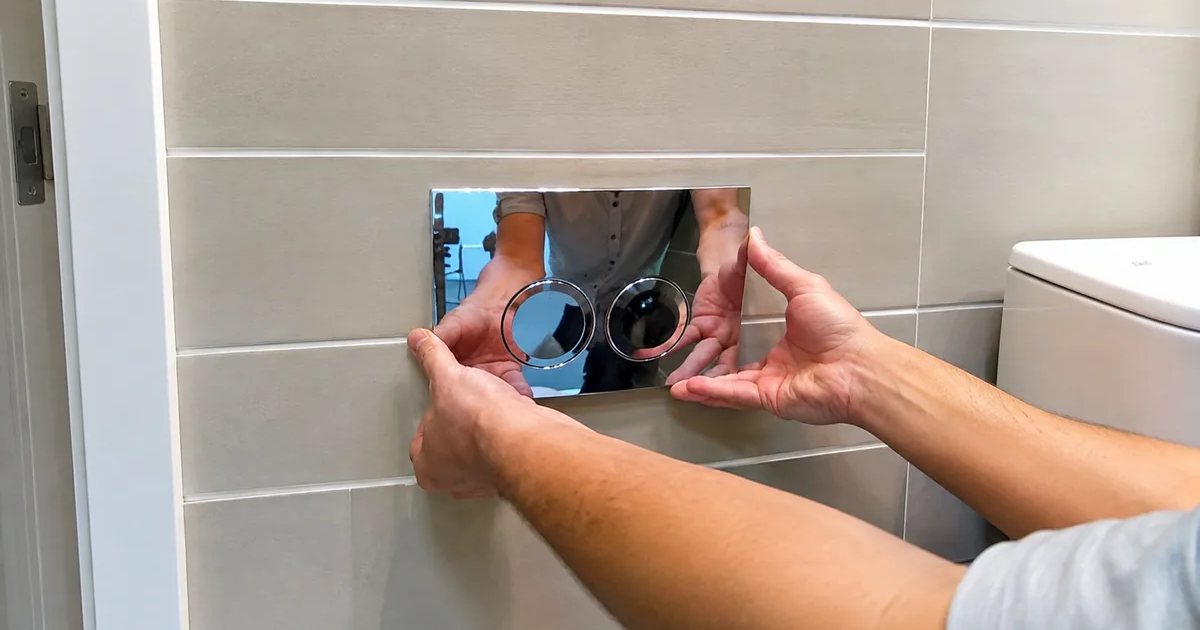
A concealed cistern that runs permanently can waste hundreds of litres a day and inflate your water bill. The good news is that in almost every case the repair is done through the flush plate opening — no tiles need to be removed — by replacing the flush valve seal or adjusting the fill valve float.
🔎 Symptoms & Initial Diagnosis
Before considering any building work, check: 1) whether you hear a constant trickle of water into the pan, even hours after the last flush — this points to the flush valve; 2) whether the fill valve never closes fully and water escapes down the overflow pipe, with a constant filling noise; 3) whether the cistern triggers itself intermittently, a sign of a slow loss forcing the mechanism to top up the level; 4) drop food colouring into the tank and wait 15 minutes without flushing — colour appearing in the pan confirms a flush valve leak. Close the internal isolating valve behind the plate and confirm whether the noise stops immediately — this isolates the fault to the internal mechanism rather than the supply pipe embedded in the wall. This quick diagnosis avoids unnecessary call-outs and allows an accurate quote for homes in Funchal, Caniço, Santa Cruz or Machico.
🧪 Main Causes / Local Challenges
1) Worn seal/membrane on the flush valve: the rubber hardens with small deposits and the typical mineral content of Madeira's water (mostly soft, without excessive limescale), eventually losing its perfect seal on the seat. 2) Incorrect float or fill valve adjustment: in higher areas of Funchal, Câmara de Lobos, Santa Cruz or Ribeira Brava, higher mains pressure caused by the steep terrain speeds up wear on the shut-off mechanism and unsettles the cut-off level. 3) Corrosion of metal components from sea air (maresia), more noticeable in bathrooms in Caniço, Machico and Porto Moniz, areas more exposed to salt air. 4) Mechanical expansion of plastic parts with water temperature changes and pressure spikes in the network. 5) Sediment and suspended particles, often dislodged after public network works in Santana or São Vicente, preventing a watertight seal even in relatively new parts. 6) Building age: in older buildings in central Funchal the original mechanisms have already exceeded their expected service life.
🛠️ Ideal Step-by-Step / Technical Planning
1) Close the internal isolating valve behind the flush plate, without affecting the rest of the home. 2) Unclip the plate (push-fit or screws, depending on the installed model) and remove the protective frame without forcing the plastic clips. 3) Precisely identify whether the fault is the flush valve (constant trickle into the pan) or the fill valve (non-stop filling through the overflow). 4) Replace the seal/membrane or the complete unit, using an original or certified compatible part for the installed model. 5) Adjust the float to the correct level, always below the overflow mark, and test several complete flush cycles. 6) Clean any sediment from the seat before closing the plate again. 7) Reopen the isolating valve slowly and check for watertightness for at least 20 minutes before closing the job. 8) Record the meter reading before and after to confirm to the client that the waste has been eliminated.
🚫 What to AVOID
1) Delaying the repair thinking “it's just a trickle” — waste adds up fast and worsens with the high pressure typical of some parts of the island, adding tens of euros to the monthly bill. 2) Using unsuitable tools (needle-nose pliers instead of the proper wrench) on brass or copper connections, which get scratched and start leaking. 3) Over-tightening nuts and unions hoping to stop the leak — this cracks the mechanism's plastic and creates a bigger problem than the original one. 4) Buying incompatible generic parts just because they are cheaper: they do not always fit the exact geometry of the installed model, causing new leaks shortly after. 5) Trying to break tiles or the wall without first confirming the fault cannot be solved through the plate — in the vast majority of cases in homes in Funchal and Caniço that work is entirely unnecessary.
🧰 Preventive Maintenance & Best Practices
Inspect the flush valve and fill valve every 2 years, replacing seals before they fail completely. In homes with high mains pressure, common at higher elevations in Funchal, Santa Cruz and Câmara de Lobos, consider installing a pressure reducer — it protects the cistern, flexible hoses and water heater at the same time against spikes and thermal expansion. Periodically clean the isolating valve's filter to prevent sediment reaching the valve, especially after public network works in Ribeira Brava or Ponta do Sol. In coastal areas like Caniço, Machico and Porto Moniz, check the internal metal components for corrosion yearly. Monitor your water meter monthly: an unexplained increase is often the first sign of a silent leak in a concealed cistern.
FAQ
Do you need to break the wall?
Almost never. The flush valve and fill valve were designed to be replaced through the flush plate opening, with no work on the tiling at all.
How do I know which part failed?
If water runs continuously into the pan, it is the flush valve seal. If you hear the cistern filling non-stop through the overflow, it is a badly adjusted fill valve.
Can you source parts for older concealed cisterns?
Yes. We work with original and compatible parts for the main brands, including older generations, in any Madeira council area.
Need help now? Fast response on WhatsApp.
We work in Funchal, Câmara de Lobos, Caniço, Santa Cruz, Machico, Ribeira Brava, Ponta do Sol, Calheta, Santana, São Vicente and across Madeira Island.