Dripping Cold Water Pipes: How to Eliminate Condensation with Thermal Insulation
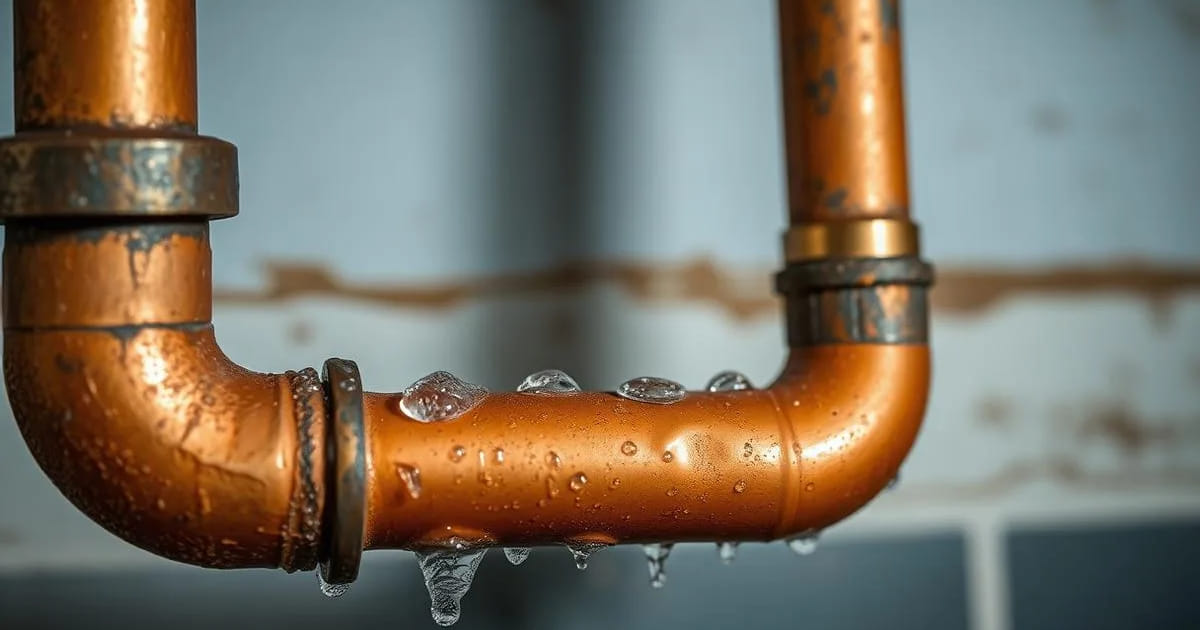
A stain appears on the ceiling or a puddle under the kitchen unit, a plumber is called, and the verdict is surprising: there is no leak at all. The pipe is simply sweating. When the surface of a cold water pipe falls below the dew point of the room air, moisture in the air condenses on it and runs off in drops. In Madeira this is especially common: high relative humidity for much of the year, proximity to the sea, garages, pantries and poorly ventilated ceiling voids. The good news is that the fix is permanent, inexpensive and purely technical: correctly applied anti-condensation insulation.
💧 Why a Cold Pipe Sweats
1) Air holds water vapour, and the warmer and more humid it is, the more vapour it can carry. 2) The dew point is the temperature at which that vapour can no longer stay suspended and condenses. 3) A cold pipe at 15 °C in a room at 25 °C with high humidity sits below the dew point. 4) Vapour then condenses on the cold surface and forms drops that run and drip. 5) The larger the pipe diameter, the greater the available condensation surface. 6) Coastal areas, bathrooms, kitchens, garages and pantries are the most affected locations. 7) That is why the dripping water is clean, continuous on humid days and disappears on dry ones.
🔍 Condensation or Real Leak? How to Tell
1) Close the main stopcock and watch the meter: no consumption means no leak in the system. 2) Condensation forms a uniform film over the whole pipe, not a localised wet spot. 3) Condensation dripping varies with the weather and worsens on the most humid days. 4) A real leak persists regardless of ambient humidity and tends to get worse over time. 5) Dry the pipe thoroughly and wrap it in paper: scattered wetting means condensation. 6) Condensation typically appears on cold water pipework and never on hot pipework in service. 7) A simple hygrometer confirms the picture: high relative humidity is the trigger.
🧱 Closed-Cell Elastomeric Foam
1) Anti-condensation insulation is made from closed-cell elastomeric foam, such as Armaflex or K-Flex. 2) Closed cells stop water vapour from migrating into the insulation. 3) That is decisive: open-cell insulation absorbs moisture and quickly loses its effectiveness. 4) The correct thickness depends on pipe diameter, water temperature and room humidity. 5) In very humid spaces, insufficient thickness simply moves condensation onto the insulation surface. 6) There are pre-slit self-adhesive sleeves and sheet rolls for covering fittings and bends. 7) For outdoor runs, choose UV-protected versions or apply suitable cladding.
🛠️ Correct Application and Seam Sealing
1) Clean and thoroughly dry the pipe before applying the insulation. 2) The sleeve must be a snug fit, with no gap where humid air can circulate against the pipe. 3) All longitudinal seams and butt joints are glued and then sealed with dedicated tape. 4) Bends, tees, valves and couplings must be insulated too — they are the commonest thermal bridges. 5) Leave no bare sections at wall penetrations and supports: condensation restarts exactly there. 6) Fit clips over the insulation, not on the bare pipe, to avoid creating a thermal bridge. 7) Insulation with open seams is practically equivalent to having no insulation at all.
🏠 Preventing Stains, Mould and Structural Damage
1) Condensation water runs, pools and stains ceiling voids, plasterboard and kitchen units. 2) Persistent damp creates ideal conditions for mould and stale odours in closed cupboards. 3) In ceiling voids, dripping can be mistaken for a leak from the flat above for months. 4) Metal trays and fixings in contact with a condensing pipe corrode quickly. 5) Room ventilation lowers relative humidity and complements the insulation. 6) Extractors in bathrooms and kitchens remove vapour at source and lower the risk. 7) In pantries and garages, avoid drying laundry next to uninsulated pipework.
📋 Periodic Checks and Best Practice in Madeira
1) Inspect the insulation once a year: lifted tape and open seams are the commonest failure. 2) Replace sections crushed or torn by later work from other trades. 3) Use any refurbishment as the opportunity to insulate all accessible cold water pipework. 4) In new build, insulate before closing ceiling voids and wall channels: afterwards it costs far more. 5) Combine with hot water insulation: it cuts heat losses and improves comfort. 6) In rentals and holiday lets, it prevents complaints about stains and damp smells. 7) Pipes dripping without a leak? Message us on WhatsApp and we will fit proper insulation.
FAQ
My pipe drips but I have no leak. Is that normal?
It is condensation. The cold pipe surface sits below the dew point of the air and ambient vapour condenses on it. A still water meter confirms there is no leak in the system.
Will any insulation stop condensation?
No. You need closed-cell insulation with a thickness matched to the diameter and to local humidity. Open-cell materials absorb vapour and stop working within a short time.
Why did condensation return after insulating?
Almost always because of poorly sealed seams, insufficient thickness, or fittings and bends left bare. Continuity of the insulation matters as much as the material itself.
Is ventilation alone enough?
It helps lower relative humidity, but in coastal areas it is rarely sufficient. The reliable answer is to insulate the pipe and improve room ventilation in parallel.
Cold water pipes dripping without a leak? Message us on WhatsApp and we will fit proper insulation.
We work in Funchal, Câmara de Lobos, Caniço, Santa Cruz, Machico, Ribeira Brava, Ponta do Sol, Calheta, Santana, São Vicente and across the whole island of Madeira.