Cleaning Extractor Hoods and Fans: Preventing Failures, Fire and Bad Odours
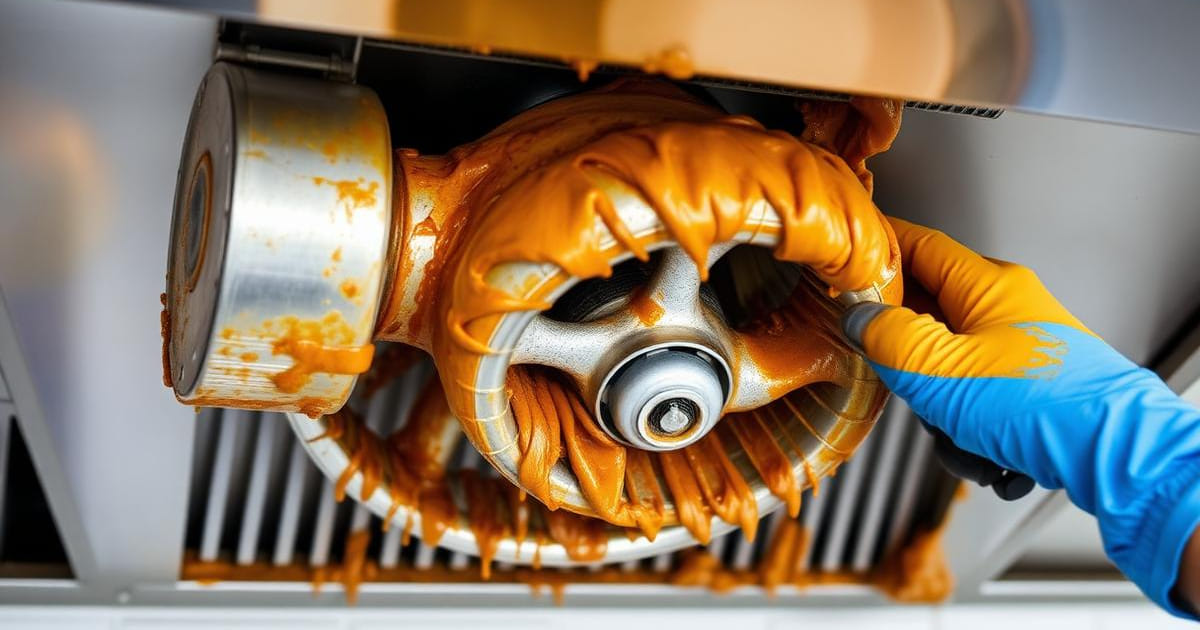
Ventilation is the most forgotten system in a home: it works silently, nobody pays attention to it, and it only becomes visible when it fails. In kitchens, grease builds up in the filters and then on the hood impeller, creating a genuine fire risk just centimetres above the hob. In bathrooms, dust combined with humidity turns ducts and grilles into ideal surfaces for mould and persistent odours. This article explains, with technical criteria, what happens inside this equipment, how often it should be cleaned, and how simple preventive maintenance avoids expensive replacements in Funchal and across Madeira.
🔥 Grease on the Impeller: A Real Fire Risk
This is the point most underestimated at home. 1) Metal filters trap part of the grease, but cooking vapour always passes through and condenses on the impeller and inside the hood casing. 2) Accumulated grease is fuel: a high flame from frying or flambé can ignite it inside the duct itself. 3) Fires that start in the hood spread along the duct towards the outside, where they are extremely hard to extinguish. 4) In holiday-let and heavily used kitchens this risk multiplies with intensity of use. 5) Metal filters should be cleaned every 3 to 4 weeks (dishwasher or alkaline degreaser). 6) Internal cleaning of the casing and impeller should be done at least once a year — every 6 months under heavy use. 7) Never use flammable products or spray degreaser directly onto electrical components.
⚙️ Motor Wear and Loss of Airflow
Grease is not only a fire risk, it is the main cause of mechanical failure. 1) A grease layer on one impeller blade unbalances the rotor and creates permanent vibration. 2) That vibration destroys bearings and bushings, which start humming characteristically before seizing. 3) The motor works against higher resistive torque, runs hotter and consumes more energy. 4) In parallel, effective airflow drops: a unit that moved 400 m³/h can fall to half that with saturated filters and impeller. 5) When a customer says «the hood doesn't pull like it used to», in 8 out of 10 cases it is not a fault: it is accumulated dirt. 6) Timely impeller cleaning extends motor life by years and restores almost all original performance. 7) Motors already making metallic noise rarely recover — at that point replacement is inevitable.
🦠 Bathroom Ducts and Grilles: Mould and Odours
In bathrooms the problem is not grease, it is biology. 1) Household dust accumulates on the grille and in the first tens of centimetres of duct. 2) With constant humidity that dust becomes a substrate for fungi and mould, which release spores back into the bathroom air. 3) The classic symptom is a dark stain around the grille and a musty smell that cleaning products do not remove. 4) Backdraft valve flaps stick with dirt and jam open, letting odours in from the shared stack. 5) Fine-mesh grilles clog faster and drastically cut airflow. 6) Proper hygiene means removing the grille, vacuuming the accessible duct, brushing and disinfecting surfaces. 7) We recommend cleaning every 6 months in internal bathrooms and every 12 months where there is a window.
🗓️ A Realistic Preventive Maintenance Plan
A plan people can actually follow beats a perfect plan. 1) Every 3 to 4 weeks: wash the hood's metal filters. 2) Every 4 to 6 months: replace the active charcoal filter if the hood runs in recirculation. 3) Every 6 months: clean the bathroom fan grille and flaps; check the door undercut is still clear. 4) Annually: internal cleaning of hood casing and impeller, checking fixings and anti-vibration pads. 5) Annually: simple airflow test with a sheet of paper at the grille and a backdraft valve check. 6) Every 2 to 3 years: inspect the duct along all accessible length, especially shared stacks and long horizontal runs. 7) In holiday lets, halve all these intervals — usage is far above domestic level.
⚠️ What to Avoid When Cleaning
We see damage caused by good intentions. 1) Never wash components with the appliance connected: always switch off the breaker before dismantling. 2) Do not immerse motors, controls or electronic boards in water or degreaser. 3) Avoid steel wool and abrasives on stainless surfaces: they create scratches where grease then sticks harder. 4) Do not use strong acids on aluminium (filters and ducts): they corrode and weaken the material. 5) Do not force hardened backdraft flaps — replace them, they are cheap parts. 6) Do not block ventilation grilles to «stop draughts»: that is a guaranteed recipe for mould. 7) Do not replace rigid duct with corrugated flexible during a clean: you lose airflow and gain noise.
✅ When to Call a Technician
Some signs should not wait. 1) Metallic noise, humming or vibration in the hood: bearings at end of life. 2) Burning smell during operation: overheated grease or a straining motor. 3) Weak extraction even after washing filters: blocked or throttled duct. 4) Recurring mould around the bathroom grille: insufficient airflow or structural damp. 5) Stack odours at specific times of day: missing or jammed backdraft valve. 6) Persistent condensation on the bathroom ceiling after showers: incorrectly sized fan. 7) At Canalizador Funchal® we handle diagnosis, technical cleaning, valve replacement and duct correction. Send photos of the equipment and duct on WhatsApp and we will advise the intervention needed.
FAQ
How often should I clean the hood filters?
Every 3 to 4 weeks in normal domestic use, and every 2 weeks if you fry a lot. Metal filters can go in the dishwasher; active charcoal filters cannot be washed and must be replaced every 4 to 6 months.
Can grease build-up in a hood really cause a fire?
Yes. Grease is fuel and accumulates inside the casing and duct, centimetres from the hob. A high flame while frying can ignite it, and a fire inside the duct is very difficult to extinguish.
Why does mould always appear around the bathroom grille?
Because damp dust on the grille and duct is a substrate for fungi, and airflow is usually insufficient. The fix combines duct hygiene with checks on airflow and the incoming air path.
Does cleaning the impeller restore the hood's original performance?
In most cases yes, almost all airflow returns and noise drops. If bearings are already making metallic noise, cleaning helps but does not undo the wear — at that point the motor is at end of life.
Need technical cleaning or a ventilation diagnosis? Contact us on WhatsApp.
We work in Funchal, Câmara de Lobos, Caniço, Santa Cruz, Machico, Ribeira Brava, Ponta do Sol, Calheta, Santana, São Vicente and across Madeira Island.