How to Get More Hot Water from Your Water Heater | Thermostatic Valve
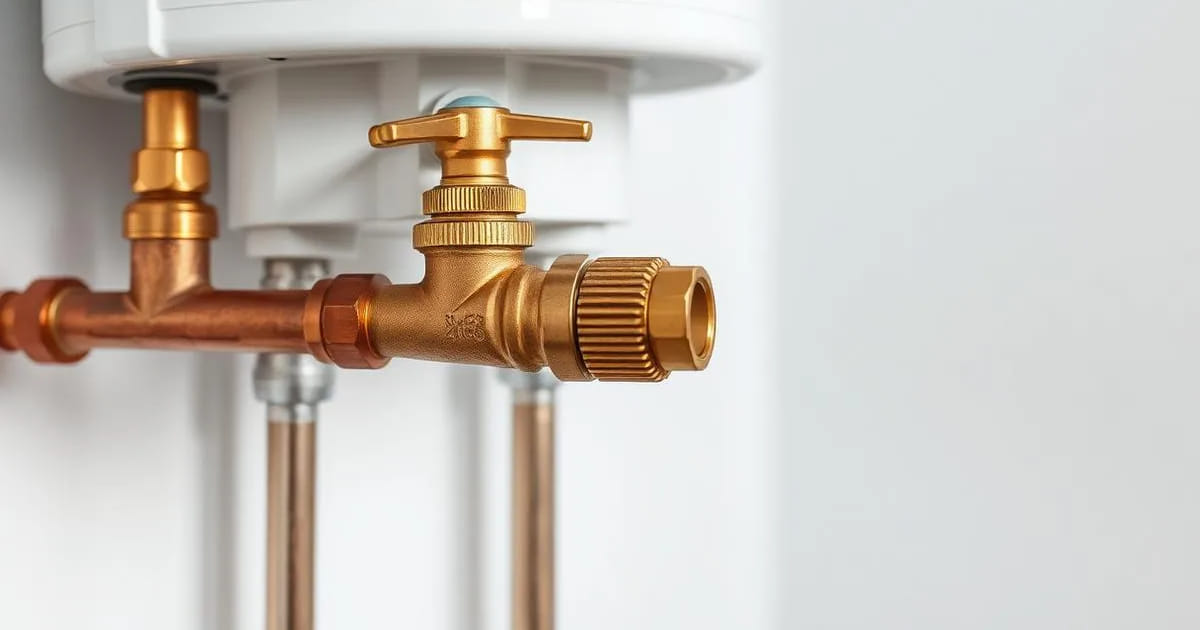
There is a technical conflict rarely explained to homeowners: the temperature that kills bacteria inside the cylinder is exactly the temperature that scalds skin at the tap. Storing water at 45 °C feels comfortable but creates ideal conditions for Legionella. Storing at 60 °C is sanitary but can cause serious burns within seconds, especially to children and older people. A central thermostatic mixing valve solves both problems at once: it keeps the cylinder hot and delivers a stable, safe temperature to the network.
🌡️ The Legionella vs Scalding Conflict
1) Legionella multiplies mainly between 25 °C and 45 °C, precisely the range many Madeira water heaters are set to in order to «save energy». 2) Above 55 °C proliferation stops; at 60 °C destruction is fast. 3) On the other hand, water at 60 °C causes second-degree burns after only a few seconds of contact. 4) At 45 °C the exposure time needed for injury is far longer, which gives a margin to react. 5) Lowering the cylinder thermostat is the wrong fix: it creates a permanent microbiological risk and reduces hot water autonomy. 6) The correct approach is to decouple storage from distribution. 7) That is exactly what a mixing valve fitted at the cylinder or solar system outlet does.
⚙️ How the Thermostatic Mixing Valve Works
1) The brass body receives two inlets: hot water from the cylinder and cold water from the mains. 2) Inside, a wax or bimetallic thermostatic element expands and contracts with the temperature of the blend. 3) That movement drives a shuttle that proportionally opens or closes the two inlets. 4) The result is a stable outlet temperature, typically adjustable between 35 °C and 60 °C. 5) Models with anti-scald function shut the flow almost completely if the cold supply fails. 6) Setting is done with a graduated knob, usually lockable with a screw to prevent accidental changes. 7) It is a purely mechanical device: no electricity, no electronics, and years of life with minimal maintenance.
🔧 Correct Installation at the Cylinder Outlet
1) The valve is fitted immediately downstream of the cylinder or solar thermal store, before indoor distribution. 2) It needs a cold supply with pressure balanced against the hot side: if a pressure reducer exists, it must serve both branches. 3) We recommend isolation valves and strainers on both inlets plus a check valve on each side, to prevent hot water migrating into the cold network. 4) We always leave access for setting and maintenance: a valve buried in a wall without an access panel is a common mistake. 5) On solar thermal systems the valve is effectively mandatory: in Madeira summers the store easily reaches 75 °C to 85 °C. 6) In houses with a hot water return loop, the valve is arranged so it does not short-circuit the return. 7) After fitting, we measure at the nearest and the farthest tap and fine-tune the knob.
💡 Real Energy Gains and Less Limescale
1) With distribution at 45 °C, heat losses along the pipes drop because the temperature difference to the surrounding air is smaller. 2) Lower circulating temperature means less limescale precipitation in mixers and shower heads — relevant in harder-water areas of the island. 3) The cylinder stays at 60 °C, storing more energy: the same volume yields more showers, because blending happens before distribution. 4) In many cases this keeps a 100-litre cylinder viable where 150 litres seemed necessary. 5) Electricity consumption does not rise proportionally: heating hotter but drawing less hot volume per shower tends to compensate. 6) In homes with a sanitary heat pump, the valve stabilises comfort when the store stratifies. 7) The main return is safety, but the extra autonomy is felt immediately.
🚫 Frequent Mistakes and What Never to Do
1) Lowering the water heater thermostat to 40 °C as an «anti-scald solution» — it creates a Legionella risk. 2) Fitting the valve without strainers: grit and sand jam the thermostatic element. 3) Feeding the cold inlet from another point of the network at different pressure — it causes shower temperature swings. 4) Concealing the valve with no access for adjustment or replacement. 5) Confusing a shower thermostatic mixer (point of use) with a central system valve: flow rates and functions differ. 6) Leaving the setting unlocked, so anyone can raise the distribution temperature. 7) Skipping maintenance: a limescaled thermostatic element stops reacting and water arrives too hot or too cold.
✅ Annual Check and Maintenance
1) Measure outlet temperature with a digital thermometer at two different taps. 2) Confirm storage temperature at 60 °C. 3) Test the anti-scald function by shutting the cold supply and verifying flow shutdown. 4) Clean the inlet strainers and check the check valves. 5) Inspect the valve body for limescale traces or leaks at the unions. 6) Record the measured values for comparison next year. 7) In holiday rentals we also recommend documenting temperatures: it is a strong safety argument with guests and insurers. Want your installation assessed? Send us a WhatsApp photo of the water heater and its outlet pipework.
FAQ
Will I use more electricity with the cylinder at 60 °C?
The cylinder loses slightly more by radiation, but it delivers more usable hot water, because blending with cold happens before distribution. In practice total consumption tends to stay level while autonomy and sanitary safety improve.
Does a central valve replace the shower thermostatic mixer?
No. The central valve protects the whole installation and caps the temperature circulating in the network. The shower mixer still regulates comfort at the point of use. Both work well together.
I have solar thermal panels. Is it really necessary?
It is practically essential. On sunny Madeira days the solar store can exceed 80 °C and water reaches taps at instant-scald temperature. The valve caps the outlet at a safe, stable value.
What distribution temperature do you recommend?
Usually 45 °C with the cylinder at 60 °C. In homes with small children or elderly residents we may set 42 °C, always verified at the tap and with the setting locked.
Want a central thermostatic mixing valve fitted? Message us on WhatsApp.
We work in Funchal, Câmara de Lobos, Caniço, Santa Cruz, Machico, Ribeira Brava, Ponta do Sol, Calheta, Santana, São Vicente and across Madeira Island.