PEX, Multilayer, PPR or Copper? Which Is the Best Pipe for Your Home Plumbing in Madeira
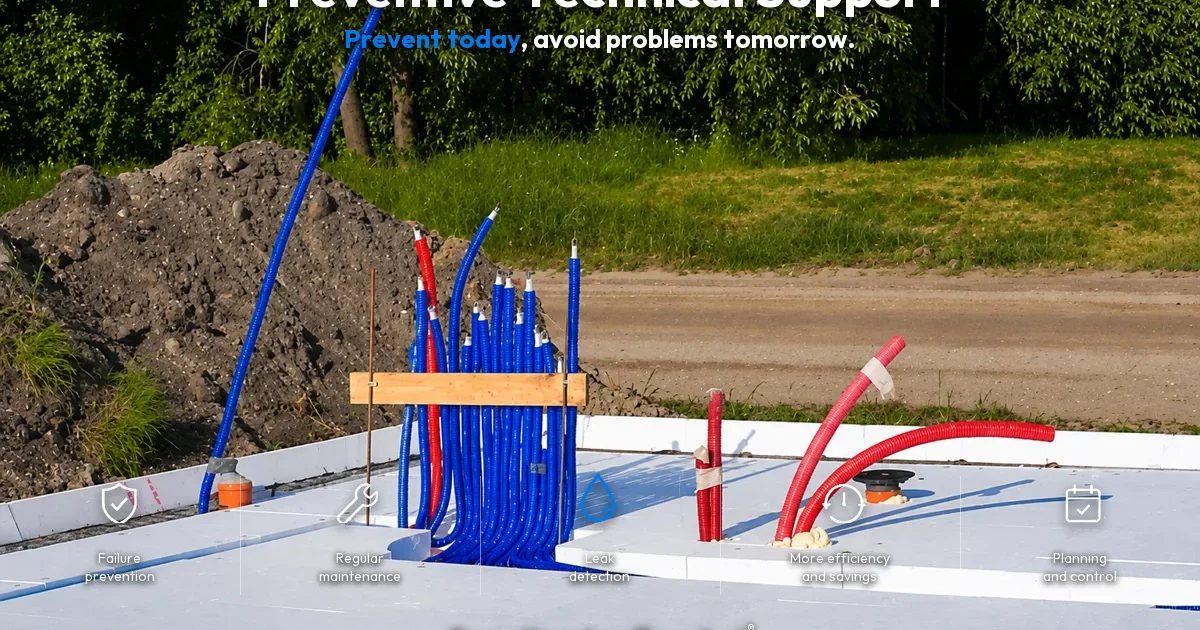
Choosing the right pipe is one of the most important decisions in any build or renovation — a mistake here is often only discovered years later, once walls and floors are already finished. In Madeira, the maritime climate, high mains pressure in some areas and the common practice of embedding pipework directly into stone masonry make this choice even more decisive than on mainland Portugal. This guide technically compares PEX, Multilayer (PEX-AL-PEX), PPR and Copper for homes in Funchal, Caniço, Santa Cruz, Machico, Câmara de Lobos, Ribeira Brava, Ponta do Sol, Santana, São Vicente and Porto Moniz.
🔎 Symptoms & Initial Diagnosis
1) Water pressure gradually dropping over the years, a sign of reduced internal bore from scaling or oxidation, more common in old copper or galvanised steel pipework. 2) Slightly yellowish or brownish water when first opening a tap in the morning, typical of internal oxidation in metal pipes. 3) Damp patches or verdigris (greenish oxidation) near copper joints embedded in exterior walls exposed to sea air. 4) Expansion noises (cracking) in walls when hot water flows through poorly fixed PPR or multilayer pipework. 5) Recurring leaks always in the same wall section, suggesting old low-quality pipework or a material unsuited to the location (for example PEX exposed to sunlight on an enclosed balcony).
🧪 Main Causes
1) High and low pressure zones of the island: in higher areas of Funchal, Câmara de Lobos or Santana, mains pressure can be considerably higher than near the sea, requiring pipes with good mechanical strength and correctly sized pressure reducers. 2) Sea air (maresia): in coastal areas such as Funchal, Câmara de Lobos and Machico, salty air progressively corrodes copper pipework and exterior or poorly protected metal fittings, but does not affect PEX, Multilayer or PPR the same way. 3) Seal and joint wear: regardless of material, threaded joints and o-rings are always the weakest point of any system, especially under repeated thermal expansion. 4) Flow differences between Madeira's network and mainland Portugal: higher distribution pressure in certain areas requires correctly sized pipework and manifolds, not just the cheapest pipe available. 5) Mechanical expansion: the daily alternation between cold and hot water expands and contracts pipework, fatiguing poorly fixed joints over the years, especially in PPR and soldered copper. 6) Pipework embedded directly in stone masonry without a protective conduit: common in older Madeiran homes, making any future repair extremely difficult.
🛠️ Ideal Step-by-Step / Immediate Action
1) For new builds or full renovations, choose PEX inside a protective conduit for sections embedded in floors and walls — it allows the pipe to be replaced without breaking masonry if a fault occurs later. 2) For visible technical pipework (garages, roof spaces, exterior areas), use Multilayer or PPR, which are more rigid and impact-resistant, always with thermal insulation on hot water lines. 3) If choosing Copper in coastal areas, ensure quality soldered joints and additional protection against sea air on exterior runs. 4) Install individual manifolds with shut-off valves per room or water point, allowing a fault to be isolated without cutting water to the whole house. 5) Before closing walls or floors, pressure-test the network for at least 24 hours and photograph the entire pipe run for future reference. 6) In older homes with pipework embedded without conduit, use any bathroom or kitchen renovation as an opportunity to convert that section to PEX in conduit.
🚫 What to AVOID
1) Do not postpone replacing old flexible hoses on taps and appliances just because “they are not dripping yet” — they remain the most vulnerable point of any network, whatever the main pipework material. 2) Never use unsuitable tools (needle-nose pliers, screwdrivers) on brass or copper fittings: it scratches the thread, deforms the nut and creates permanent leaks. 3) Do not overtighten threaded or flanged joints hoping to stop a leak — excess force cracks the material and crushes internal seals, making the problem worse. 4) Do not leave PEX pipe directly exposed to sunlight or UV radiation on enclosed balconies, terraces or roofs: it dries out and can burst within a few years. 5) Do not mix dissimilar metal fittings (for example brass with steel) without dielectric bushings: it causes accelerated galvanic corrosion, especially serious near the coast.
🧰 Preventive Maintenance
Visually inspect safety valves, manifolds and visible joints at least twice a year, checking they turn freely and show no signs of oxidation or verdigris. Flush and clean inlet filters annually, especially in homes with their own borehole, where water may contain more dissolved minerals than the public mains. Check the thermal insulation on hot water pipework every few years, replacing sections degraded by sun or damp. Replace connection hoses every 5 years and never exceed 8 years of use. This simple routine, followed in homes and holiday rentals across Madeira, extends the working life of any pipework system, whether PEX, Multilayer, PPR or Copper.
FAQ
PEX, Multilayer, PPR or Copper: which resists sea-air corrosion best in Madeira?
PEX, Multilayer and PPR do not corrode from salty air, unlike Copper, which in coastal areas such as Funchal, Câmara de Lobos or Machico can oxidise faster if joints are exposed or poorly protected. For exterior sections near the sea, PEX or Multilayer are generally the safer long-term choice.
Does Madeira's water contain limescale and cause pipe scaling?
No, mains water in Madeira is mostly soft, with little limescale. Any scaling that does appear is usually caused by fine sediment, metal particles from old pipework, or dissolved minerals in private borehole water, and it mainly affects aerators and filters — not the internal bore of modern pipes.
Is it worth embedding PEX pipe in a protective conduit instead of running it directly?
Yes, especially in new builds or renovations. If the pipe runs inside a guide conduit, a future fault can be fixed by pulling out the damaged section and sliding a new pipe through the same conduit, without breaking tiles, flooring or walls — a huge advantage in Madeira's traditional stone homes.
Need help now? Fast response on WhatsApp.
We install PEX-in-conduit, multilayer, PPR and copper water systems in Funchal, Câmara de Lobos, Caniço, Santa Cruz, Machico, Ribeira Brava, Ponta do Sol, Santana, São Vicente, Porto Moniz and across the island of Madeira.