Cracking and Banging Noises in the Walls When Hot Water Runs? Here Is What It Is and How to Fix It in Madeira
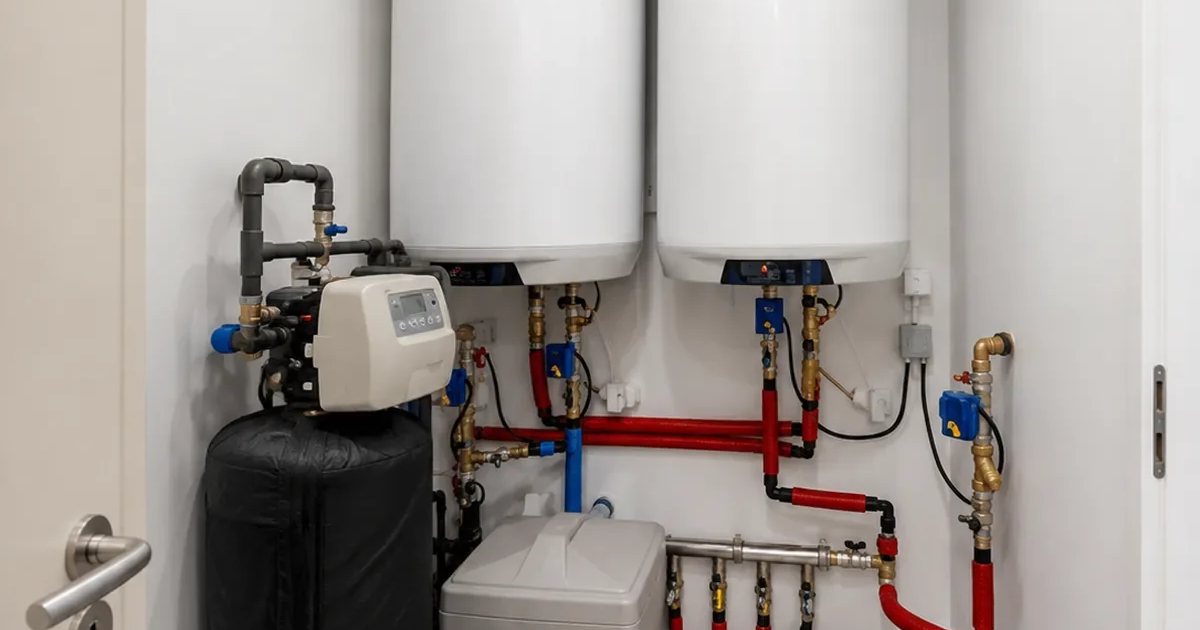
Hearing sharp knocks or “cracking” sounds inside the wall or under the floor every time a hot tap is opened, or during a shower, is a common situation that worries many homeowners in Funchal, Caniço, Santa Cruz, Machico, Câmara de Lobos, Ribeira Brava, Ponta do Sol, Santana, São Vicente and Porto Moniz. In the vast majority of cases it is neither a water leak nor structural damage, but rather thermal expansion of the pipe rubbing against masonry due to missing insulation, or water hammer caused by mains pressure. This guide explains the exact technical cause and how to fix it without destructive building work.
🔎 Symptoms & Initial Diagnosis
1) A dry crack or “tick-tick” sound inside the wall, heard seconds after opening the hot tap, most intense at the start of flow. 2) A sound that travels along the route of the embedded pipe, following the wall from the bathroom to the kitchen, indicating expansion at several fixing points. 3) A single loud bang, like “BANG!”, exactly the moment a tap is closed or the washing machine finishes filling — characteristic of water hammer rather than thermal expansion. 4) Noise that only occurs with hot water and never with cold, confirming the cause is thermal rather than a leak. 5) Vibration felt on the wall or skirting board when touched, with no visible damp patch associated, ruling out a burst pipe.
🧪 Main Causes
1) High and low pressure zones of the island: in higher areas of Funchal, Câmara de Lobos or Santana, mains pressure can be considerably higher than near the coast, worsening both water hammer and expansion friction. 2) Missing insulation sleeve or expansion sleeve: when the hot water pipe was embedded directly in cement or mortar without a thermal sleeve (coquilha), it expands and rubs directly against the rigid material every time it is used. 3) Rigid fixing clips: metal fixings tightened without any slack prevent the pipe's natural movement, turning every expansion cycle into a point of friction and noise. 4) Flow and pressure differences between Madeira's network and mainland Portugal: distribution pressure in certain parishes requires well-calibrated reducers, missing in many older installations. 5) Sea-air corrosion (maresia) on exterior metal fittings in coastal areas such as Funchal or Machico, which stiffens fixing points and amplifies sound transmitted through the structure. 6) Worn seals and fast-closing valves, which make the water shut-off more abrupt and intensify the water hammer effect over the years.
🛠️ Ideal Step-by-Step / Immediate Action
1) Confirm whether the noise happens when opening the tap (expansion) or when closing it (water hammer), as the technical fixes differ. 2) For water hammer, fit a water hammer arrestor and a calibrated pressure-reducing valve near the meter or water inlet, solving the problem without any wall work. 3) For thermal expansion, identify accessible wall sections (wardrobes, false ceilings, technical cupboards) and replace rigid clips with supports allowing sliding room. 4) In future renovations, insist on thermal insulation sleeving or expansion conduit along the entire embedded hot water run, already standard practice in quality new builds. 5) Slightly lower the water heater's thermostat (for example from 65°C to 55-60°C), which reduces the pipe's expansion range and the associated noise. 6) If the problem persists even after reducing pressure, schedule a technical inspection to confirm whether a hidden rigid fixing point exists inside the wall.
🚫 What to AVOID
1) Do not postpone replacing old flexible hoses on taps and appliances just because “they are not dripping yet” — worn hoses worsen vibration and abrupt water shut-off, intensifying water hammer. 2) Never use unsuitable tools (needle-nose pliers, screwdrivers) on brass or copper fittings near the meter when fitting a pressure reducer: it scratches the thread and creates permanent leaks. 3) Do not overtighten threaded joints or clips hoping to stop the noise — excess force cracks the material and prevents the pipe's natural expansion, worsening friction. 4) Do not ignore the problem for years: repeated vibration and friction wear out joints and seals, potentially causing hidden leaks inside the wall years later. 5) Do not break walls without first confirming whether the problem is water hammer solvable with a simple arrestor — this is the most costly and unnecessary mistake in these cases.
🧰 Preventive Maintenance
Periodically check, at least once a year, the condition of safety valves and shut-off valves near the meter, confirming they turn freely and show no leaks. Inspect the installed pressure reducer, ensuring it maintains the recommended calibration of 2 to 3.5 bar for residential use, especially in higher areas of Funchal, Câmara de Lobos and Santana. Visually inspect accessible pipework sections (technical cupboards, wardrobes, false ceilings) for signs of friction, rub marks or overly tight fixings. Replace connection hoses every 5 years and never exceed 8 years of use. This simple routine, followed in homes and holiday rentals across Madeira, prevents a simple annoying noise from evolving into a costly and hard-to-locate leak.
FAQ
Do cracking noises in the walls mean I have a leak?
Usually not. Noises that appear only when hot water is used are almost always pipe thermal expansion caused by a missing insulation sleeve. If you also see damp patches, higher consumption or continuous running water sounds, then leak detection is advisable.
Do the walls have to be opened to fix it?
In most cases no. Water hammer is solved with an arrestor or pressure reducer at the water inlet, and thermal expansion noises can be reduced by adjusting hot water temperature and replacing accessible fixings with clips that allow slack.
What is the ideal water pressure in a Madeira home?
Between 2 and 3.5 bar. Because of the island's steep terrain, higher areas of Funchal, Câmara de Lobos or Santana have much higher mains pressure than coastal areas, which worsens both cracking noises and water hammer — there a pressure reducer is essential.
Need help now? Fast response on WhatsApp.
We diagnose and fix plumbing noises, water hammer and pressure problems in Funchal, Câmara de Lobos, Caniço, Santa Cruz, Machico, Ribeira Brava and across Madeira Island.