Automatic Filling Valves: How to Prevent Overflows and Keep a Steady Water Level
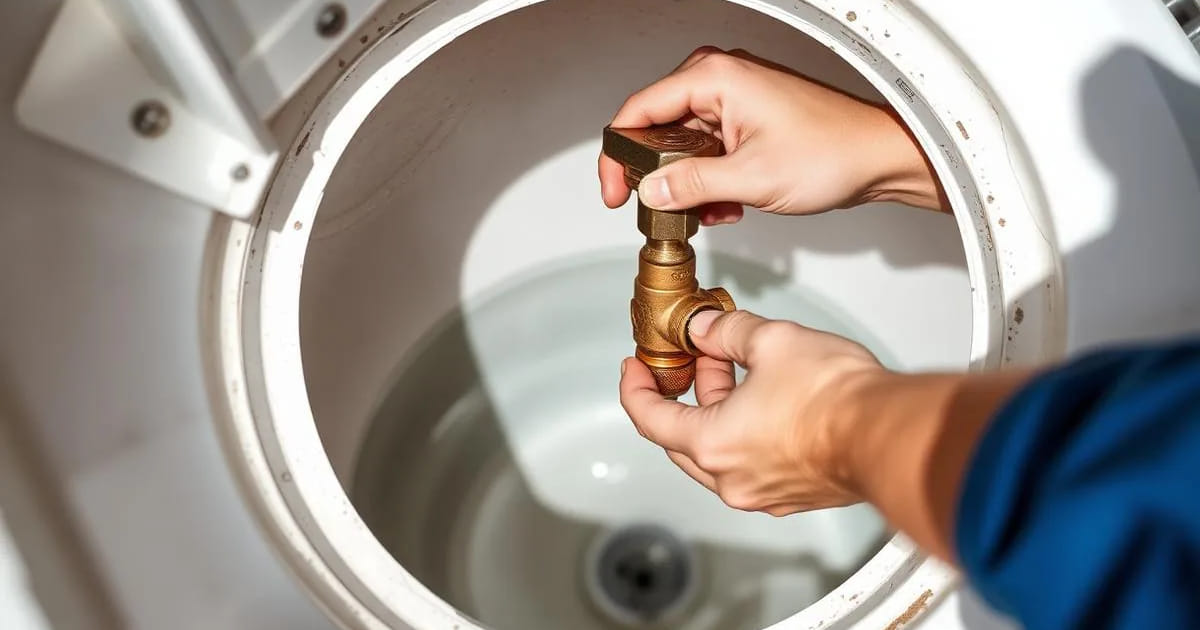
A water storage tank is only as reliable as its filling valve. It is a small component, usually hidden inside the tank, yet it decides whether the property keeps a proper reserve or quietly sends water down the overflow pipe for hours. In Madeira, where many houses and holiday rentals depend on tanks to smooth out pressure swings or to store borehole and spring water, a misadjusted or limescaled valve means unexplained bills, damp walls and pumps that start again and again. This guide covers the valve types available, how to set the level correctly, and how to keep the needle and diaphragm from becoming the weak point of the whole installation.
🧰 Valve Types and Where Each One Fits
1) Mechanical float valves in brass or stainless steel work by lever action: the float rises with the level and closes the shut-off directly. 2) They are simple, repairable and suited to domestic tanks with stable pressure and moderate flow. 3) Servo-controlled diaphragm valves use mains pressure itself to close, with minimal mechanical effort on the float. 4) They seal more tightly at high pressure and are the right choice for large-volume reservoirs. 5) There are also side-entry and bottom-entry versions: position governs maintenance access and the noise of falling water. 6) In pump-fed tanks, choose models that withstand pressure surges without chattering. 7) Sanitary brass or stainless bodies cope far better with aggressive water than cheap plastic ones.
📐 Setting the Level Correctly in Reservoirs
1) First define the maximum working level: it must sit at least 5 to 10 cm below the overflow pipe inlet. 2) Adjust the float arm — by bending it or moving the adjustable collar — until closure happens at that level. 3) Check the travel: the valve should open as soon as the level drops a few centimetres, avoiding permanent part-open running. 4) Confirm full closure with the tank full: any trickle points to a dirty or worn seat. 5) Leave clearance between the float and the tank walls so it cannot jam halfway. 6) Where a pump draws from the tank, keep the minimum level above the suction so no air is drawn in. 7) Record the final adjustment position so it can be reproduced quickly after any future work.
💧 Why Continuous Flow and Overflow Happen
1) The most common cause is a needle or seat fouled with limescale and grit, preventing a tight shut-off. 2) Punctured or water-filled floats lose buoyancy and never reach the closing position. 3) Hardened or torn diaphragms let water pass permanently even with the float at the top. 4) Pressures above 5 bar force the shut-off and cause leaks and whistling at the valve. 5) Arms bent by handling or weighed down by deposits shift the closing level. 6) An overflow discharging continuously can add hundreds of litres a day to the water bill. 7) On rooftops, that discharge often ends up soaking the walls and ceilings below.
🧽 Descaling the Needle and Preventive Maintenance
1) Isolate the supply and release the pressure before dismantling any part of the valve. 2) Remove the needle and seat and soak them in a mild descaling solution for a few minutes. 3) Clean with a soft brush — never file or scrape the seat, as the scoring leaves a permanent leak path. 4) Replace seals and diaphragms with genuine parts for the same model instead of improvised substitutes. 5) Check and clean the inlet strainer, where sand and metal filings collect. 6) A particle filter upstream of the tank greatly extends valve life, especially with borehole water. 7) Inspect the valve, float and overflow pipe once a year as part of the property maintenance plan.
🛡️ Backup Protection: Overflow, Alarm and Shut-Off
1) The overflow pipe should be at least as large as the inlet and must discharge visibly, never out of sight. 2) A visible discharge shows immediately that the valve has stopped closing. 3) In critical reservoirs, add a second safety layer with a solenoid valve and a high-level sensor. 4) Level probes with an audible alarm or notification prevent long-running waste in unoccupied homes. 5) Accessible isolating valves upstream allow work without draining the whole installation. 6) A pressure reducing valve upstream stabilises operation and reduces wear on the shut-off. 7) In holiday rentals, this combination avoids nasty surprises between stays when nobody is on site.
📋 Inspection Checklist and When to Call a Professional
1) Can you hear water running into a tank that is already full? Closure is incomplete and needs correcting. 2) Is the overflow dripping or running? The valve is passing and should be serviced at once. 3) Does the pump start unusually often? There may be a continuous loss at the filling point. 4) Is the float heavy, waterlogged or resting against a wall? It needs replacing or repositioning. 5) Is mains pressure above 5 bar? Consider fitting a pressure reducing valve before the inlet. 6) Have there been damp patches near the tank? A recurring overflow may be the cause, not a pipe leak. 7) Want your tank filling valve adjusted, repaired or replaced? Message us on WhatsApp.
FAQ
What is the difference between a float valve and a diaphragm valve?
A float valve closes through direct lever action, which makes it simple and repairable. A servo-controlled diaphragm valve uses mains pressure to close, giving a tighter seal at high pressure and higher flow rates.
At what level should the filling valve close?
At least 5 to 10 cm below the overflow pipe inlet, so level swings and water movement do not push the tank into discharging through the overflow.
My valve does not close fully. Must it be replaced?
Not always. Descaling the needle and seat and renewing the washer or diaphragm often solves it. If the seat is scored or the body corroded, replacement is the reliable option.
How can overflows be avoided in unoccupied homes?
With a visible overflow discharge, an upstream particle filter, a pressure reducing valve and, in larger reservoirs, a second safety layer using a high-level probe and a solenoid shut-off valve.
Want your tank filling valve adjusted or replaced? Message us on WhatsApp.
We work in Funchal, Câmara de Lobos, Caniço, Santa Cruz, Machico, Ribeira Brava, Ponta do Sol, Calheta, Santana, São Vicente and across Madeira Island.