45° vs 90° Elbows in Sewer Pipes: Preventing Drainage Clogs in Funchal
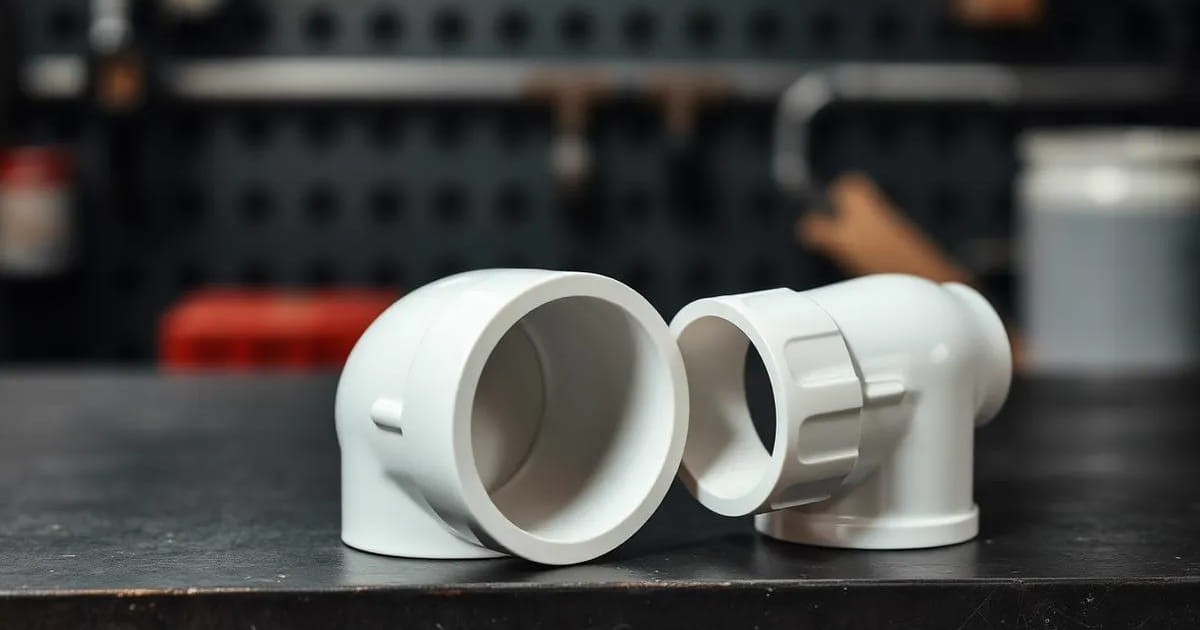
When designing or repairing a residential sewer network on Madeira Island, the choice of PVC fittings and the pipe layout determine the long-term reliability of the system. One of the most common faults in sanitary installations is the misuse of 90° elbows, which create turbulence hotspots where toilet paper, grease and organic waste accumulate.
🔎 The Problem with 90° Elbows in Sewer Lines
1) Drastic speed reduction: the impact against the pipe wall stalls the water flow at the direction change. 2) Narrow internal corner: the geometry of a 90° elbow restricts the usable cross-section at the bend, forming a choke point. 3) Clog focal point: toilet paper, grease and organic waste almost always build up at these sharp direction changes. 4) Excessive turbulence: the flow stops being laminar, loses energy and no longer carries solids efficiently. 5) Greater mechanical wear: repeated hydraulic shock overloads joints and unions, increasing the risk of leaks inside walls and ceilings.
🧪 Why Two 45° Bends Work Better
1) Smooth transition: the wider bend radius lets water flow without losing kinetic energy. 2) Better flow management: discharge water keeps transporting solid waste continuously without excessive turbulence. 3) Lower hydraulic impact: mechanical pressure on pipe joints and unions is reduced, preventing future leaks. 4) Preserved usable cross-section: the internal passage stays close to the nominal diameter, with no choking. 5) Superior self-cleaning: flow velocity carries sediments better, stopping them from settling inside the bend.
🛠️ Step-by-Step Installation or Repair
1) Draw the layout and mark where the pipe needs to turn 90°. 2) Instead of a 90° elbow, install a first 45° elbow. 3) Insert a straight PVC section at least 3 to 5 times the pipe diameter between the two bends. 4) Install the second 45° elbow to complete the full 90° change of direction. 5) Check falls: the sewer line must keep the recommended minimum slope (usually 1 to 2 cm per metre) so water carries solids. 6) Glue and align each fitting with a quarter-turn to spread adhesive evenly. 7) Run a volume flush test: a 10-litre bucket of water poured at once should drain without backing up.
🎯 Definitive Technical Solution
The definitive solution is to systematically replace 90° elbows in sewer networks with long-sweep bends or with two 45° bends separated by a straight intermediate section. This removes turbulence hotspots, restores flow velocity and reduces the risk of recurring blockages. In critical cases, especially in older buildings in Funchal, Câmara de Lobos and Santa Cruz, we also recommend a camera inspection to identify all 90° elbows and reverse falls acting as obstruction points.
🚫 What to AVOID
1) Do not use 90° elbows in solids-carrying runs or immediately after a toilet discharge. 2) Do not install 45° bends back-to-back without a straight section between them — the combined radius can still create turbulence. 3) Do not reduce pipe diameter next to bends to 'save space'. 4) Do not ignore slow flushes or gurgling sounds: they are signs that flow is already compromised. 5) Do not repeatedly use aggressive chemical drain cleaners; they attack PVC joints and do not fix pipe geometry.
🧰 Preventive Maintenance
1) Visually inspect accessible PVC fittings every 2 years for wear, cracks or leaking joints. 2) Run a monthly test flush with 10 litres of water in a toilet or drain to check flow velocity. 3) In holiday rentals and vacant homes, flush every drain weekly to prevent traps drying and sediment settling in bends. 4) Schedule a preventive camera clean every 3 to 5 years in buildings with a history of blockages. 5) If renewing pipework, insist on long-sweep bends or double 45° elbows in the project design.
FAQ
Can I replace just the problematic 90° elbow with two 45° bends?
Yes, as long as there is physical space for the intermediate straight section. In many Funchal bathrooms and kitchens space is tight, but even a short few-centimetre straight piece between the two bends improves flow significantly compared with a 90° elbow.
The toilet is still slow even with 45° bends. What else could it be?
If the bends are correct but the flush remains slow, the cause may be reverse fall, undersized pipework, a downstream blockage or poor stack venting. A camera inspection and slope measurement will settle the diagnosis.
Slow drains or recurring blockages? We correct the layout and bends for a permanent flow fix.
We work in Funchal, Câmara de Lobos, Caniço, Santa Cruz, Machico, Ribeira Brava, Ponta do Sol, Calheta, Santana, São Vicente and across Madeira Island.